Rajshahi University Students Protest Display of Convicted War Criminals on Campus Billboard
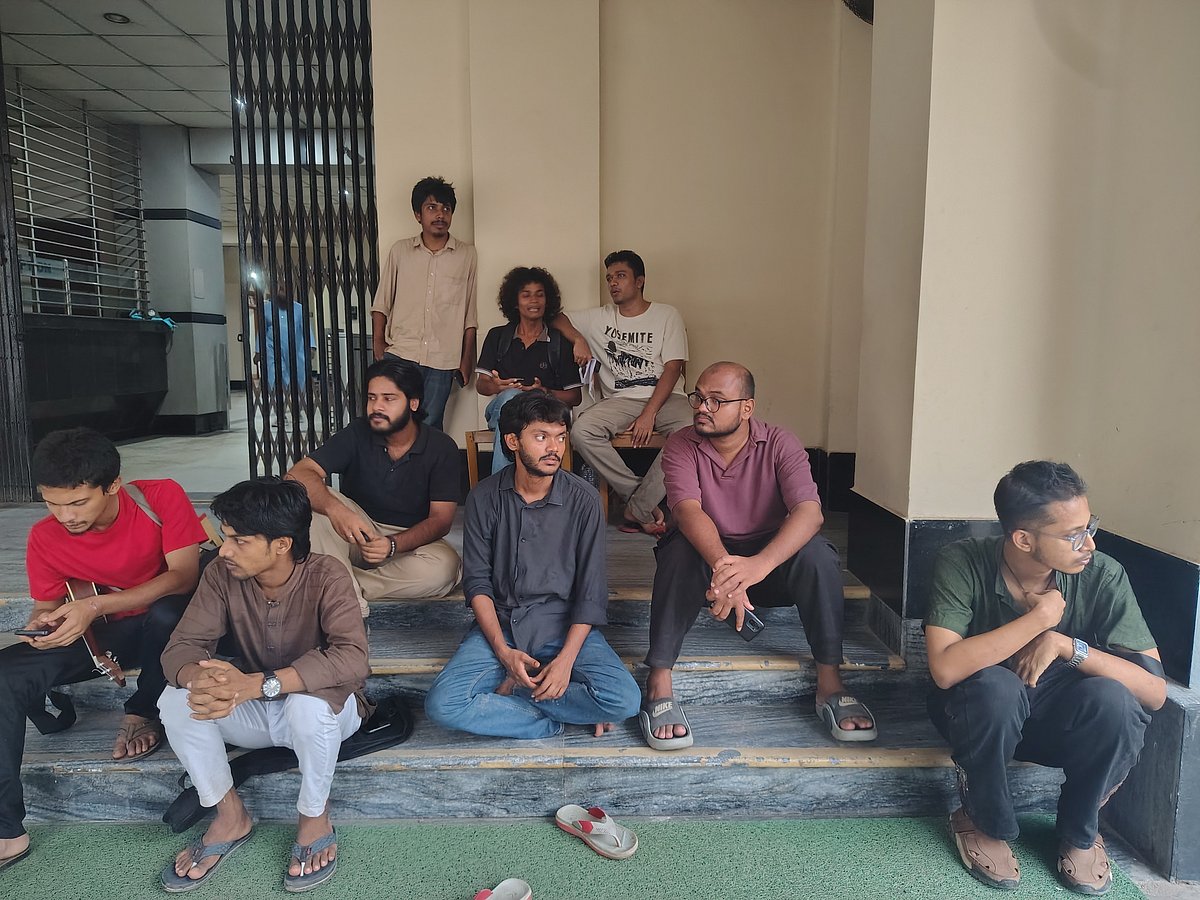
Photo Collected
Tensions have escalated at Rajshahi University following the display of a billboard featuring individuals convicted of crimes against humanity during Bangladesh’s 1971 Liberation War. The billboard, titled “Judicial Killing,” was erected along the campus’s prominent Paris Road by a cultural platform known as “Novoculture,” led by Salauddin Ammar, the general secretary of the Rajshahi University Central Students’ Union (RUCSU).
The display depicts several high-profile figures executed for war crimes, including former Jamaat-e-Islami leaders Motiur Rahman Nizami, Delwar Hossain Sayeedi, Abdul Quader Molla, Ali Ahsan Mohammad Mojaheed, and Mir Quasem Ali, as well as former BNP leader Salauddin Quader Chowdhury. The board also includes an image of Major (retd) Bazlul Huda—convicted in the assassination of Sheikh Mujibur Rahman—alongside claims regarding his death and references to missing witnesses and judicial controversies.
The billboard has sparked intense debate among students and faculty, with many questioning the intent behind labeling the legal proceedings against convicted war criminals as “judicial killings.” Critics have taken to social media and organized protests, arguing that the display serves to rehabilitate figures responsible for atrocities during the 1971 conflict. Student organizations, including the Chhatra Odhikar Parishad and the Socialist Student Front, have formally demanded the immediate removal of the billboard, characterizing it as an insult to the nation’s history.
Protesting students staged a sit-in at the administration building on Sunday, refusing to vacate the premises until the university authorities provided a clear timeline for the removal of the controversial display. Representatives of the protesters stated that the university administration initially requested time to resolve the matter but had not provided firm assurances, prompting the students to maintain their presence on site.
Defending the project, Salauddin Ammar argued that the billboard was intended to highlight concerns over politically motivated trials and the integrity of the judicial system during the tenure of the previous government. He maintained that the display was meant to spark discussion on systemic issues such as enforced disappearances and extrajudicial actions, rather than to serve as a defense of the individuals pictured.
In response to the mounting pressure, university proctor Professor Mahbubur Rahman acknowledged the division among the student body. He stated that while different groups are presenting conflicting arguments, the administration aims to avoid activities that create unnecessary friction within the academic community. He confirmed that instructions have been issued to have the billboard removed, though the implementation of this directive remains a focal point of the ongoing standoff.
0%
0%
0%
0%