



Public health experts emphasize rational use of oral rehydration salts amid rising heatwaves and climate risks
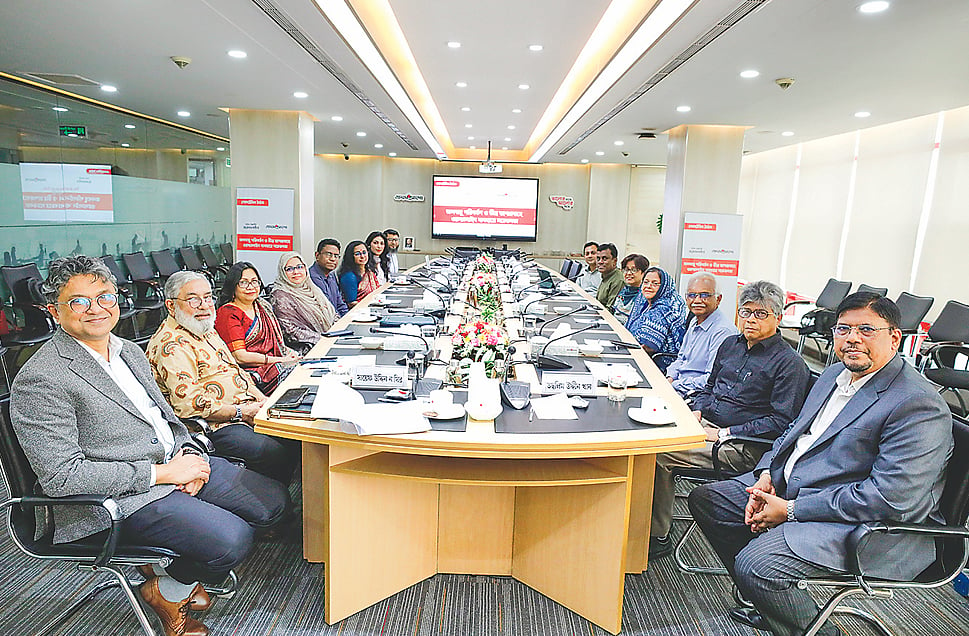
Photo Collected
Public health experts are urging for heightened awareness regarding the rational use of oral rehydration salts (ORS) as rising global temperatures exacerbate heat-related illnesses and waterborne diseases. During a roundtable discussion in Dhaka titled “Awareness of ORS use during climate change and severe heatwaves,” hosted by Social Marketing Company (SMC) and Prothom Alo, specialists emphasized that while ORS remains a vital frontline intervention, its effectiveness depends on proper preparation and informed application.
Climate change has led to increasingly severe heatwaves, resulting in widespread heat exhaustion, dehydration, and heatstroke. Experts highlighted that the physiological stress caused by rising temperatures, combined with the spoilage of food in extreme heat, has significantly increased the incidence of diarrhea. As the human body struggles to regulate its internal temperature, the role of ORS in maintaining electrolyte balance has become more critical than ever.
বিজ্ঞাপন
Public health specialist Dr. Sukumar Ray described ORS as an essential tool that can be administered by family members without specialized training. He advocated for a standardized public health approach that empowers the general public to manage heat-induced fatigue and dehydration effectively, particularly in communities where immediate access to medical specialists is limited.
SMC Managing Director Taslim Uddin Khan noted that while Bangladesh has achieved remarkable success in reducing diarrheal mortality over the past three decades, the shifting climate demands new strategies. Statistics from the Bangladesh Demographic and Health Survey show that diarrheal death rates have plummeted to 4 percent, largely due to the widespread availability and use of ORS. However, experts cautioned that this progress must be protected by ensuring that citizens understand the precise methods of ORS preparation.
বিজ্ঞাপন
WaterAid Bangladesh Country Director Hasin Jahan highlighted the intersection of poor sanitation and climate impacts, noting that research indicates E. coli contamination in nearly 47 percent of water sources, a figure that rises to 85 percent at the point of use due to improper handling. She called for the establishment of hydration points in public spaces, including markets and schools, to provide safe water and ORS to vulnerable populations during heatwaves.
Pediatricians and clinical experts underscored the importance of technical accuracy in administering ORS. Data from the Dhaka Medical College Hospital suggests that many caregivers struggle with correct dilution ratios, which can lead to life-threatening electrolyte imbalances. Specialists reiterated that ORS must be prepared with exactly half a liter of clean, room-temperature water and discarded after 12 hours. Furthermore, they warned that ORS is not a universal cure; instances of bloody diarrhea require immediate professional medical intervention.
As climate-induced internal migration forces more people into densely populated urban centers with inadequate sanitation, the risk of typhoid, hepatitis, and dehydration continues to climb. Public health experts concluded that while ORS has historically saved millions of lives, its future impact depends on a collective effort to educate the public on rational usage, proper hygiene, and the necessity of maintaining standard nutritional intake alongside rehydration therapy.
0%
0%
0%
0%