

Khagrachhari Mango Farmers Face Financial Crisis as Prices Plummet Amid Transport and Toll Hurdles

Photo Collected
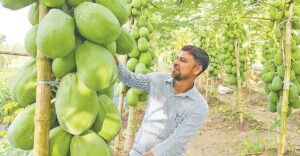
Amrapali mango growers in Khagrachhari are facing a severe economic crisis as a bumper harvest has failed to translate into profitability. Despite a record-breaking production yield this season, farmers report that market prices have plummeted to nearly half of what they were last year, leaving many struggling to cover basic operational costs such as labor, fertilizers, and pesticides.
Wholesale prices for Amrapali mangoes in the region currently range between 20 and 50 taka per kilogram, a sharp decline from the 60 to 100 taka fetched during the same period last year. Local growers, who have long relied on the high demand for Khagrachhari’s sweet and vibrant mangoes in major hubs like Dhaka and Chattogram, are now finding it difficult to locate buyers willing to pay sustainable rates.
বিজ্ঞাপন
Farmers attribute the market collapse primarily to a significant drop in the number of visiting wholesalers from other districts. Traditionally, competitive bidding by outside buyers ensures fair prices at the orchard level. However, rising fuel prices, increased transportation costs, and logistical hurdles have discouraged many traders from making the journey to the hill tracts.
The financial strain is further exacerbated by a complex web of local levies. According to growers and traders, vehicles transporting mangoes are subjected to multiple tolls, including municipal fees per crate and various charges imposed by the District Council’s ‘Bazar Fund’ at key checkpoints. Furthermore, anecdotal reports suggest that regional groups often demand additional payments, creating a cumulative burden that diminishes profit margins for both farmers and local distributors.
বিজ্ঞাপন
Official data from the Department of Agricultural Extension (DAE) reflects the scale of the production increase. In the 2025-26 fiscal year, mango cultivation expanded to 5,130 hectares, with production expected to exceed 80,000 metric tons—a substantial rise from the 62,179 metric tons recorded in the previous year.
Nadir Uddin Chowdhury, Deputy Director of the Khagrachhari DAE, acknowledged that while the harvest quality is excellent, the combination of high market supply and low external demand has created a pricing imbalance. He noted that long-term stability for the sector depends on developing better marketing infrastructure, facilitating direct links between farmers and consumers, and investing in cold storage facilities.
For many farmers, the current downturn is a sobering reality check. As mango cultivation has become a cornerstone of the regional economy over the past 15 years, stakeholders warn that if the issue of fair pricing remains unaddressed, the agricultural enthusiasm that has transformed the hills could face a lasting decline.
0%
0%
0%
0%