History of Presidential Instability in Bangladesh and the Departure of Mohammad Shahabuddin
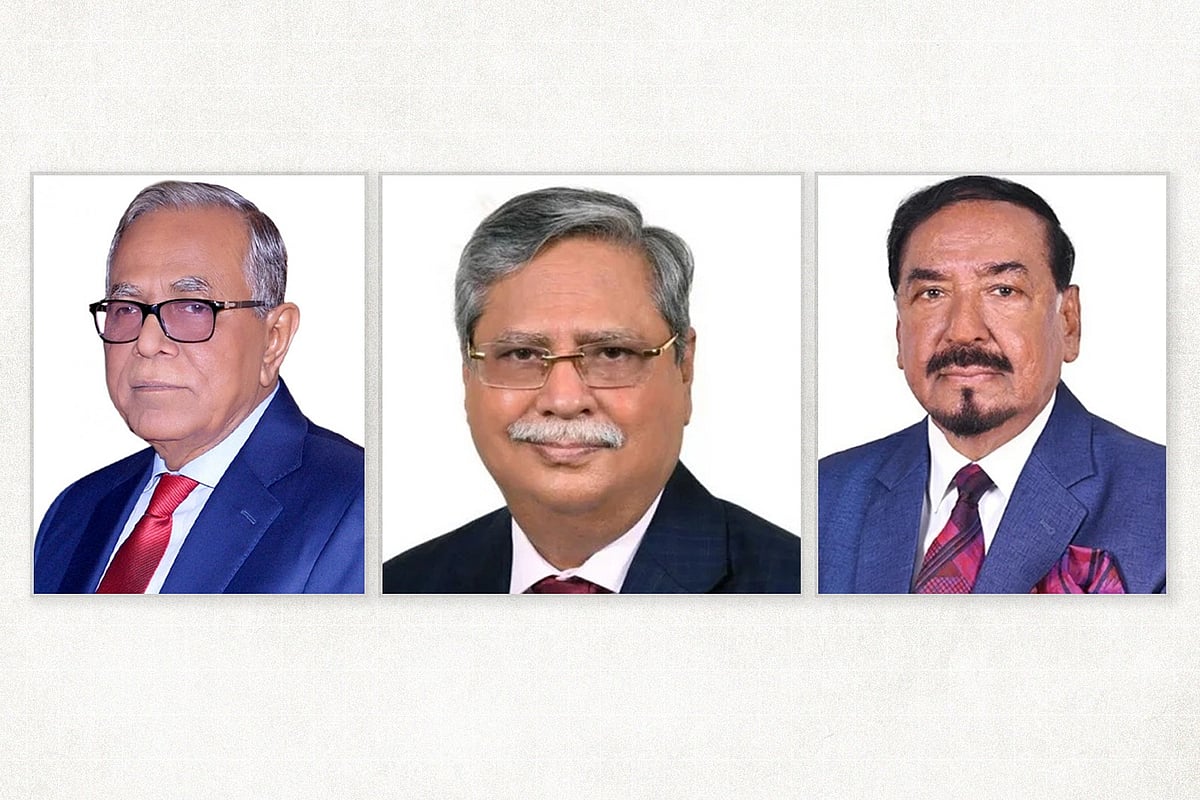
Photo Collected
Only four presidents in the history of independent Bangladesh have successfully completed their designated terms, highlighting the persistent instability surrounding the nation’s highest constitutional office. Since its independence, the presidency has been marred by assassinations, military coups, mass uprisings, and political volatility, rendering the position historically precarious.
The most recent transition occurred on July 24, when President Mohammed Shahabuddin resigned citing severe health complications. Following his departure, Speaker Hafiz Uddin Ahmad assumed the role of acting president in accordance with the constitution. On Friday evening, Mirza Fakhrul Islam Alamgir, nominated by the Bangladesh Nationalist Party (BNP), took the oath of office as the 24th president of Bangladesh, allowing Hafiz Uddin Ahmad to return to his duties as Speaker.
Since 1971, 19 individuals have served as president, acting president, or interim president. Notably, no president elected through direct popular vote has ever completed a full term. The only individuals to successfully serve their complete tenures assumed office after the restoration of parliamentary democracy in 1991, a period during which the executive power of the presidency was significantly curtailed.
Mohammed Shahabuddin, who had been elected unopposed on April 24, 2023, as the sole candidate of the then-ruling Awami League, resigned before his term was set to conclude in April 2028. Following the fall of the Awami League government in the August 5, 2024, student-led mass uprising, pressure for his removal intensified. Reports indicate that the BNP eventually signaled to Shahabuddin that his resignation was necessary to allow for a new appointment, assuring him that he would be permitted a peaceful life thereafter. In his resignation letter, Shahabuddin cited a critical combination of heart disease, hypertension, diabetes, and autonomic neuropathy as reasons for his inability to continue his duties.
The historical trend of instability began early. Sheikh Mujibur Rahman, the first president, was assassinated alongside his family in 1975. His successor, Khondaker Mostaq Ahmad, served for only 83 days, followed by Justice Abu Sadat Mohammad Sayem, who resigned in 1977. Ziaur Rahman, who succeeded him, was assassinated in 1981.
Abdur Rahman Biswas, who served from 1991 to 1996, remains a significant figure in this history for being the first to complete a full five-year term without being forced out by political upheaval. Similarly, Shahabuddin Ahmed completed his term in 2001, though his departure was shadowed by deteriorating relations with the Awami League.
Abdul Hamid holds the record for the longest tenure in the nation’s history, serving for 10 years after completing two full terms. Upon his departure in 2023, he was the first president to receive a formal state farewell at Bangabhaban, the presidential palace.
Despite the constitutional mandate defining the president as the highest state official, the office has repeatedly fallen victim to constitutional amendments and shifting political allegiances. From the implementation of one-party rule in 1975 to the military-backed government in 2007, the presidency has served as a flashpoint for national crises. Even with the transition to a parliamentary system, the role remains susceptible to the broader political shifts that continue to shape the governance of Bangladesh.
0%
0%
0%
0%
More News from Local