



Historic Guava Markets of Southern Bangladesh Face Existential Crisis Amid Climate and Economic Challenges
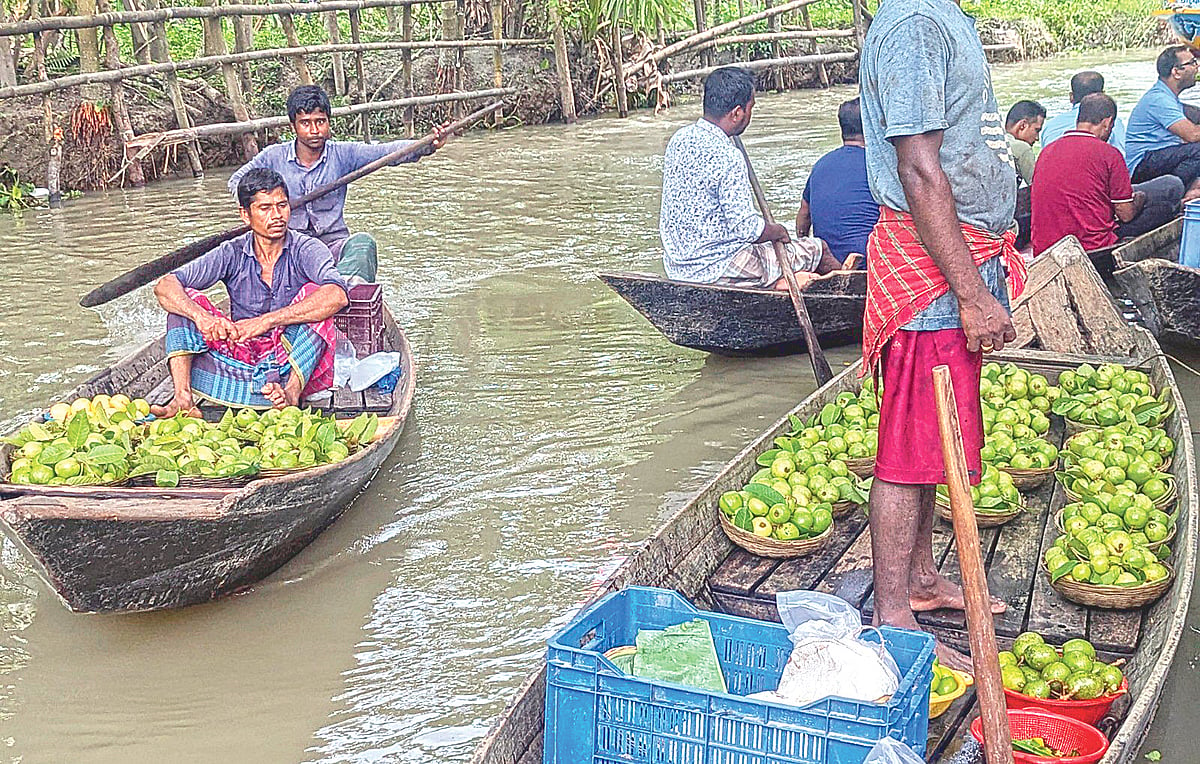
Photo Collected
In the water-veined landscape of Pirojpur’s Nesarabad upazila, the onset of the monsoon season transforms a network of canals into a bustling economic artery. At the heart of this region lies the Bhimruli floating market, a two-century-old tradition where hundreds of wooden boats converge, laden with guavas, lemons, and coconuts. The scene, often referred to as the “Venice of Bangladesh,” captures a unique way of life where canals serve as vital transport routes for trade, education, and daily existence.
While the region’s aesthetic appeal draws scores of tourists to landmarks such as the Natural Tourism and Picnic Spot in Kathurakathi and the Riyan Guava Park, the reality for the area’s 50,000 farmers remains precarious. Spanning 1,932 hectares across Nesarabad, Banaripara, and Jhalokathi, the guava orchards that once defined the local economy are in decline. Growers report that erratic weather and extreme heat have decimated yields, forcing many to pivot toward cultivating lemons and hog plums to sustain their livelihoods.
বিজ্ঞাপন
Farmers face systemic hurdles that exacerbate these environmental challenges. Despite the regional importance of the crop, the lack of cold storage facilities and food processing industries results in significant post-harvest losses. Farmers are frequently compelled to sell their produce at low prices to prevent spoilage. Furthermore, the absence of accessible credit forces many to rely on high-interest loans from non-governmental organizations, leaving little margin for profit.
For the residents of the canalside villages, the shallow *kosha* boats remain an extension of the household, used for everything from navigating narrow orchard channels to transporting children to school. However, as the agricultural landscape shifts, local farmers express concern that the region’s traditional geography is being fundamentally altered. The decline of the guava industry threatens not only the economic stability of the rural population but also the preservation of a cultural heritage that has persisted for generations.
বিজ্ঞাপন
Despite these hardships, the area remains a significant draw for visitors. Students and families continue to flock to the region during the monsoon, captivated by the synergy between the raw, flooded beauty of the landscape and the resilient daily life of the farmers. As tourism continues to grow—supported by a fleet of tourist boats and floating eateries—the tension between the area’s emergence as a leisure destination and the struggle for survival among its traditional inhabitants becomes increasingly pronounced.
0%
0%
0%
0%