Experts Call for Enhanced Skills Training and Employment Opportunities to Harness Bangladesh Demographic Dividend
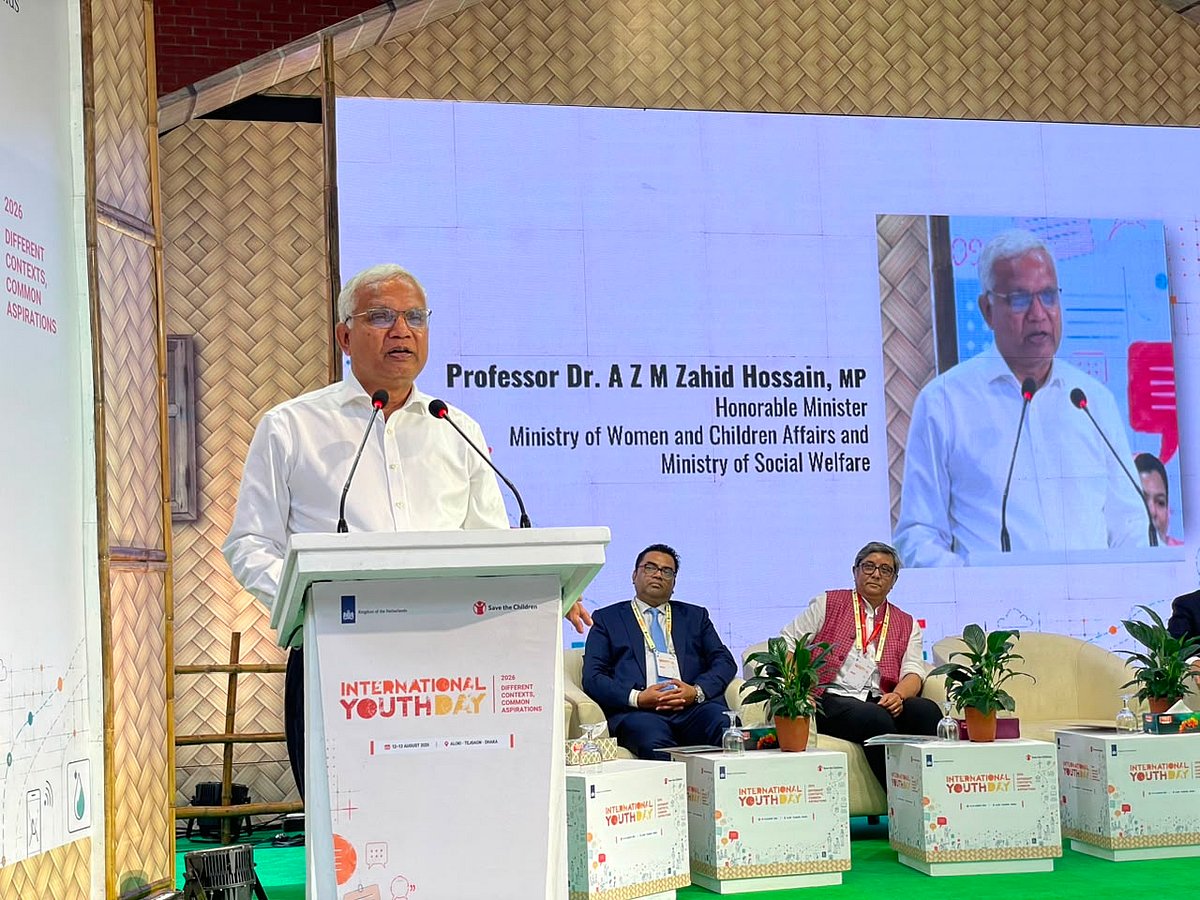
Photo Collected
DHAKA — Bangladesh’s youth population, currently estimated at 58.1 million people between the ages of 15 and 34, represents approximately 35 percent of the nation’s total population. Experts and government officials gathered in Dhaka on Wednesday to underscore the urgent need to harness this demographic dividend by enhancing skills, creating employment opportunities, and ensuring digital accessibility.
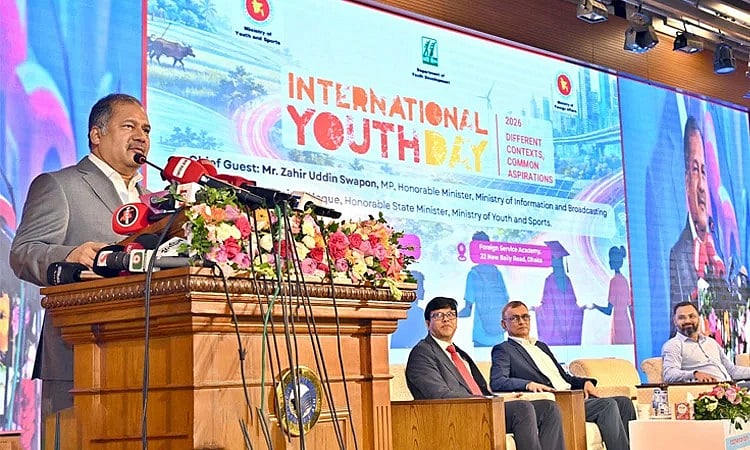
The event, marking International Youth Day 2026, was held at Aloki in Tejgaon and jointly organized by Save the Children Bangladesh and The National Youth Network. The two-day program was inaugurated by A.Z.M. Zahid Hossain, Minister of Women and Children Affairs and Minister of Social Welfare.
Addressing the assembly as the chief guest, Minister Zahid Hossain emphasized that the youth must move beyond purely institutional education and prioritize technical and vocational training to remain competitive in the labor market. He reaffirmed the government’s commitment to providing necessary resources and support for young professionals. Highlighting the 5 billion BDT allocation in the national budget for youth entrepreneurs, the minister stated that the government aims to prioritize the creative economy, positioning young people as the primary stakeholders in national development.
Special guest Jawad Azaui, First Secretary of Political and Human Rights Affairs at the Embassy of the Netherlands, stressed that youth should not be viewed merely as beneficiaries of development programs. Instead, they must be empowered as innovators, leaders, and agents of change. Azaui noted that while Bangladesh has a significant opportunity to capitalize on its demographic dividend, this potential will not be realized automatically. He pointed to persistent barriers facing young women and marginalized youth, calling for greater opportunities for inclusion, leadership, and participation in decision-making processes that affect their futures.
Professor Samsad Mortuza, Vice-Chancellor of the University of Liberal Arts Bangladesh (ULAB), argued that while the current generation possesses immense technological capability and vision, the burden of development cannot rest on them alone. He urged the government, educational institutions, diplomatic missions, and civil society to take collective responsibility for providing quality education, safe environments, decent employment, and digital infrastructure, while also safeguarding the right to freedom of expression.
Suman Sengupta, Country Director of Save the Children Bangladesh, shifted the narrative by characterizing the youth as the “present” rather than just the “future” of the nation. He stated that the organization is actively working to enhance the capacity of young people to voice their opinions and participate in critical decision-making.
The inaugural ceremony, which began with the national anthem and a flag-hoisting ritual, also featured remarks from Farhana Akter, manager of Save the Children’s Socchar project, and youth representative Lily Pru Marma. Following the opening session, officials toured exhibitions showcasing initiatives led by nine female-led organizations.
0%
0%
0%
0%