


Encroachment turns Comilla vital drainage artery into narrow drain triggering chronic flooding

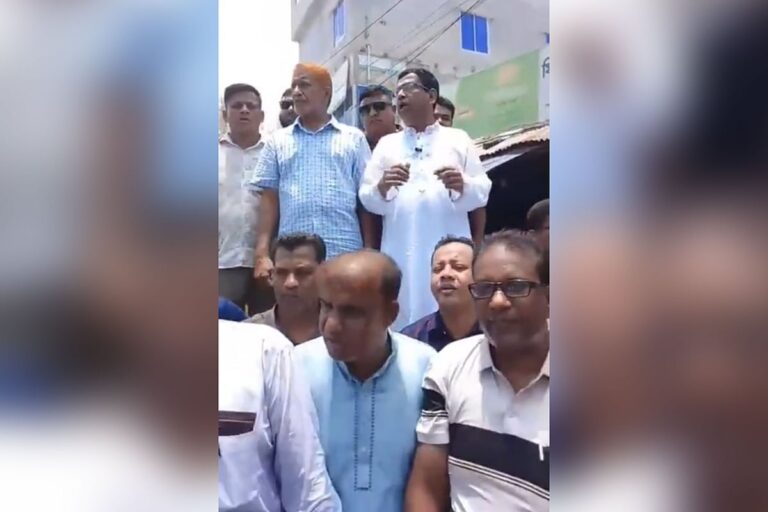
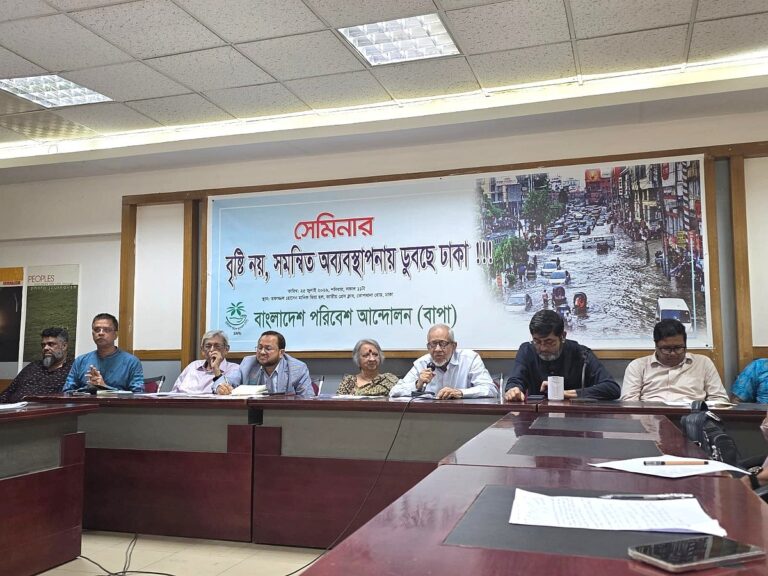
Photo Collected
Persistent waterlogging in the Bangladeshi city of Comilla has reached a breaking point, drawing national attention after recent heavy rainfall forced Higher Secondary Certificate (HSC) examinees to wade through waist-deep water to reach their testing centers on July 13. While the images of students struggling through inundated streets near Comilla Government Women’s College sparked public outcry, local residents note that the crisis is a long-standing systemic failure driven by the systematic destruction of the city’s primary drainage artery, the Kandi Canal.
Historically, the five-kilometer Kandi Canal served as the vital lifeline for urban water management, channeling discharge into the Gungaijuri Canal and ultimately into the Dakatia River. Research cited by local historians indicates that the canal once spanned between 80 to 95 feet in width. Over decades of unchecked encroachment, illegal construction, and development, that expanse has been reduced to a narrow, choked passage measuring in some areas only eight to 15 feet.
বিজ্ঞাপন
The degradation of the canal reached a critical juncture during the 2018 expansion of the Comilla-Noakhali regional highway into a four-lane thoroughfare. According to residents and local observers, the project led to the contraction of nearly half of the canal’s remaining width near the Tomsom Bridge area. While historians like Ahsanul Kabir point to this period as the definitive turning point for the city’s drainage capacity, the local office of the Roads and Highways Department (RHD) has denied allegations of encroaching on canal property.
Field observations reveal a landscape of obstructed flow, where private and government entities alike have constructed undersized culverts, steel bridges, and boundary walls that impede natural drainage. Multi-story buildings have encroached directly into the canal’s path, and various institutions, including the RHD office and the Institution of Engineers, Bangladesh (IEB), are reported to have built structures that significantly restrict water movement.
বিজ্ঞাপন
In response to the recurring flooding, Comilla City Corporation administrator Md. Yusuf Molla (Tipu) has vowed to reclaim the canal’s original path. He stated that the corporation has begun removing unauthorized obstacles and warned that any entity—be it a private citizen or a government agency—that fails to voluntarily demolish illegal culverts and encroachments will face forced demolition by city authorities. The city administration plans to finalize boundary demarcation and pursue legal action against those who have occupied the canal’s land.
0%
0%
0%
0%