Deadly Clashes Across Bangladesh Leave Dozens Dead Amid Escalating Anti-Government Protests
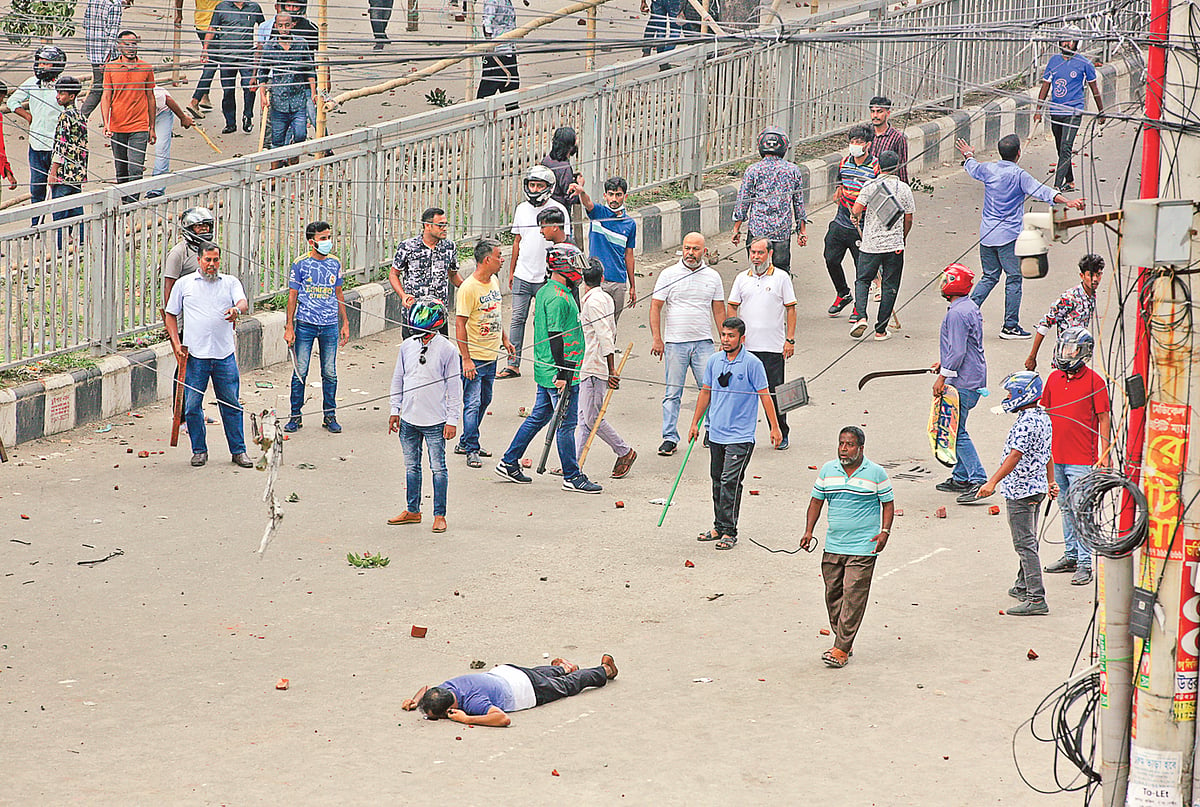
Photo Collected
Bangladesh descended into widespread violence on August 4, 2024, as the “Non-Cooperation Movement” called by student protesters triggered clashes across at least 50 districts, resulting in 98 deaths. The fatalities included student demonstrators, police officers, and members of the then-ruling Awami League and its affiliated organizations.
The surge in unrest followed a declaration by student leaders on August 3, when coordinator Nahid Islam called for the resignation of the Sheikh Hasina government and the dismantling of the political establishment. In response, senior leaders of the Awami League resolved to suppress the movement through force, deploying party activists armed with clubs, indigenous weapons, and firearms, including pistols and shotguns, to confront protesters.
Throughout the capital, Dhaka, violence erupted in key hubs including Jatrabari, Uttara, Dhanmondi, Shahbag, and Mirpur. The resulting chaos left at least 11 people dead in the city alone. Similar scenes played out across the country. In Magura, two people, including a local student leader, were killed, while six Awami League activists were beaten to death in Madhabdi, Narsingdi, following an exchange of fire. The violence also reached police infrastructure; 13 officers were killed at the Enayetpur police station in Sirajganj, and one officer died at the Elliotganj highway station in Cumilla.
Despite the deployment of armed party loyalists, the protesters held their ground, frequently forcing pro-government groups to retreat. The unrest escalated into widespread attacks on the state apparatus and ruling party assets. At least 38 districts reported arson and vandalism targeting Awami League offices and the residences of cabinet members and lawmakers. Law enforcement facilities were also hit, with 15 police stations in Dhaka, along with several district superintendent offices and outposts, coming under siege. Official reports indicated that more than 300 police officers and 57 members of the Border Guard Bangladesh were injured during the confrontations.
To regain control, the government imposed an indefinite nationwide curfew on the evening of August 4 and declared a three-day public holiday starting August 5. Communication was further restricted when authorities ordered the suspension of 4G mobile networks and blocked access to major social media platforms, including Facebook and WhatsApp.
Amid the escalating crisis, retired military officers convened at the RAWA Club in Dhaka, warning that the government was attempting to “militarize” a political problem and urging that the armed forces be returned to their barracks. Simultaneously, the High Court issued observations during a hearing, emphasizing that law enforcement must prioritize the protection of life and dignity. The court ruled that while police may use rubber bullets and tear gas to control riots, the use of live ammunition should be restricted strictly to situations where the law is being violated and public order is under imminent threat.
As the day concluded, student leaders accelerated their strategy. While initial announcements proposed a “Long March to Dhaka” for August 6, movement coordinator Asif Mahmud Sajeeb Bhuiyan later moved the date forward to August 5, signaling a rapid intensification of the push to topple the government.
0%
0%
0%
0%