


Country Faces Renewed Measles Test Kit Shortage
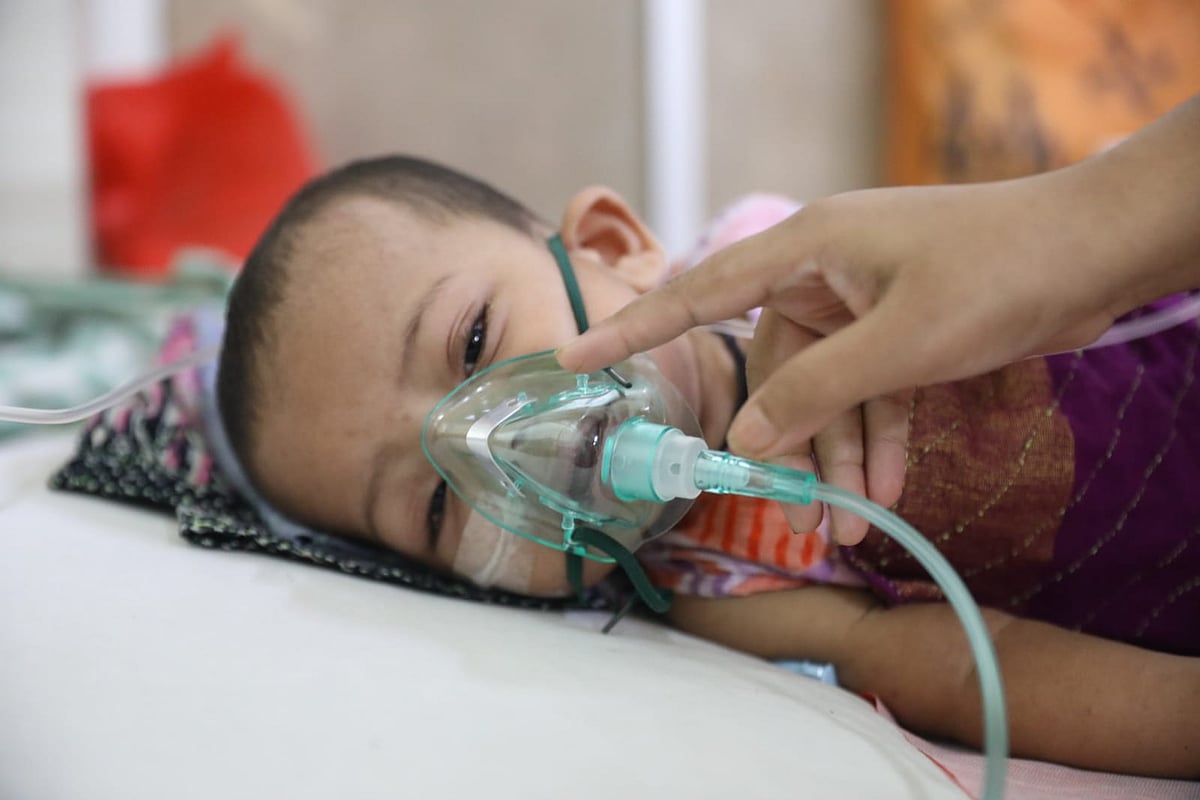
Photo Collected
Bangladesh’s public health system is again grappling with a severe shortage of measles testing kits, hindering its ability to process thousands of samples amid a widespread outbreak. The Public Health Institute (PHI), the country’s sole facility for measles diagnosis, has amassed nearly 5,000 pending samples from across the nation due to the scarcity.
Officials at the PHI in Mohakhali, Dhaka, confirmed Tuesday that the lack of kits is severely limiting their diagnostic capacity. Dr. Mominur Rahman, director of the PHI, told Prothom Alo that the institute can currently process only about 100 samples daily, declining to elaborate further on the extent of the crisis.
Repeated attempts to contact Professor Probhat Chandra Biswas, Director General of the Directorate General of Health Services, for comment on the kit shortage were unsuccessful. He did not answer calls or respond to text messages.
The backlog of samples is expected to grow as the current kit supply remains insufficient. The increased public demand for measles testing, driven by the disease’s widespread prevalence, adds urgency to the situation. Parents are seeking confirmation for children exhibiting measles-like symptoms, and tests are crucial for determining causes of death in infants and guiding hospital discharge decisions, which are currently prolonged by delayed results.
This current crisis echoes a similar issue faced by the health division last month. On April 19, Dr. Rahman informed Prothom Alo that the World Health Organization (WHO) is the exclusive supplier of measles detection kits for the PHI laboratory, with no alternative sources used. Each kit can process 90 samples, and the PHI has a daily capacity of 300 tests.
PHI officials reported that the WHO supplied 60 kits on the evening of April 19 and had initially promised another 100 kits by April 30 or May 1, a commitment it failed to meet. A WHO official, when contacted Tuesday, stated that 100 kits are expected within one to two weeks. Both WHO and PHI officials confirmed that the WHO’s South-East Asia Regional Office in Delhi has decided to urgently provide Bangladesh with 30 measles detection kits, which are anticipated to arrive within a week.
Several public health experts monitoring the measles situation have voiced concerns to Prothom Alo, citing a perceived lack of urgency from the government in procuring kits and from development partners in ensuring their timely supply. They emphasized the critical need for swift action during such an emergency.
The PHI had foreseen a potential kit shortage, having formally requested 60 kits from the WHO in a letter dated February 8. Those kits were finally received on April 19, demonstrating a significant delay in supply.
“It is unfortunate that there are no disease detection kits during this measles outbreak,” commented public health expert Abu Jamil Faysal to Prothom Alo. He asserted that such a situation would not have arisen if the health division and the WHO’s Dhaka office had performed their duties adequately, stressing that they cannot evade responsibility. Faysal urged the exploration of alternative kit sources to prevent future recurrences.
In the 24 hours leading up to Tuesday morning, six more children died in Bangladesh from measles or measles-like symptoms. Two confirmed measles cases died in Dhaka, while four children with measles-like symptoms died—one each in Khulna and Rajshahi, and two in Sylhet. These figures were released in the Directorate General of Health Services’ measles report on Tuesday.
Since March 15, a total of 263 children have died from measles or measles-like symptoms across the country, with 54 of these deaths confirmed as measles cases. During the same period, 42,979 children have exhibited measles symptoms, leading to 29,831 hospital admissions. Of those hospitalized, 26,368 have been discharged after recovery.
0%
0%
0%
0%