
Chittagong City Corporation faces scrutiny over mosquito pesticide contract awarded to former adviser’s firm

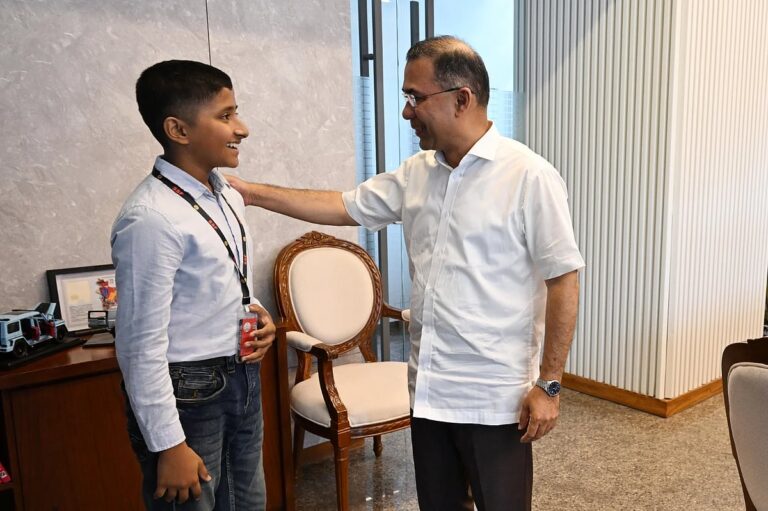
Photo Collected
Chittagong City Corporation’s procurement of a specialized mosquito-control larvicide has sparked debate over potential conflicts of interest, centering on a 36.3 million taka contract awarded to a firm owned by a former interim government advisor.
The controversy involves the acquisition of BTI (Bacillus thuringiensis israelensis) last September to bolster municipal efforts against the city’s persistent mosquito population. The contract was awarded to Farash Pest Control, a Chittagong-based firm owned at the time by Farooq-e-Azam, who served as an advisor in the interim government.
বিজ্ঞাপন
The issue gained prominence following comments from Prime Minister Tarique Rahman, who recently rejected a proposal for the Mayor of Chittagong, Shahadat Hossain, and four officials to travel to Florida to study mosquito-control techniques. The Prime Minister suggested that such measures could be developed locally without the need for international travel. Further scrutiny revealed that the Florida-based firm funding the proposed trip, Valent BioSciences LLC, is the manufacturer of the BTI provided to the city by Farash Pest Control.
According to municipal records, the city corporation initiated an e-tender process in August 2023. Two firms participated: Farash Pest Control and Dhaka-based Messers Ahsania International. Ahsania International submitted a lower bid of 31 million taka but was disqualified for failing to meet mandatory technical requirements. Consequently, the contract was awarded to Farash Pest Control for 36.3 million taka, covering the delivery of 1,100 kilograms of BTI.
বিজ্ঞাপন
City officials maintain that the procurement followed standard procedures. Captain Ikhtiar Uddin Ahmed Chowdhury, the corporation’s chief cleaning officer, stated that the city was particularly cautious to avoid the supply fraud that plagued similar initiatives in North Dhaka years ago. He emphasized that the contract was awarded because Farash Pest Control was confirmed as the authorized local agent for the American manufacturer, noting that Farooq-e-Azam had reportedly transferred management responsibilities of his firm to others before assuming his role as an advisor.
Addressing the controversy, Farooq-e-Azam insisted that the procurement complied with all legal regulations and dismissed allegations of a conflict of interest. He stated that he had not been involved in the operational management of the business for some time prior to his government service.
However, civil society representatives have questioned the optics of the deal. Akhtar Kabir Chowdhury, president of the Chittagong chapter of the advocacy group Shujan, argued that it was inappropriate for a sitting advisor’s company to participate in a government tender process, particularly as the firm had no prior history of supplying pesticides to the city corporation.
The debate highlights a broader shift in municipal procurement, which has historically been marred by irregularity. During the previous administration, mosquito-control supplies were frequently procured through non-competitive, direct-purchase methods. Records show that between 2019 and 2022, approximately 7.5 million taka worth of pesticides were supplied by a firm linked to a former local political official without an open tender. Even in early 2024, officials continued to bypass standard procurement rules by splitting orders into smaller lots to circumvent competitive bidding thresholds, a practice traditionally reserved only for emergency situations.
0%
0%
0%
0%


