

Cabinet approves Bank Resolution amendment, new visa policy and Human Rights Commission Act
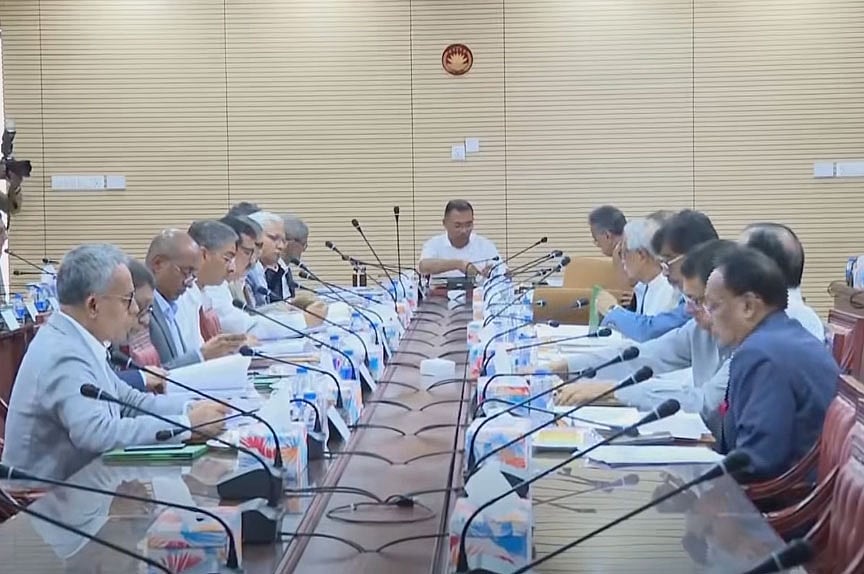
Photo Collected
The Cabinet on Monday granted principle and final approval to the draft Bank Resolution (Amendment) Act, 2026, alongside new frameworks for visa policies and the National Human Rights Commission. The decisions were finalized during the 16th Cabinet meeting held at the Secretariat, presided over by Prime Minister Tarique Rahman.
The Bank Resolution (Amendment) Act, 2026, seeks to repeal Section 18A of the existing Bank Resolution Act, 2026. The section, which was introduced to foster market-based restructuring, address capital shortages, and protect depositor interests, is being removed due to a lack of applications from eligible individuals or entities meeting its specific criteria. The original Bank Resolution Ordinance, 2025, was initially promulgated to mitigate risks such as liquidity crises and insolvency within scheduled banks, later transitioning into law following recommendations from a parliamentary special committee.
In a separate move, the government approved the Visa Policy, 2026, aimed at streamlining entry and exit procedures for foreign nationals. This policy is designed to attract foreign investment, bolster the tourism and hospitality sectors, and ensure national security while maintaining diplomatic balance. Replacing the 2006 regulations, the new policy expands visa categories from 33 to 34, creating a modernized, service-oriented immigration framework. Implementation will be managed collectively by the Ministry of Home Affairs, the Department of Immigration and Passports, and Bangladesh’s diplomatic missions abroad.
The Cabinet also approved the draft National Human Rights Commission Act, 2026, reinforcing the state’s commitment to upholding human rights in accordance with international treaties and the United Nations Universal Declaration of Human Rights. The act mandates a commission led by a chairperson and four commissioners, ensuring at least one member is a woman and prioritizing representation from ethnic and marginalized communities.
Key provisions of the new Human Rights Commission Act include the formalization of a selection committee comprising university professors and civil society representatives. The commission is granted enhanced powers, including the authority to issue interim orders to ensure the immediate safety of victims and prevent further harm during investigations. Furthermore, the legislation establishes a National Preventive Mechanism unit to monitor and prevent custodial torture, deaths, and enforced disappearances, aligning with the Optional Protocol to the UN Convention against Torture.
0%
0%
0%
0%
More News from Local