

Bangladeshs Bangabandhu Tunnel Fails to Attract Holiday Traffic Despite Infrastructure Expansion
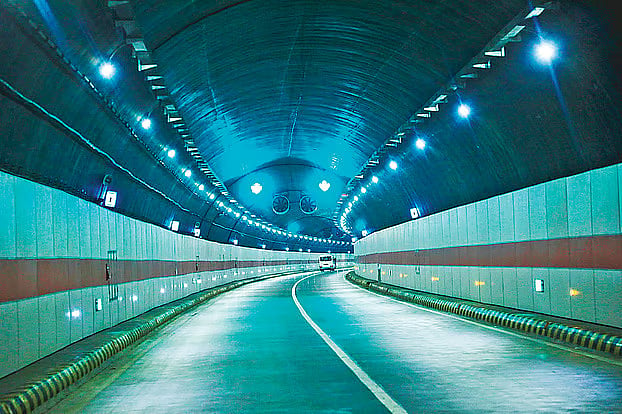
Photo Collected
While major infrastructure projects like the Padma and Jamuna bridges experience a massive surge in traffic during national holidays, Bangladesh’s first underwater tunnel, the Bangabandhu Sheikh Mujibur Rahman Tunnel, continues to see negligible changes in vehicle flow. Data from the Bangladesh Bridge Authority reveals that despite the festive rush that typically doubles or triples traffic on the country’s major bridges, the tunnel beneath the Karnaphuli River fails to see a significant uptick in usage.
During the recent seven-day Eid-ul-Adha holiday, 31,889 vehicles passed through the tunnel, averaging approximately 4,555 vehicles per day. This figure is only marginally higher than the daily average of 3,800 to 3,900 vehicles recorded during non-holiday periods. In contrast, the Padma Bridge accommodated 244,000 vehicles during the same holiday window, while the Jamuna Bridge handled over 258,000, with both structures seeing daily traffic spikes reaching up to 50,000 vehicles.
বিজ্ঞাপন
Constructed at a cost of 10.69 billion taka and opened on October 29, 2023, the tunnel was projected in feasibility studies to handle an average of 19,669 vehicles daily. Since its inauguration, traffic volume has consistently fallen well short of these targets. As of May 23, total traffic through the tunnel reached 3.62 million vehicles, translating to an average of 3,868 vehicles per day, generating roughly 1.05 billion taka in total toll revenue.
Bridge Authority officials attribute the stagnation to several structural and economic factors. During public holidays, heavy goods-carrying vehicles are restricted on highways, which naturally limits the number of industrial vehicles utilizing the tunnel. Furthermore, the expected industrial expansion on the Anwara side of the river, the full operational status of the Matarbari deep-sea port, and the realization of the “One City, Two Towns” urban planning model have yet to materialize. Road connectivity, particularly the expansion of the route from Anwara to Chandanaish, also remains a bottleneck.
বিজ্ঞাপন
Transportation sector stakeholders note that the tunnel currently lacks utility for long-distance transit. Buses traveling from Dhaka to tourist destinations like Cox’s Bazar and Bandarban bypass the tunnel to maintain access to passenger counters located within Chittagong city, such as GEC intersection and Bahaddarhat. By using the Shah Amanat Bridge instead, operators remain in the urban loop to secure passengers.
Industry experts emphasize that without aggressive urban development and large-scale industrialization in Anwara, significant increases in traffic remain unlikely in the short term. According to transport association leaders, the tunnel’s viability hinges on integrating it into the city’s public transport network and establishing new routes that effectively bypass the congested city center, a transformation expected to take at least two to three years.
0%
0%
0%
0%