Bangladesh signals diplomatic friction with India over political rhetoric from exiled leadership
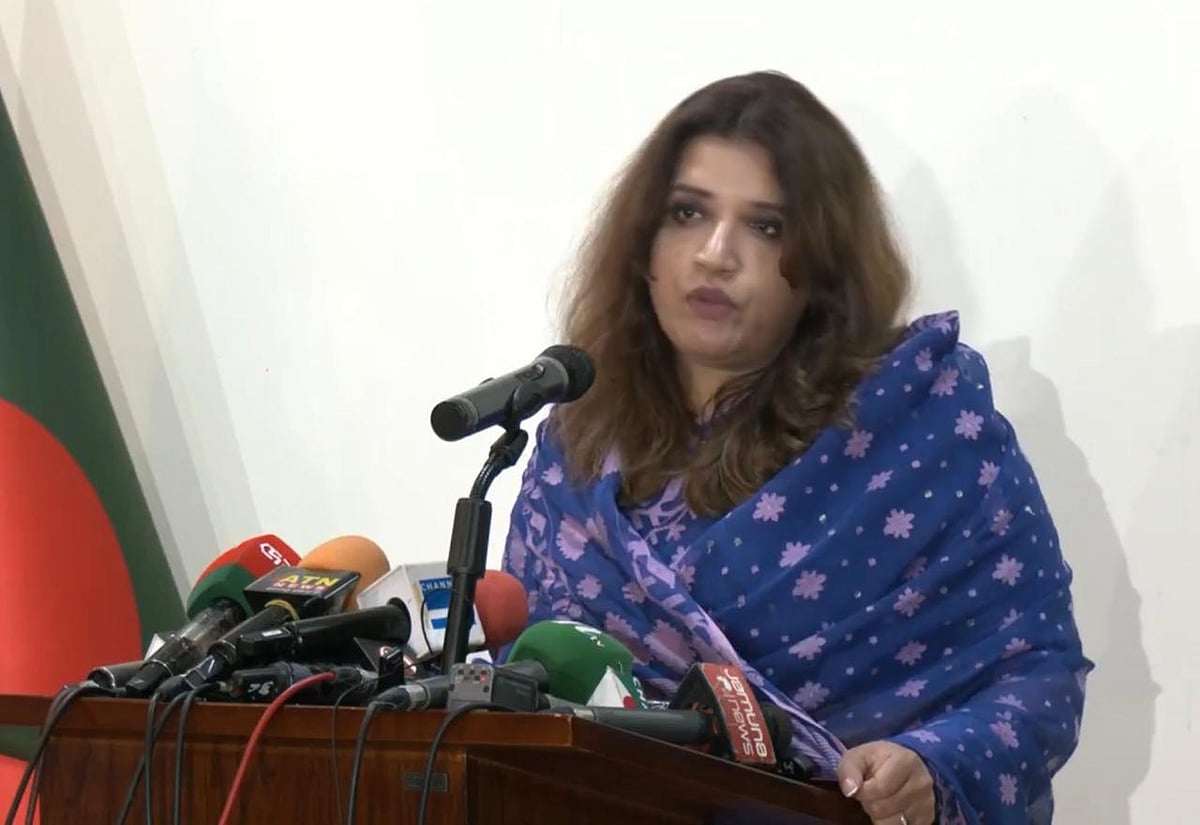
Photo Collected
Bangladesh’s Minister of State for Foreign Affairs, Shama Obaid, has urged the Indian government to clarify its stance on bilateral relations following recent incidents in New Delhi involving former Prime Minister Sheikh Hasina. The minister expressed deep concern over the platform provided to a convicted individual to propagate allegations of rising militancy in Bangladesh, warning that such actions from Indian soil jeopardize the diplomatic ties between the two neighbors.
Addressing reporters at the Ministry of Foreign Affairs on Thursday, Obaid emphasized that the decision on the future of the partnership now rests with New Delhi. She dismissed allegations of militancy as a continuation of political narratives employed by the Awami League during its 17-year tenure, characterizing them as a distraction from the human rights abuses and extrajudicial killings that occurred under the previous administration. According to the state minister, the continued presence of these figures in India and their ability to disseminate “conspiratorial narratives” is causing significant distress among the Bangladeshi public.
While acknowledging that both nations share a desire for improved relations, Obaid stressed that such ties must be built on the foundations of equality, mutual respect, and the protection of national interests. She noted that the issue transcends simple diplomatic friction, as it directly impacts the sentiments of the families of those who participated in the July protests and the broader Bangladeshi population. She called on India to act with greater sensitivity, cautioning that allowing these provocations to persist could complicate future high-level cooperation.
The diplomatic tension coincides with ongoing bilateral engagements. Despite the recent protest lodged by Dhaka, Indian High Commissioner Pranay Verma met with the Bangladeshi Minister of Power, Energy and Mineral Resources to discuss the continuity of gas and electricity imports. Obaid cited this meeting as evidence of the multifaceted nature of the relationship, confirming that dialogue regarding energy, water sharing, and border management remains active.
Regarding potential high-level interactions, including a possible invitation for Chief Adviser Muhammad Yunus to attend the upcoming BRICS summit, Obaid noted that Bangladesh remains interested in participating in multilateral forums, particularly given its current presidency of BIMSTEC. She clarified that any decision on travel would depend on the Chief Adviser’s schedule, and urged the public to wait for further updates as formal correspondence between the two governments continues.
Ultimately, Obaid underscored that while Bangladesh is committed to resolving bilateral issues through dialogue and negotiation, the burden of ensuring a stable and constructive partnership now lies with the Indian government. She reiterated that the nation cannot remain anchored to the past and must focus on the strategic imperatives of the present.
0%
0%
0%
0%