


Bangladesh Moves to Rebrand RAB Under New Police-Led Legal Framework
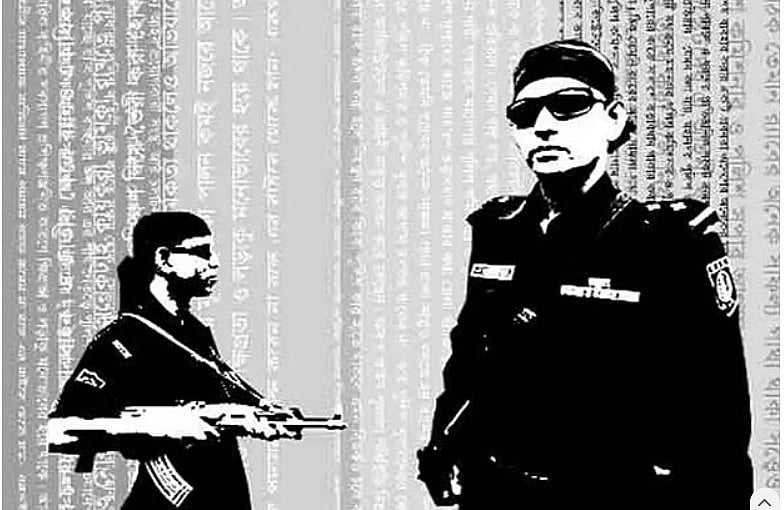
Photo Collected
The Bangladeshi government has initiated a formal legislative process to rename the Rapid Action Battalion (RAB), a move that aims to reorganize the elite force under a new legal framework while maintaining its controversial structural reliance on military personnel. According to sources within the Ministry of Home Affairs, the draft legislation proposes rebranding the unit as either the Special Response Force (SRF) or the Special Response Battalion (SRB), effectively transitioning it into a specialized unit under the direct supervision of the Bangladesh Police.
The proposal follows growing international and domestic pressure to dissolve the force, which has faced persistent allegations of human rights abuses, including extrajudicial killings and enforced disappearances. Organizations such as the United Nations and the government’s own Commission of Inquiry on Enforced Disappearances have previously advocated for the dissolution of RAB. While the rebranding suggests a departure from the current status quo, critics argue that the draft law essentially preserves the force’s core identity by transferring its assets, personnel, and operational mandates to the new entity.
বিজ্ঞাপন
Central to the ongoing debate is the government’s decision to retain the authority to depute members from the armed forces and other security services into the new unit. Human rights advocates, including activist Nur Khan, contend that law enforcement should remain a strictly professional police function. They argue that integrating military-trained personnel into civilian law enforcement creates systemic risks regarding the use of force, interrogation tactics, and the protection of civil liberties. Despite these concerns, the draft legislation maintains the unit’s multi-force structure, mirroring the composition of the current battalion.
The draft, which comprises 29 sections across nine chapters, details a broad mandate for the proposed unit. Its responsibilities include internal security, intelligence gathering, the recovery of illegal arms and narcotics, and the combatting of organized, cyber, and human trafficking crimes. Critically, the legislation grants the force powers to conduct searches and arrests without warrants under specific circumstances. Unlike the current RAB, which largely defers case investigations to the police or other agencies, the new framework empowers this unit to function as a comprehensive criminal investigation body.
বিজ্ঞাপন
Internal accountability mechanisms remain a point of contention. The draft proposes a five-member grievance redressal committee to investigate complaints against unit members. However, human rights experts note that because four of the five committee members are drawn from the police and the home ministry, the body may lack the independence required to ensure meaningful oversight. The final committee member, a legal or human rights expert, is to be appointed by the Inspector General of Police, further raising questions about the committee’s ability to act impartially.
The Home Ministry is expected to hold a final consultation with relevant stakeholders on July 29 to review the draft. As the process moves forward, the disconnect between the government’s focus on rebranding and the civil society demand for fundamental structural reform remains a significant challenge. For many, the transition appears to be a procedural overhaul rather than the substantive institutional change needed to address long-standing accountability concerns.
0%
0%
0%
0%