


Bangladesh Government Warns Recruiting Agencies Against Syndicates and Migrant Exploitation
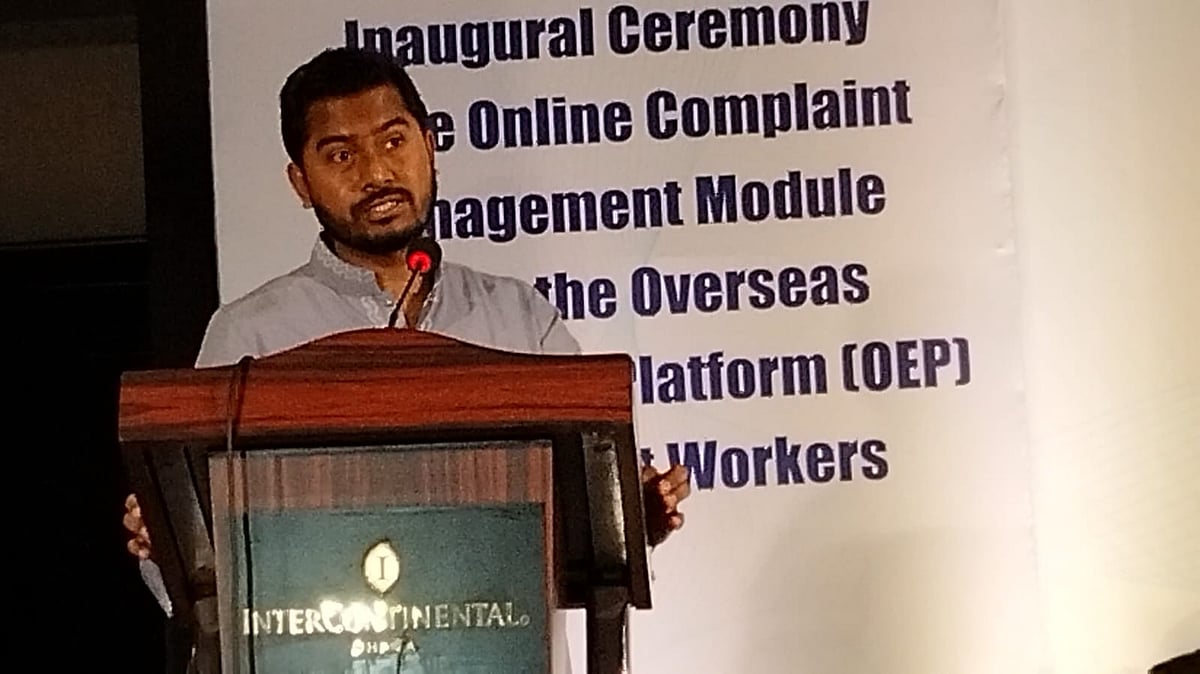
Photo Collected
State Minister for Expatriates’ Welfare and Overseas Employment, Md. Nurul Haque, has issued a stern warning to recruitment agencies engaged in syndicates and fraudulent practices, vowing that the government will take decisive action against those exploiting migrant workers. Speaking at an event in Dhaka on Thursday, the minister cautioned that those who have built illicit syndicates to profit from the desperation of job seekers must immediately cease their activities or face severe consequences.
The warning came during the launch of an online complaint management module, a joint initiative by the Bureau of Manpower, Employment and Training (BMET) and the Refugee and Migratory Movements Research Unit (RMMRU). The platform is designed to provide victims and their families with a streamlined, transparent mechanism for grievance redressal.
বিজ্ঞাপন
Highlighting the systemic abuse, the minister cited the case of workers traveling to Singapore, where agencies allegedly extort between 1.2 million and 1.5 million taka from each individual under the guise of training and processing fees. Haque emphasized that these illicit charges are not state-sanctioned but are the byproduct of predatory syndicates profiting hundreds of millions of taka. He confirmed that intelligence agencies, including the Detective Branch, are now monitoring these criminal networks, and agencies failing to meet licensing standards will face immediate cancellation.
The minister also addressed the proliferation of deceptive advertisements on social media promising employment abroad, particularly in Malaysia. He has instructed the BMET to utilize mobile courts to crack down on unauthorized recruiters. Furthermore, he condemned reports of extortion within the Expatriate Welfare Bank, noting that corrupt practices involving the solicitation of bribes for loan approvals will no longer be tolerated. Of the nearly 3,000 licensed agencies in the country, the minister warned that only a small fraction operate ethically, and the government intends to prune the sector to ensure accountability.
বিজ্ঞাপন
Professor Tasneem Siddiqui, executive director of RMMRU, underscored the necessity of the digital intervention, citing research that indicates 51 percent of migrants face some form of exploitation. Her data reveals that 19 percent of applicants failed to reach their destinations despite paying fees, while 32 percent reported suffering abuse abroad. Since 2022, these systemic risks have contributed to a 41 percent decline in female migration by 2025. She expressed optimism that the new digital platform will improve compensation recovery efforts tenfold by allowing migrants to file and track complaints remotely.
The online module integrates all District Employment and Manpower Offices into a unified digital framework, enabling complainants to upload evidence and receive real-time notifications on the status of their cases. BMET officials will manage the entire lifecycle of an investigation, from registration and mediation to final resolution, within the secure system.
BMET Director General Jamil Ahmed noted that the agency successfully facilitated 100 million taka in compensation for workers through 500 manual case resolutions in 2025 alone. With the launch of this digital portal, officials expect to significantly improve both the speed and transparency of service delivery, ensuring that migrants no longer need to endure the bureaucratic hurdles of repeated physical office visits.
0%
0%
0%
0%