Bangladesh Finance Minister Urges Monetization of Arts to Drive Creative Economy

Photo Collected
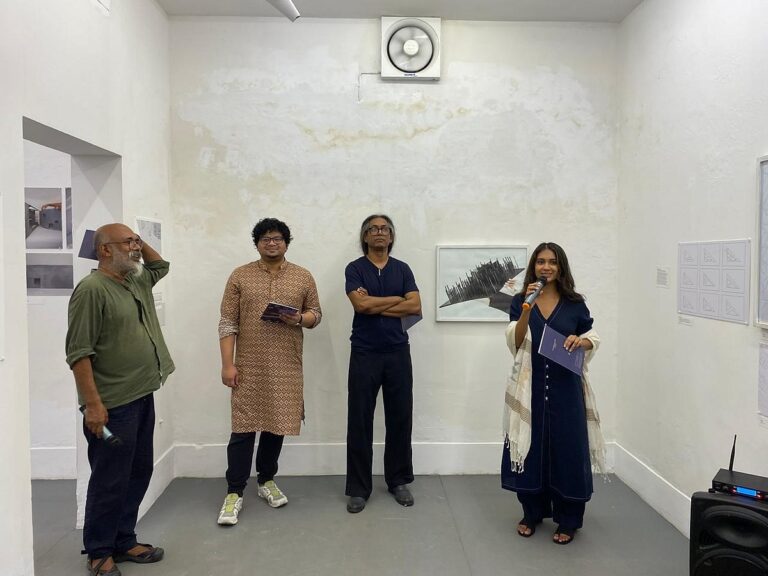
Finance and Planning Minister Amir Khasru Mahmud Chowdhury has underscored the necessity of monetizing artistic endeavors to ensure the sustainability of both the arts and the artists, arguing that the lack of institutional platforms currently hinders the growth of a robust creative economy in Bangladesh. Speaking as the chief guest at the inauguration of the “The Long Present” art exhibition at Bengal Shilpalay in Dhaka, the minister asserted that without transforming creative output into viable economic commodities, artists struggle to survive and cultural development stagnates.
The exhibition features 46 works by 15 prominent artists, including Hashem Khan, Rafiqun Nabi, Shishir Bhattacharjee, and Kanak Chanpa Chakma. Organized by Bengal Shilpalay, the showcase aims to explore how time and experience reflect on the canvas, tracing artistic journeys from the 1960s to the present day. The exhibition is open to the public daily from 4:00 p.m. to 8:00 p.m. until July 4.
বিজ্ঞাপন
Minister Chowdhury outlined the government’s strategic vision to integrate the creative sector—ranging from rural artisans to theater performers—into the mainstream economy. He highlighted the creation of a centralized Design Center intended to provide technical support and branding assistance to local craftsmen. By adopting models similar to Thailand’s “One Village One Product” initiative, the government aims to increase the value of local goods, such as traditional Shitalpati mats, through improved design and global market access.
Citing the economic model of London’s theater district, the minister noted that a fully integrated creative industry functions as a significant contributor to a nation’s GDP. He urged for a collective effort between the government, the private sector, and non-governmental organizations to leverage Bangladesh’s cultural heritage—such as folk music and Lalon Geeti—as “soft power” that can be successfully monetized on the global stage.
বিজ্ঞাপন
Echoing the importance of these initiatives, renowned artist Rafiqun Nabi expressed optimism that such multifaceted exhibitions would foster greater public interest and encourage the younger generation to engage with art and literature for cognitive development. Bengal Foundation President Abul Khair also commended the government’s efforts, noting that this represents the first time in the country’s history that creative economy integration has been prioritized as a national policy. The event, which also featured contributions from artists Mohammad Eunus and Kanak Chanpa Chakma, was moderated by Bengal Foundation Director General Luva Nahid Chowdhury and opened with a documentary detailing the foundation’s long-standing support for four generations of Bangladeshi artists.
0%
0%
0%
0%