
Bandarban Mango Growers Face Financial Ruin as Thousands of Tons Rot Unsold
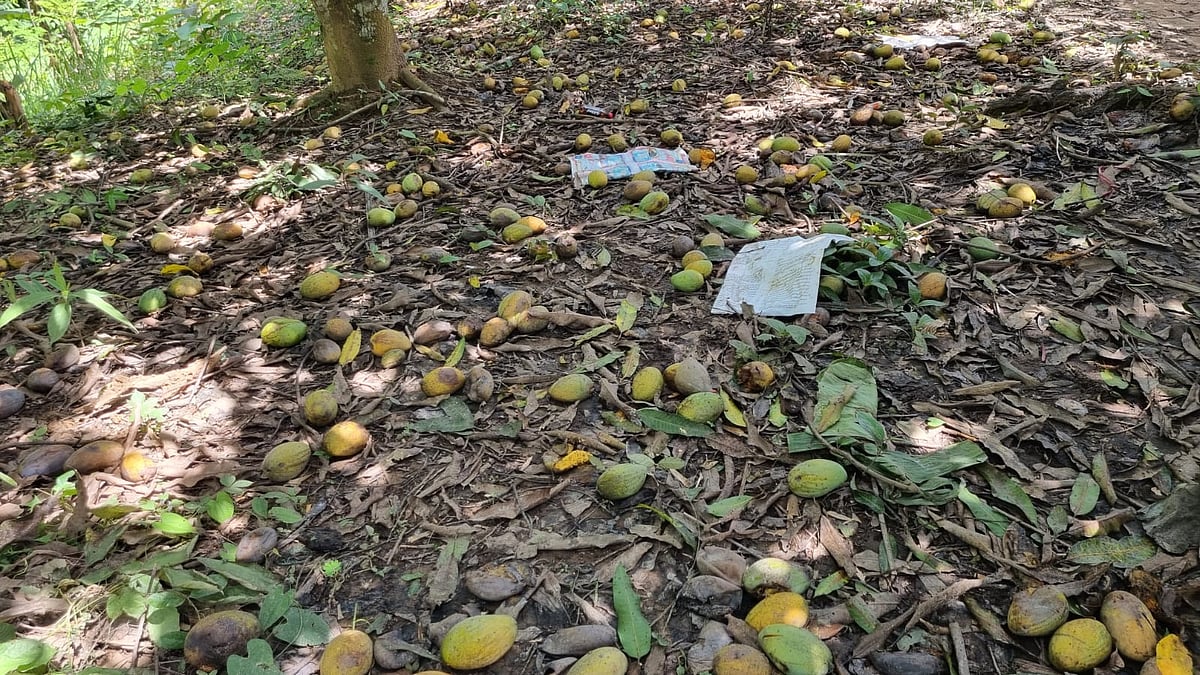
Photo Collected
Hundreds of fruit farmers in the remote hill tracts of Bandarban, Bangladesh, are facing severe financial losses as thousands of maunds of locally grown Rangoyai mangoes rot on the ground due to a lack of wholesale buyers. Farmers in Ruma and Rowangchhari upazilas report that despite the fruit reaching maturity, intermediaries are refusing to purchase the harvest, citing low market demand and prohibitive transportation costs.
At Chandapara, located 32 kilometers from the district headquarters, farmer Atuimang Marma has watched his investment vanish. His 12-acre orchard, featuring 2,000 trees, is currently carpeted with decaying fruit. Marma estimates that roughly 1,500 maunds of mangoes have already perished after waiting in vain for wholesalers who never arrived. Similar scenes are playing out across several remote villages, including Chuanlupara, Thoaibotong, and Seprupara, where farmers report that even when buyers show interest, they offer as little as 450 to 500 taka per maund—a price that fails to cover the labor costs of harvesting and transporting the fruit to the main road.
বিজ্ঞাপন
The crisis is exacerbated by the logistical isolation of the orchards. Fruit traders note that the cost of transporting a three-ton truck of produce from these remote areas often exceeds 6,000 taka due to informal levies and high transit fees along the hill roads. With current wholesale market prices hovering around 700 to 800 taka per maund, traders argue that purchasing from remote farmers at lower rates is economically unviable, leaving growers like Palash Kanti Tanchangya to watch their harvests wither while neighboring varieties like Amrapali and Bari continue to sell.
According to data from the Department of Agricultural Extension (DAE), mangoes are cultivated across 25,860 acres in Bandarban, with local Rangoyai varieties accounting for 60 percent of the total output. While the region’s climate is well-suited for this specific cultivar, its naturally acidic profile makes it less desirable to consumers compared to sweeter commercial varieties.
বিজ্ঞাপন
Local agricultural officials remain cautiously optimistic, noting that Rangoyai mangoes have a later ripening cycle that can extend into the end of the traditional mango season. Abu Nayeem Mohammad Saifuddin, Deputy Director of the DAE in Bandarban, suggests that as other varieties disappear from the market, demand for the Rangoyai could rise. However, for many small-scale farmers, this late-season shift may come too late to prevent total ruin for a season’s worth of labor.
0%
0%
0%
0%