


Authorities Urged to Exercise Caution in Compensating Flood-Affected Farmers
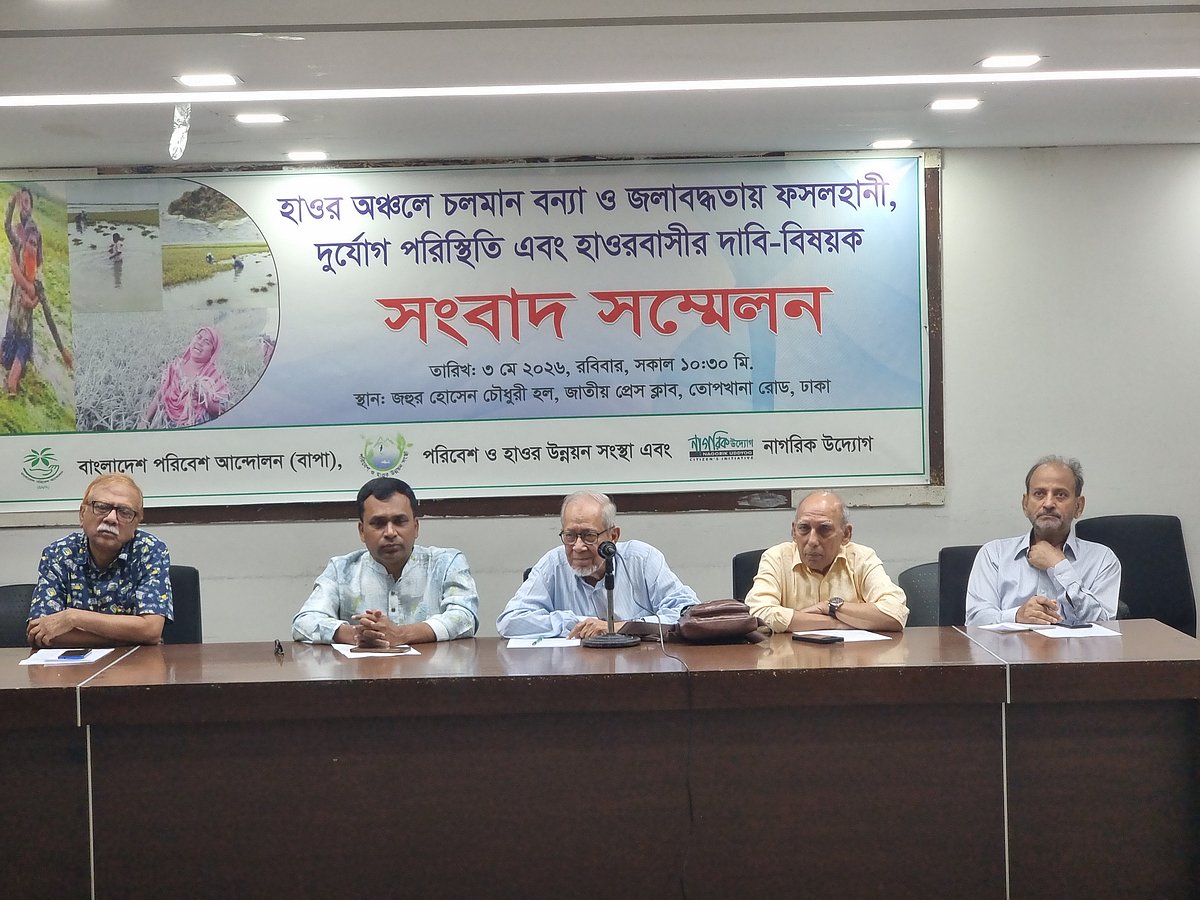
Photo Collected
The devastation of crops in Bangladesh’s Haor region, caused by recent floods and waterlogging, poses a grave threat to national food security, speakers warned at a press conference in Dhaka on Sunday. Environmental researchers and activists emphasized the critical need for impartiality and caution in compiling lists of affected farmers to ensure aid reaches those genuinely in need and to prevent social crises such as child marriage and school dropouts.
The joint press conference, organized by the Bangladesh Poribesh Andolon (BAPA), Poribesh O Haor Unnayan Songstha (Environment and Haor Development Organization), and Nagorik Udyog (Citizen Initiative), focused on the ongoing disaster situation in the Haor areas and the demands of its residents.
বিজ্ঞাপন
Gowhar Nayeem Wara, a writer and researcher, highlighted that the primary burden of crop loss has fallen on sharecroppers, who require urgent assistance. He also stressed the absence of local government in the region, asserting that its swift establishment is crucial for effective disaster management and the area’s overall development.
Shamsul Huda, Executive Director of ALRD, described the crisis as national, not merely local, and warned of dire future consequences if immediate, effective measures are not taken. The crop failure is disrupting farmers’ livelihoods, their ability to repay loans, and access to education and healthcare. Furthermore, a shortage of fodder for livestock is forcing farmers to sell their cattle at distressingly low prices.
বিজ্ঞাপন
The current situation stems from three spells of rainfall between mid-March and late April, which, coupled with breaches in crop protection dams, submerged at least 75,000 hectares of Boro rice paddies. An additional 800 hectares were damaged by hailstorms, according to a written statement presented by Kasimir Reza, President of Poribesh O Haor Unnayan Songstha. He cautioned that continuous rainfall and flooding could exacerbate the damage.
To address the crisis, a 15-point demand was put forth, including year-round family support of 30 kg of rice and 1,000 Bangladeshi Taka for affected farmers. Other demands include ensuring water flow through dredging rivers, canals, and bills; halting unplanned road and embankment construction; strict action against irregularities and corruption in crop protection dams; and adopting science-based research and long-term planning.
Further demands encompass the construction of effective sluice gates to resolve waterlogging, direct government procurement of at least 1 million tons of paddy, not rice, from Haor farmers, interest-free loans and loan rescheduling, establishment of community threshing centers and dryers, effective measures against lightning strikes, cancellation of water body leases, creation of alternative employment opportunities, and increased allocation from the climate fund for the Haor region.
Professor Nur Mohammad Talukdar, presiding over the conference, characterized the current crisis as not solely natural but also policy, planning, and management-related. He identified reduced river navigability, unplanned infrastructure, delays in constructing crop protection dams, and corruption as key factors escalating the situation, calling for permanent solutions.
0%
0%
0%
0%