

4,000 irrigation pumps are not working due to diesel crisis and load shedding, worry about Boro paddy plantation
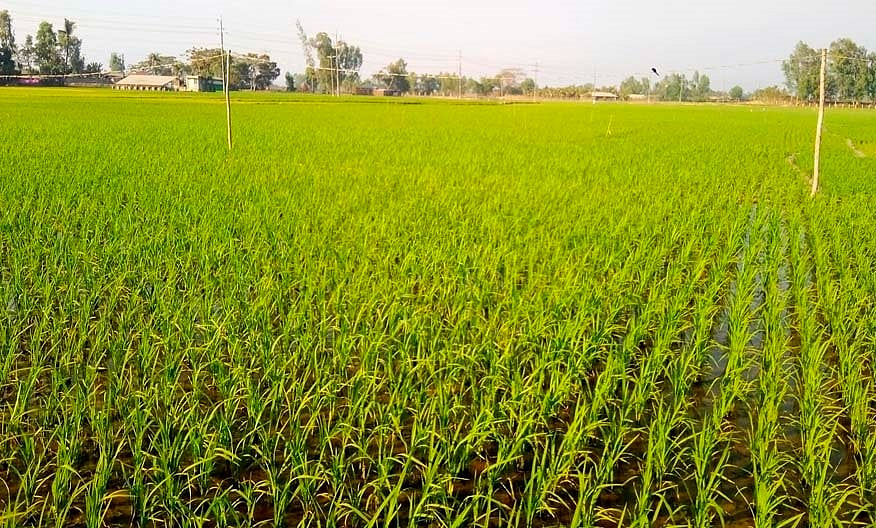
Photo Collected
The farmers of Cox’s Bazar have also suffered due to the energy crisis that started after the Iran war. Irrigation pumps are not running due to frequent load-shedding in addition to non-availability of diesel as required. Paddy fields have dried up in many places. In this situation, farmers are worried about boro cultivation.
Farmer Saiful Alam (48) cultivates boro rice on three acres of land in Nayapara of Khurushkul Union of Cox’s Bazar Sadar Upazila. Paddy seedlings planted in mid-December need to be irrigated twice a day. He installed a 5 horse (horse power) diesel driven shallow pump on one side of the field to draw water from the ground. Running a shallow pump for one hour with 3 liters of diesel would irrigate 3 acres of land. But due to diesel crisis, he could not run the pump for even one hour continuously for a month. Saiful Alam said, if this situation continues for the next 10-12 days, most of the paddy plants will die.
বিজ্ঞাপন
Not only Nayapara, Palpara, Taitaya, Muhuripara, Banglabazar, Kharulia areas of Khurushkul of the upazila have been seen recently. The land has started to crack under the intense sun. Meanwhile, the irrigation crisis has started.
According to the information provided by the Cox’s Bazar district office of the Directorate of Agricultural Extension, there are 7 thousand 146 irrigation pumps in Teknaf, Ukhia, Ramu, Eidgaon, Maheshkhali, Kutubdia, Pekua, Chakaria and Sadar upazilas. Among them there are 10 deep pumps of 5-20 horses, 4 thousand 852 shallow pumps of 1-5 horses and 2 thousand 284 LLP (low lip pumps) of 5-10 horses. 70 percent of the pumps are diesel powered, the remaining 30 percent run on both electricity and diesel. But due to fuel shortage and frequent load shedding, pumps are not running properly. Irrigation activities are severely disrupted.
বিজ্ঞাপন
According to the information provided by the upazila-based agricultural association leaders, more than 4,200 irrigation pumps are currently closed due to the diesel crisis. As a result, it is not possible to provide proper water supply to at least 25 thousand hectares of land. Boro rice is being cultivated in more than 55 thousand hectares of land in the district.
Deputy Assistant Agriculture Officer of the Directorate of Agriculture Cox’s Bazar office Ashish Kumar told Prothom Alo that there has been a severe shortage of fuel oil in the district for 20-25 days. More than half of the pumps are not functioning properly due to non-availability of diesel as per demand. Farmers told them that irrigation activities are being disrupted. Apart from this, water supply is also disrupted due to frequent load shedding. Some pumps are electric-powered.
Ashish Kumar said, on an average, 5 liters of diesel is required to run a deep pump, 4 liters for a low lip pump and 2 liters for a shallow pump. Cultivation of Boro paddy has started in last December, paddy will ripen in May-June. If the energy crisis worsens, there is fear that the target in rice production will not be achieved.
According to the information of the Agriculture Department, 55 thousand 700 hectares of boro rice is being cultivated in 9 upazilas of the district. The target of rice production from the field is 2 lakh 35 thousand 752 metric tons. Last season, 2 lakh 35 thousand 265 metric tons of rice was produced on the same land.
Farmer Sadek Hossain cultivates boro on two acres of land in Rangikhali village of Hnila Union of Teknaf. Last year he cultivated paddy with canal water. Now the water in the canal has dried up. They have been going for so long with water supply from other people’s irrigation pumps. For 20 days water supply is not being taken properly from the pump. It gives the plants a reddish color. Sadekur Rahman said, if water supply is not provided properly in the next 10-15 days, the tree may die.
Abdul Nabi, a farmer of the same area, said that he has started farming by leasing 6,000 taka per kani (40 cents) of land for boro cultivation. 36 thousand rupees have to be paid for lease in 6 Kani. He spent 3000 taka for irrigation supply and 18000 taka for 6 takas, labor cost 10000 taka, urea fertilizer, pesticides total 90 thousand taka. But if the paddy production is disrupted, he will have to sit on the road. 1 thousand 800 hectares are being cultivated in Teknaf upazila. The same crisis has occurred in Ramu, Ukhia, Chakaria, Eidgaon, Pekua upazilas.
Farmers said that 80 percent of Boro farming is dependent on irrigation water. If not irrigated on time, rice seedlings may die midway. Abbas Uddin, a farmer of Fatekhanrkul in Ramur, said that he did not get 1 liter of diesel after going to three filling stations in the upazila in the last few days. He bought diesel from the retail market at Tk 150 per liter and supplied water by running the pump for a few days. The crisis is increasing day by day.
Source: Prothom Alo Bangla
0%
0%
0%
0%