Study highlights critical need for paternal involvement in early childhood development as 30 percent of Bangladeshi children face growth delays

Photo Collected
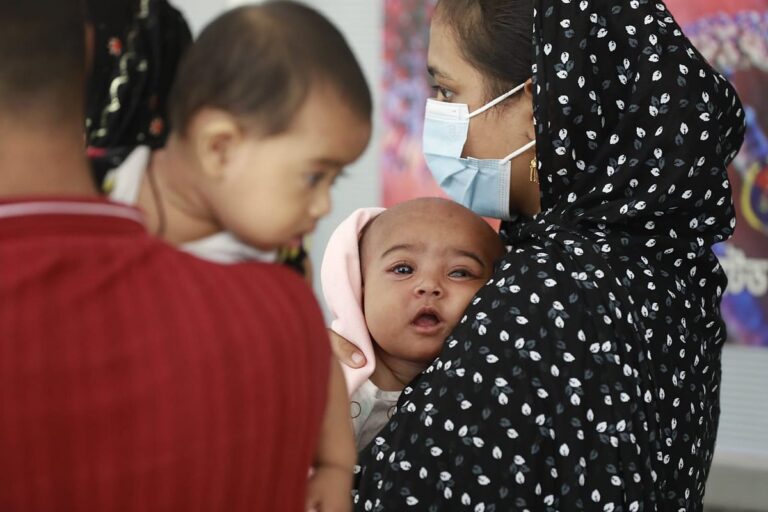
A national study has revealed that 30 percent of children in Bangladesh are not achieving optimal development, highlighting an urgent need for greater paternal involvement and integrated early childhood care. Findings presented at a workshop in Dhaka on Thursday indicated that while maternal care remains primary, only 7 percent of fathers actively participate in the daily caregiving of their children.
The event, titled “Evaluation of Integrated Early Childhood Care and Development Services through the Primary Healthcare System in Bangladesh,” was jointly organized by the Institute of Public Health and Nutrition, UNICEF, and the International Centre for Diarrhoeal Disease Research, Bangladesh (icddr,b). Attendees included government health officials, medical professionals, researchers, and representatives from development organizations.
Experts noted that 80 percent of a child’s brain development occurs within the first three years of life. This “window of opportunity”—defined as the first 1,000 days from conception—requires significant investment in terms of nurturing, security, and positive stimulation. UNICEF Deputy Representative Malala Ahmadzai emphasized the existence of socio-economic disparities in child development, noting that 38 percent of children from the poorest households fail to reach developmental milestones, compared to 20 percent among the wealthiest families.
The research project, conducted between March 2023 and February 2025, evaluated the feasibility of incorporating child stimulation and responsive care into primary healthcare services. By training 565 frontline health workers across Bhola and Satkhira districts and providing play equipment to 154 health centers, researchers observed improvements in cognitive, linguistic, emotional, and motor development among the participants.
Data presented by icddr,b scientist Sheikh Jamal Hossain revealed that after mothers, grandmothers are the primary caregivers, providing support to nearly 57 percent of children. The study also highlighted concerns regarding child safety, finding that many children are left unattended for portions of the day, which researchers identified as a contributing factor to the high incidence of drowning.
During the panel discussion, icddr,b scientist Jena Hamadani advocated for embedding early childhood development services directly into the national primary healthcare infrastructure. She noted that historical data suggests children who receive such care early in life demonstrate better academic performance, lower dropout rates, and higher future earning potential.
Executive Director of icddr,b, Tahmid Ahmed, added that malnutrition and exposure to heavy metals like lead, mercury, and arsenic remain significant barriers to development. Concluding the session, Mohammad Yunus Ali, Director of the Institute of Public Health and Nutrition, underscored that while integrating these services into primary healthcare is essential, success will ultimately require a multi-sectoral approach involving support from other government ministries.
0%
0%
0%
0%