
Deadly Gas Leak at Sitakunda Shipyard Highlights Persistent Safety Failures in Bangladeshs Shipbreaking Industry
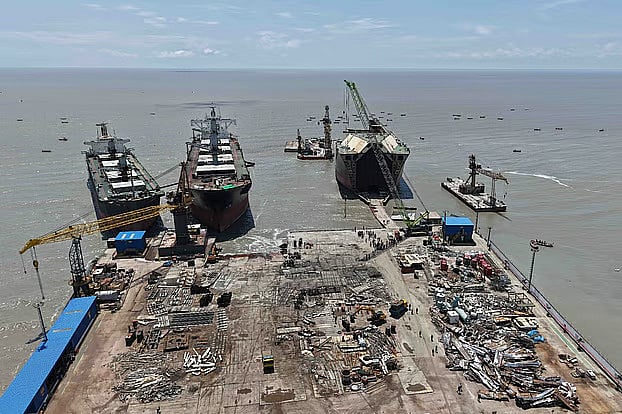
Photo Collected
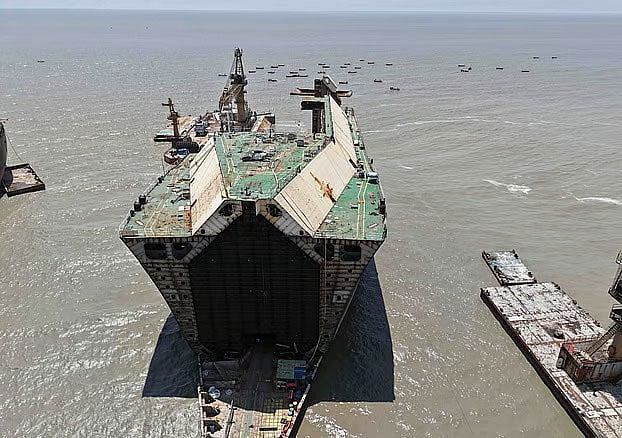
A lethal accident at the Ferdous Steel Ship Recycling Industries in Sitakunda, Chittagong, has claimed nine lives and left several others injured, reigniting urgent concerns regarding safety standards and regulatory enforcement in the global ship-breaking industry. The incident, which occurred on Friday, resulted from exposure to toxic gases while workers were dismantling an aging vessel.
Ship recycling is a labor-intensive industry that serves as a critical source of raw materials. As vessels age, maintenance costs eventually render them unprofitable, leading them to be sold for scrap. Once beached, these ships are systematically dismantled, yielding thousands of tons of steel, engines, generators, and assorted machinery. International maritime organizations, including the International Maritime Organization (IMO), emphasize that ship recycling is a sustainable practice, as reusing steel requires roughly one-third of the energy compared to manufacturing new steel from iron ore.
However, the industry is fraught with systemic risks. Workers operate in hazardous environments, handling heavy steel structures, utilizing open-flame cutting tools, and navigating confined spaces that may contain flammable or toxic gases. While international regulations like the Hong Kong International Convention exist to protect laborers and the environment, implementation remains inconsistent.
The center of global ship-breaking has shifted over the decades. Historically dominated by the United States, Europe, and later Japan, South Korea, and Taiwan, the industry migrated to South Asia due to lower labor costs, high demand for scrap steel, and traditionally lenient environmental and occupational safety enforcement. Today, Bangladesh, India, and Turkey dominate the market. According to the United Nations Conference on Trade and Development (UNCTAD), these three nations accounted for approximately 80 percent of global ship recycling in 2025. Bangladesh currently holds the world’s second-largest capacity, processing roughly 2.68 million gross tons across 88 vessels in 2025.
The Sitakunda coast in Chittagong has emerged as the primary hub for this industry in Bangladesh due to its unique geographical advantages. The tidal range, which can reach up to six meters, allows massive vessels to be easily “beached” deep inland during high tide. Furthermore, the region’s proximity to major highways and rolling mills facilitates the efficient distribution of salvaged materials.
Despite its economic significance, the industry’s human cost is mounting. Data from the Bangladesh Institute of Labour Studies (BILS) indicates that at least 149 workers have died in ship-breaking accidents between 2015 and August 2025. Common causes include structural collapses, crane failures, fires, and toxic gas exposure. Critics, including labor leaders and NGOs, argue that many yards fail to provide adequate personal protective equipment (PPE), training, and regular safety inspections.
While “Green Yards”—facilities certified for meeting rigorous safety and environmental standards—are increasing in number, they remain a minority. As of 2025, only 23 of Bangladesh’s 84 registered ship-breaking yards held green certifications. Obtaining such certification requires infrastructure for hazardous waste management, specialized training, and strict adherence to safety protocols for “hot work” and gas testing.
The economic reality of the industry remains tied to the livelihoods of approximately 30,000 to 50,000 direct employees and over 150,000 indirect workers. As the industry faces increased scrutiny following the latest tragedy, the central challenge remains: reconciling the immense economic value of ship recycling with the urgent necessity of protecting the workforce from the inherent dangers of the yard.
0%
0%
0%
0%
More News from Business