
Chittagong Draft Transport Master Plan Prioritizes Bus Rapid Transit Over Metro Rail to Tackle Congestion
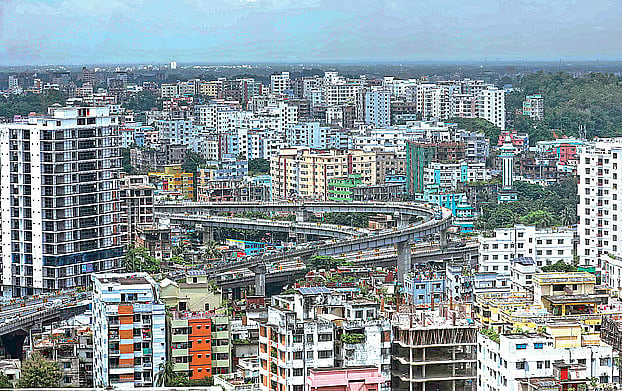
Photo Collected
CHITTAGONG — Metropolitan planners have determined that investing 25 to 30 billion BDT in a metro or monorail system for Chittagong is currently neither economically viable nor necessary. Instead, the Chittagong Development Authority (CDA) recommends a comprehensive overhaul of the city’s transit network centered on Bus Rapid Transit (BRT), route rationalization, and the introduction of 700 modern buses at an estimated cost of 2.5 to 3 billion BDT.
The recommendations are part of a draft Traffic and Transportation Master Plan (2025–2050), which has been opened for public feedback for a 60-day period. The plan shifts focus away from expensive elevated expressways and flyovers, which experts argue have constricted existing roadways and failed to alleviate traffic congestion, in favor of pedestrian-friendly infrastructure and efficient public transport.
According to the master plan, a metro rail system is currently unjustifiable as it requires a demand of at least 18,000 passengers per hour per direction—a threshold Chittagong is not projected to reach by 2050. Furthermore, the city’s existing infrastructure, heavily modified by previous elevated road projects, leaves little room for rail construction without incurring prohibitive costs for subterranean engineering.
Project Director and Deputy Chief Urban Planner Abu Isa Ansari stated that the initiative aims to build an integrated, safe, and environmentally sustainable transit system to support the port city’s growing population. The plan emphasizes “smart” traffic management and the modernization of rail and waterways.
To improve service, the proposal suggests establishing a unified bus company operating under a public-private partnership (PPP) model, managed by the Bangladesh Road Transport Authority (BRTA). This shift would phase out the current fleet of poorly maintained vehicles. Additionally, the plan proposes five new bus terminals at Kalurghat, Shah Amanat Bridge, New Market, Patenga, and Kulgaon, while upgrading existing hubs at Kadamtali, Bahaddarhat, and Hathazari.
The report also offers a scathing critique of past urban planning, noting that the 5.19 billion BDT spent on three flyovers and one elevated expressway over the last 13 years failed to prevent Chittagong from becoming one of the world’s slowest cities. CDA Chairman Belayet Hossain admitted that past projects were often politically motivated and unplanned, vowing that future development would prioritize aesthetics and green urban planning through better inter-agency coordination.
In the short term (2025–2030), the master plan prioritizes the construction of 140 kilometers of new footpaths, the implementation of automated traffic signals, and the creation of an administrative framework for the new bus transit company. Mid-term goals (2030–2040) include widening 245 kilometers of roads, while long-term strategies (2040–2050) leave room for potential metro expansion should population density and economic conditions warrant such investment.
Transportation expert Subhash Barua, vice-president of the Planned Chittagong Forum, supported the pivot away from rail, noting that the city must first address road congestion caused by existing flyover pillars and private vehicle encroachment. He emphasized that successfully implementing BRT will require “courageous decisions” to restrict private cars and reclaim space for dedicated bus lanes.
0%
0%
0%
0%