


Betel leaf farmers in Rajshahi struggle with rising production costs and low market prices
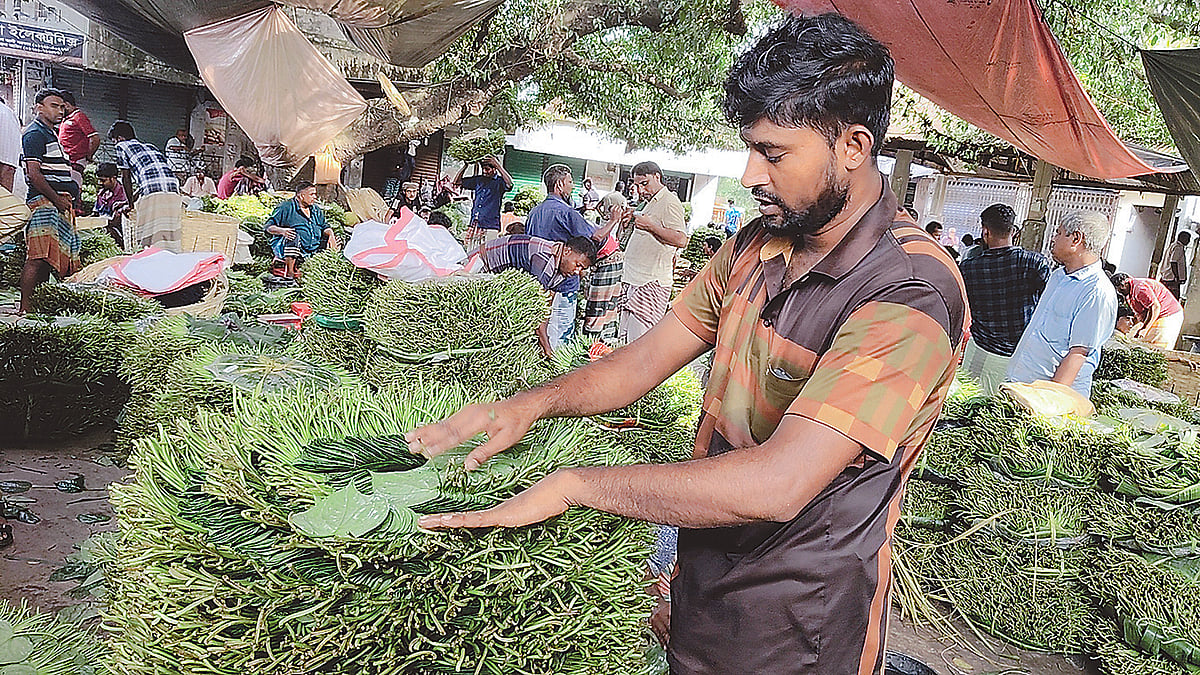
Photo Collected
Betel leaf farmers in Rajshahi are facing severe financial distress as soaring production costs outpace the market price of their crops. Growers report that despite significant hikes in the prices of fertilizers, pesticides, irrigation, and labor, the wholesale rates at local markets remain stagnant, leaving many unable to cover their basic living expenses.
The crisis was evident Sunday morning at the Maugachi betel leaf market in Mohanpur, one of the district’s primary trading hubs. Farmers arriving at the market—which spilled over onto the Rajshahi-Naogaon highway due to high attendance—reported that small-sized betel leaves were selling for as little as 10 to 25 taka per ‘bira’, a local unit consisting of 64 leaves. While premium leaves fetched between 50 and 60 taka, farmers maintained that these prices are insufficient to recoup their investment.
Mohammad Ershad, a local farmer, expressed frustration that he had hoped for at least 15 taka per unit but was being offered only 10. Another farmer, Mohammad Ziaul Islam, noted that a price of 35 taka per unit is the minimum required to break even, yet they are currently receiving only a fraction of that amount. He stated that many are selling their crops solely to generate immediate cash flow rather than to secure any profit.
The capital expenditure for betel cultivation is substantial. Growers estimate that preparing a one-bigha plot and planting seedlings costs approximately 100,000 taka, with annual maintenance, including fertilizers and pesticides, adding another 100,000 taka in expenses. Farmers like Mohammad Sohel Runa pointed out that it has become difficult to even sell 100,000 taka worth of produce against a 200,000 taka annual cost. They suggested that a market price of at least 80 taka per unit would be necessary for sustainable farming.
Traders at the market attributed the price fluctuations to the basic laws of supply and demand. Moinul Islam, a wholesaler who ships betel leaves to Panchagarh, explained that prices drop when market arrivals are high and rise when supplies are constrained. Other traders, including Tajibor Rahman and Taibur Rahman, noted that quality and seasonal cycles also dictate market rates.
Looking ahead, farmers remain pessimistic about immediate relief, though they anticipate prices may rise in the coming months as production naturally declines during the winter season. Some growers expect prices to reach 80 to 90 taka per unit between October and March. However, they argue that these seasonal gains are insufficient to offset the chronic losses sustained throughout the rest of the year.
According to data from the Department of Agricultural Extension (DAE) in Rajshahi, the district has a target of cultivating betel leaves across 5,020 hectares of land this year, with a production goal of 86,824 metric tons. Last year, the region produced 79,681 metric tons across 4,509 hectares. Mohammad Nasir Uddin, Deputy Director of the Rajshahi DAE, stated that prices typically dip during the monsoon season due to higher output, but he maintained that farmers generally receive better returns during other periods of the year.
0%
0%
0%
0%