Families of disappeared individuals demand independent inquiry and reject new anti-enforced disappearance law
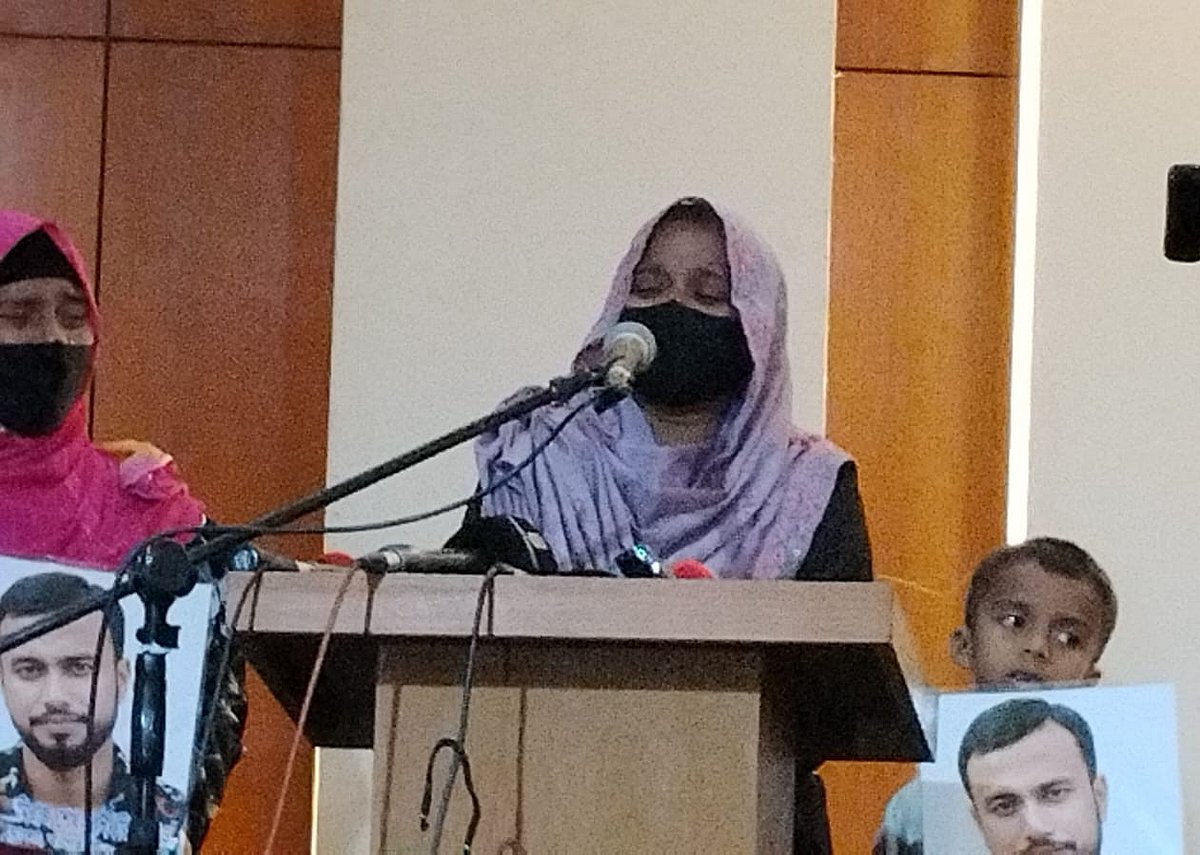
Photo Collected
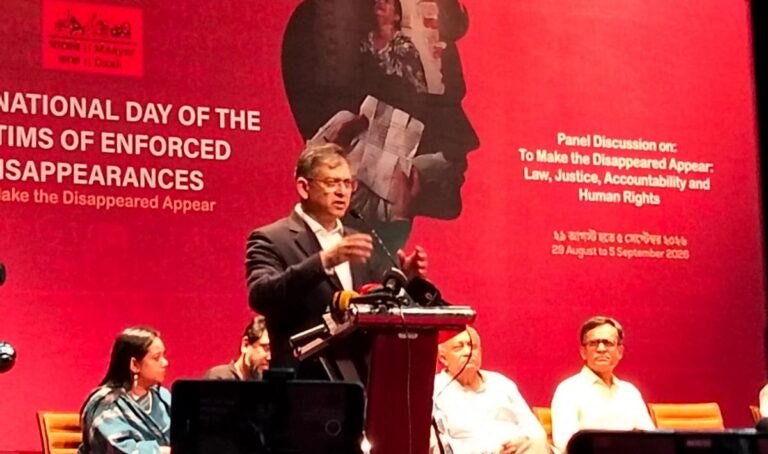
DHAKA — Families of individuals subjected to enforced disappearance gathered in the capital on Saturday to demand the return of their loved ones, marking the eve of the International Day of the Victims of Enforced Disappearances. The seminar, organized by the human rights organization Odhikar at the Bishwo Shahitto Kendro, provided a platform for approximately 20 affected families and survivors to voice their grievances against ongoing state-sanctioned abuses.
Among those present was seven-year-old Mahir Sheikh, who clutched a photograph of his father, Miraz Sheikh, while standing alongside his mother, Mukta Khatun. Mukta Khatun recounted that her husband, a fisherman and part-time motorcyclist from Bagerhat, was abducted by two men in plainclothes identifying as Coast Guard members on April 10. According to Khatun, the abductors left his motorcycle with a local shopkeeper, which was later retrieved by a man claiming to be a Coast Guard official. Despite these accounts, authorities continue to deny holding him in custody.
The seminar highlighted persistent anxieties regarding the current political climate, with attendees alleging that enforced disappearances have continued even following the political transition on August 5. Anisha Islam Insha, whose father Ismail Hossain Baten disappeared in 2019, expressed frustration that despite years of advocacy, the practice remains unabated. Other speakers, including Amena Akter, whose husband Firoz Khan—a local Jatiotabadi Chhatra Dal leader—was allegedly abducted by the Rapid Action Battalion in 2012, echoed these concerns, emphasizing that the whereabouts of many victims remain unknown after more than a decade.
Participants directed sharp criticism toward the government’s newly drafted “Enforced Disappearance Prevention Act.” Tasnim Farhana, Director of Training and Advocacy at Odhikar, argued that the proposed legislation is fundamentally flawed. She specifically challenged the provision that mandates investigations be conducted by security forces, asserting that such inquiries would lack the independence required for justice. Furthermore, Farhana criticized a clause stipulating that complainants face up to five years of rigorous imprisonment if their claims are proven false in court, labeling it a measure that will institutionalize impunity.
Odhikar formally presented a three-point demand to the government: the transfer of investigation authority to the independent National Human Rights Commission, the establishment of legal mechanisms to allow families access to the assets and bank accounts of the missing, and the withdrawal of all fabricated cases against survivors who have returned from secret detention.
Political figures also condemned the draft law. Member of Parliament Mir Ahmad Bin Quasem, himself a victim of disappearance during the previous administration, dismissed the legislation as a “worthless law” that grants immunity to perpetrators rather than ensuring accountability. Supreme Court Bar Association President Mahbub Uddin Khokon argued that the law unfairly penalizes victims’ families for failing to prove claims that state agencies themselves have failed to investigate, stating that the legislation must be universal and impartial to be effective.
The event featured contributions from various speakers, including Member of Parliament Abdullah Al Amin, retired Brigadier General Hasinur Rahman, former diplomat and survivor Maruf Zaman, and United Nations Human Rights Office official Zahid Hossain. The families reiterated their plea for state intervention, emphasizing that their struggle continues until their missing relatives are returned.
0%
0%
0%
0%