Traditional Puthipath Performance Revives Fading Cultural Heritage in Pabna Village
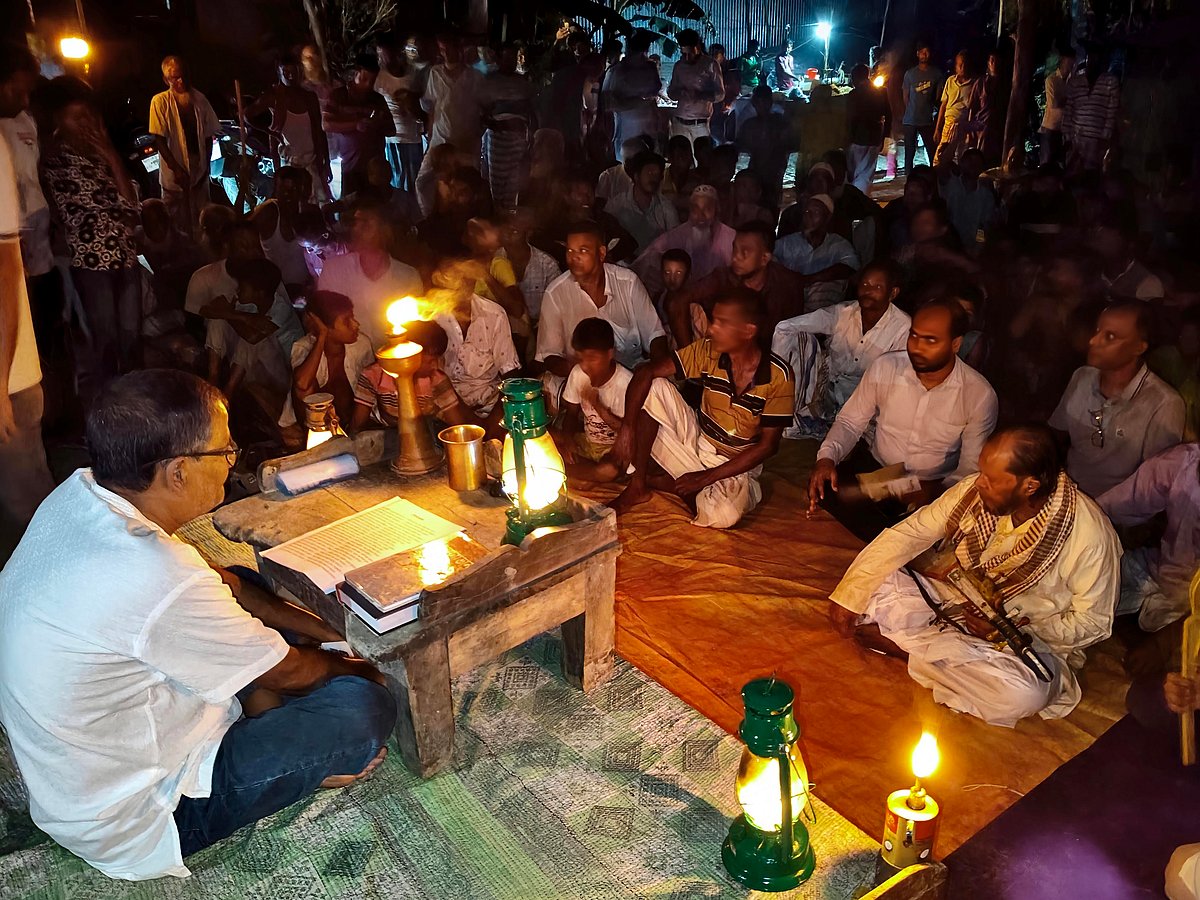
Photo Collected
A traditional art form known as Puthipath—the ancient practice of reciting rhythmic folk narratives—was revived in the Chatmohar Upazila of Pabna this week, offering a nostalgic glimpse into rural Bengal’s cultural history amid the dominance of modern digital entertainment.
The event took place on Thursday night at the residence of Kitab Pramanik in Sonahara Para village, located in the Bilchalon Union. Organized by local cultural activists under the leadership of physician and cultural organizer S.M. Atiqul Alam, the gathering intentionally eschewed modern electric lighting. Instead, the performance was illuminated solely by traditional kerosene lanterns and oil lamps to recreate the authentic atmosphere of historic rural gatherings.
Residents of all ages gathered on bamboo mats and floor coverings, listening in rapt attention as the performers brought centuries-old tales to life. Despite the availability of electricity in the village, organizers kept the area dark to preserve the rustic ambiance, successfully transporting the audience back to a bygone era of folk performance.
Local theater personality Asaduzzaman Dulal performed excerpts from the epic “Hanif Palowan o Bibi Sonabhan,” while Md. Loimuddin Pramanik recited verses from “Gazi Kalu o Champabati.” The event was coordinated by a group of local youths, including Sajal Biswas, Biplob Acharya, Niyamul Mukta, and teacher Abdul Mannan.
Physician S.M. Atiqul Alam, the event organizer, noted that while rural communities once relied on these musical recitations for evening entertainment, the rise of satellite television and mobile technology has pushed the tradition toward extinction. He emphasized that the initiative was designed to reconnect the younger generation with their cultural roots and indicated that similar events are planned for the future across the Chalan Beel region.
Cultural and social activist S.M. Mizanur Rahman reflected on his own childhood memories, noting the rarity of traditional reciters in the current era. He stressed the importance of preserving these folk performances, arguing that they are vital to maintaining historical narratives and local folklore for posterity.
0%
0%
0%
0%