Severe waterlogging threatens Aman rice cultivation across 703 hectares in Bhola Sadar Upazila
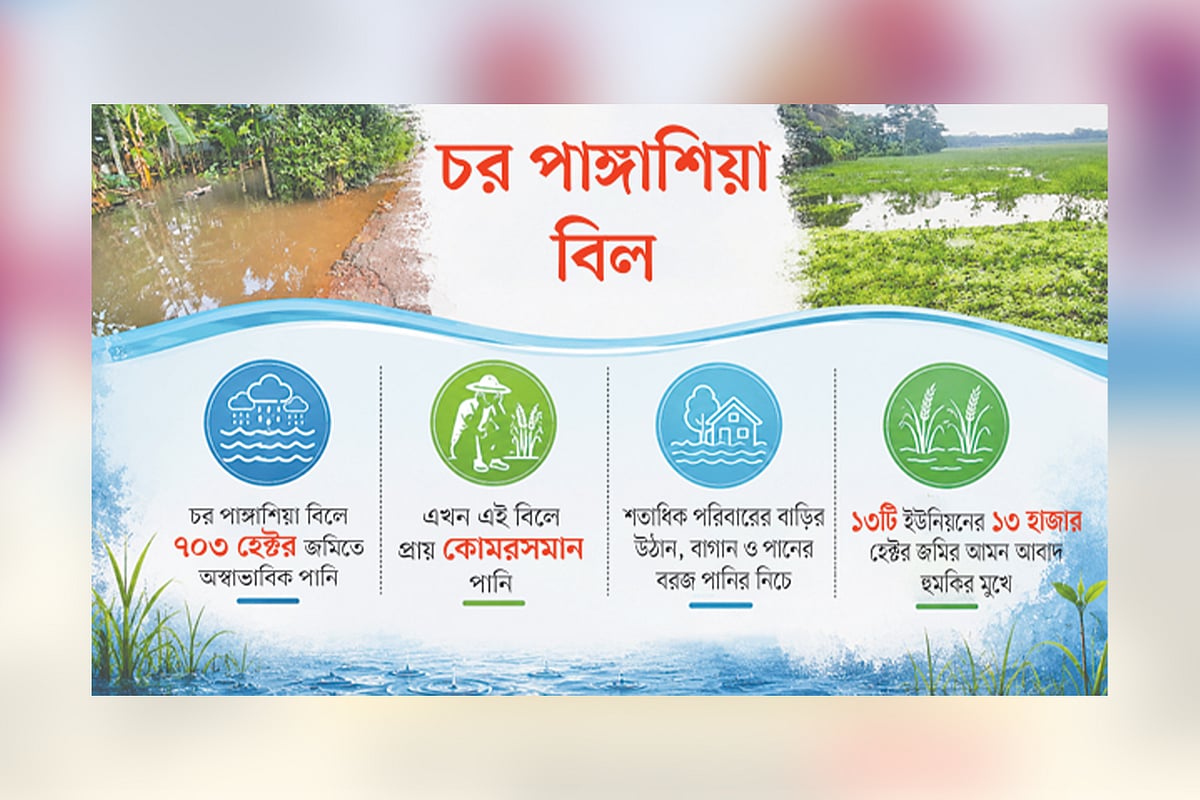
Photo Collected
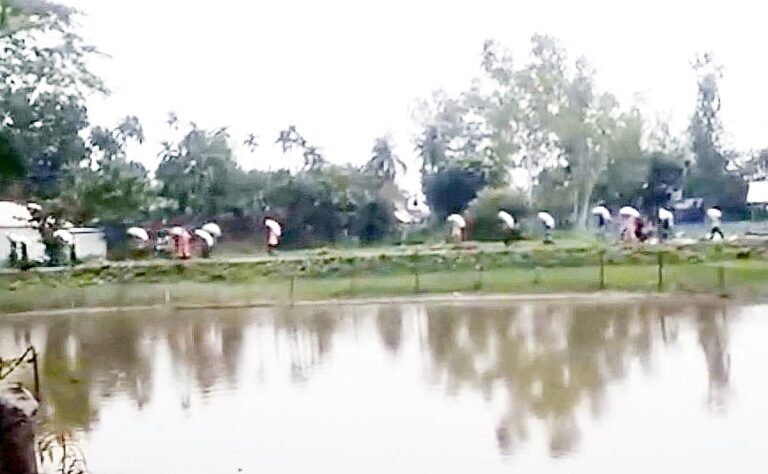
Excessive waterlogging has jeopardized Aman paddy cultivation across 703 hectares of land in the Char Pangashia bill of Bhola Sadar Upazila, threatening the livelihoods of hundreds of farmers. Persistent flooding, caused by disrupted natural drainage systems and heavy rainfall, has left fields submerged, preventing the timely transplanting of rice seedlings.
Approximately 400 to 500 farmers in the Char Pangashia bill, located in West Ilisha Union, are facing severe financial distress as water levels in some areas have reached waist-height. Local residents report that the inundation has extended beyond agricultural land to residential courtyards, betel nut orchards, and ponds. Farmers, who typically produce up to 11,300 metric tons of paddy across three annual seasons, now fear the loss of their primary crop.
Agricultural officials attribute the crisis to unplanned development, including the filling of canals, construction of houses and roads on agricultural land, and the obstruction of natural water flow. Compounded by heavy rainfall and high tides, the water has become trapped, with no effective outlet.
“The drainage problem has persisted for years, but this year the situation is the most dire,” said local farmer Ekramul Alam. While residents have staged protests and petitioned the administration for relief, no effective resolution has been implemented. Farmers have proposed installing underground piping to connect the central bill area to existing canals, arguing that this would bypass the need for open drains that might otherwise encroach upon arable land.
Mohammad Alamgir Hossain, an assistant agricultural officer in West Ilisha, acknowledged that the issue has been reported to higher authorities. He noted that existing Bangladesh Agricultural Development Corporation (BADC) pipelines are designed for irrigation rather than drainage, necessitating new government projects for a permanent fix.
The crisis extends far beyond Char Pangashia. Waterlogging has been observed in several other regions, including the South Charpata, Sudurchar, Charpotka, Charnapta, South Char-Nowabad, Chargazi, and Char-Kali bills. Local agricultural data suggests that nearly 13,000 hectares of Aman cultivation across 13 unions in the district, involving approximately 50,000 farmers, are at risk.
Mohammad Shahabuddin Faraji, president of the Bangladesh Krishak Oikya Foundation, warned that unless the drainage issue is addressed, national production targets will remain unmet despite government incentives. Agricultural officials, including Harun Or Rashid of Velumia Union, emphasize that a lasting solution requires a combination of canal dredging, the installation of box culverts and sluice gates, and the strict enforcement of land-use protection laws.
Administrative efforts to mitigate the flooding have faced resistance. Officials from the BADC and local agricultural offices reported that efforts to install drainage pipes have been repeatedly blocked by property owners whose structures obstruct natural water channels.
Khairul Islam Mallick, Deputy Director of the Department of Agricultural Extension in Bhola, stated that while the cultivation is not entirely destroyed, it is severely delayed, which will likely lead to reduced yields. He stressed that simple dredging is insufficient and called for a coordinated effort between the administration, police, local representatives, and agricultural departments to clear water channels and enforce regulatory measures.
0%
0%
0%
0%
More News from Business