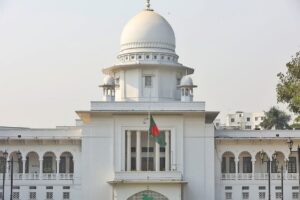

SSC pass rate hits 19-year low as over half a million students fail mandatory subjects

Photo Collected
The pass rate for Secondary School Certificate (SSC) examinations under nine general education boards in Bangladesh has fallen to 64.05 percent, marking a 19-year low. Official data released on Monday shows a continued downward trend for the second consecutive year, with the number of students achieving a Grade Point Average (GPA-5) declining by approximately 19,000 compared to last year.
Out of 1,404,539 candidates who sat for the examinations between April 21 and May 20, a total of 504,929 students failed to pass, representing more than one-third of the total examinees. Additionally, the number of educational institutions with a zero pass rate rose to 57, up from 48 the previous year.
Analysis of the results highlights consistent student weaknesses in English and Mathematics. Except for the Comilla Board, the pass rate in English remained below 80 percent across all eight other general education boards. Even in the Dhaka Board, which secured the highest overall pass rate, English performance saw a significant decline, dropping from roughly 88 percent last year to just over 78 percent. Dhaka Education Board Chairman Professor ATM Hasanuzzaman attributed the overall slump in results to these two mandatory subjects.
The Humanities department also contributed to the poor performance, recording pass rates significantly lower than those of the Science and Business Studies departments. While over 600,000 candidates sat for Humanities, their lower success rates heavily impacted the national aggregate. Conversely, female students outperformed their male counterparts in both pass rates and the attainment of GPA-5. Female candidates recorded a pass rate of approximately 68 percent, compared to 60 percent for male students.
Education sector experts suggest that the results indicate an urgent need to re-evaluate the quality of teaching at the school level, the availability of subject-specific teachers, and existing learning deficits. They argue that with over 500,000 students failing after a decade of schooling, systemic reforms rather than surface-level analysis are required.
Despite the decline, Education Minister ANM Ehsanul Haque Milon described the results as satisfactory. During the official announcement at the Ministry of Education, he emphasized the integrity of the evaluation process, noting that marks were awarded based strictly on performance. Prime Minister’s Education Advisor Mahadi Amin reinforced this stance, stating that answer scripts were graded with complete objectivity, reflecting the students’ actual preparation.
The current trend marks a sharp reversal from the performance seen between 2008 and 2022, a period during which pass rates frequently exceeded 80 percent, and occasionally topped 90 percent. Officials maintain that the shift in evaluation methods, combined with post-pandemic learning gaps, has necessitated a more rigorous assessment standard. Results for the Dakhil examination under the Madrasa Education Board and the SSC and Dakhil Vocational examinations under the Technical Education Board were also released on the same day.
0%
0%
0%
0%
More News from Local