Beyond the Uprising: Analyzing the Political Legacy and Fragmented Reality of Bangladesh July Movement
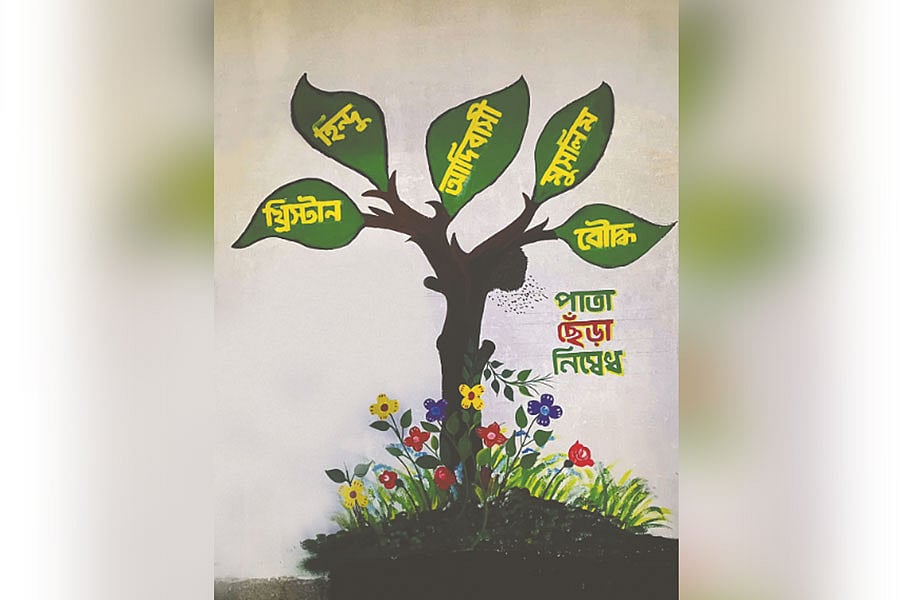
Photo Collected
The memory of July in Bangladesh remains a complex, unresolved legacy—a testament to a mass uprising that has since become fragmented by competing political interests and shifting narratives. What began as a spontaneous eruption of collective political desire is now being contested by various factions, with accusations of betrayal, counter-revolution, and sectarian maneuvering overshadowing the core intent of the movement.
The uprising was not a sudden anomaly but the result of decades of structural inequality. As the nation integrated into the global capitalist order, it became a hub for cheap labor, while “jobless growth” left millions of young people without prospects or economic security. This systemic deprivation was compounded by the erosion of democratic representation and the rise of an authoritarian executive branch that prioritized control over the rights of its citizens.
Tensions simmered through years of scattered protests—ranging from road safety demonstrations and worker strikes to gender-based and livelihood movements. The administration’s attempts to maintain its grip through symbols of excess and unchecked power only widened the disconnect with the public. By the time the protests ignited in mid-July, the societal fabric was already frayed, and the violent crackdown on students at the University of Dhaka served as the final catalyst. The subsequent deaths of protesters, including the iconic image of Abu Sayed’s defiance, transformed a student movement into a broader national rebellion that stripped away the middle class’s remaining tolerance for executive impunity.
Unlike traditional political movements, the July uprising lacked a singular, hierarchical leadership. It was an “horizontal” movement, fueled by diverse participants—from private university students and madrasa scholars to workers and the urban poor—linked not by central commands but by shared slogans and wall art. These expressions, such as the declaration that “the country does not belong to any individual’s father,” challenged the patriarchal and dynastic political culture that has long dominated the nation’s governance.
However, the lack of a formal, unified structure meant that participants arrived with conflicting understandings of the movement’s goals. The debate over slogans, including the controversial use of “Razakar” as an ironic label to mock the regime’s own labeling tactics, highlighted the deep divisions within the revolutionary coalition. While the youth pushed for a multi-layered democracy, others sought to reclaim historical narratives or push sectarian agendas, creating friction that deepened as the uprising transitioned from the streets to the post-5 August reality.
This transition has been marked by a struggle over ownership. Following the regime’s collapse, various groups attempted to consolidate power, often resorting to “scapegoating” and exclusionary tactics. The targeting of marginalized groups, including minorities and those frequenting shrines, has signaled a drift toward “mob-rule” or a form of executive violence practiced by organized groups rather than the state. Such actions have undermined the broad, inclusive vision originally championed by the youth.
As the nation grapples with the aftermath, the question remains whether the July uprising can yield a new political settlement that addresses the material needs of the marginalized—the hawkers, transport workers, and garment laborers—or whether it will remain a symbolic shift. The path forward requires moving beyond the fetishization of the event and engaging in the “everyday translation” of its democratic promise. The true legacy of July lies not in the grandiose myths constructed by political elites, but in the persistent, practical demands of the people for dignity, economic justice, and an accountable, inclusive future.
0%
0%
0%
0%