

Visually impaired street vendor defies odds to earn dignified living in Dinajpur
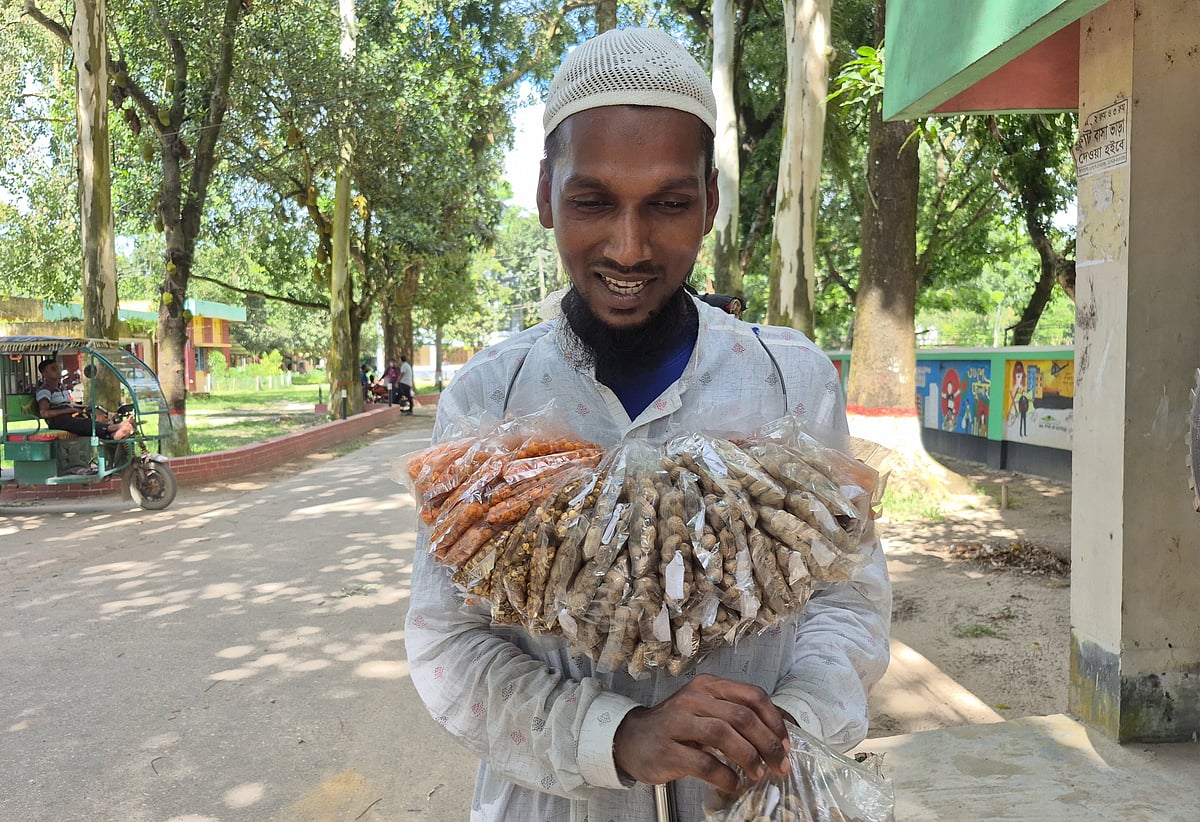
Photo Collected
Clad in a white panjabi and a prayer cap, Raju Ahmed navigates the bustling grounds of the Birampur Upazila complex with the help of a white cane, announcing his arrival with a rhythmic call of “Peanuts, chickpeas?” To his regular customers, he is a familiar fixture, carrying packets of snacks suspended from a metal ring around his neck. For Ahmed, an entrepreneur who has been legally blind for nearly two decades, the business is built on a foundation of faith in the public’s integrity—a trust he says has never been betrayed.
According to a report by Prothom Alo, Ahmed, a 38-year-old resident of the West Joydebpur Ashrayan Project in Dinajpur, has spent 18 years operating his modest snack stall. Despite his vision impairment, he rejected the path of begging, choosing instead to sustain his family of four through hard work. He recalls that many were initially skeptical of his business model, warning him that passersby would surely take his goods without paying. Instead, he has found the opposite to be true, noting that many customers often pay double the price for his ten-taka packets as a gesture of support.
Ahmed’s journey has been defined by resilience. After his education at a local madrasa was cut short due to his family’s financial struggles, he found himself excluded from the labor market because of his disability. Undeterred, he turned to street vending. Today, his business remains a family effort; each evening, he purchases raw ingredients in town, which his wife roasts and packages at home, ensuring the stock is ready for the following day. Ahmed earns a daily profit of between 300 and 500 taka, providing him with a sense of dignity that he insists begging could never offer.
The vendor remains a source of inspiration for many in his community. He encourages other individuals with disabilities to eschew charity and seek honorable, self-reliant livelihoods, emphasizing that even those with limited physical capacities can find meaningful ways to support themselves. While he occasionally struggles during periods of inclement weather when foot traffic at the Upazila complex slows, he finds a safety net in local officials who provide personal assistance and ensure he receives his rightful share of government social support.
Local project implementation officer Md. Rokonuzzaman praised Ahmed as a model for others. Officials in Birampur have pledged to continue their support, both through personal contributions during slow business days and by facilitating access to government programs. For Ahmed, the work is more than just a source of income; it is a testament to the value of honest labor and the enduring goodwill of his neighbors.
0%
0%
0%
0%