

Cambridge Study Reveals Armed Groups Exploiting AI for Bomb-Making and Attack Planning
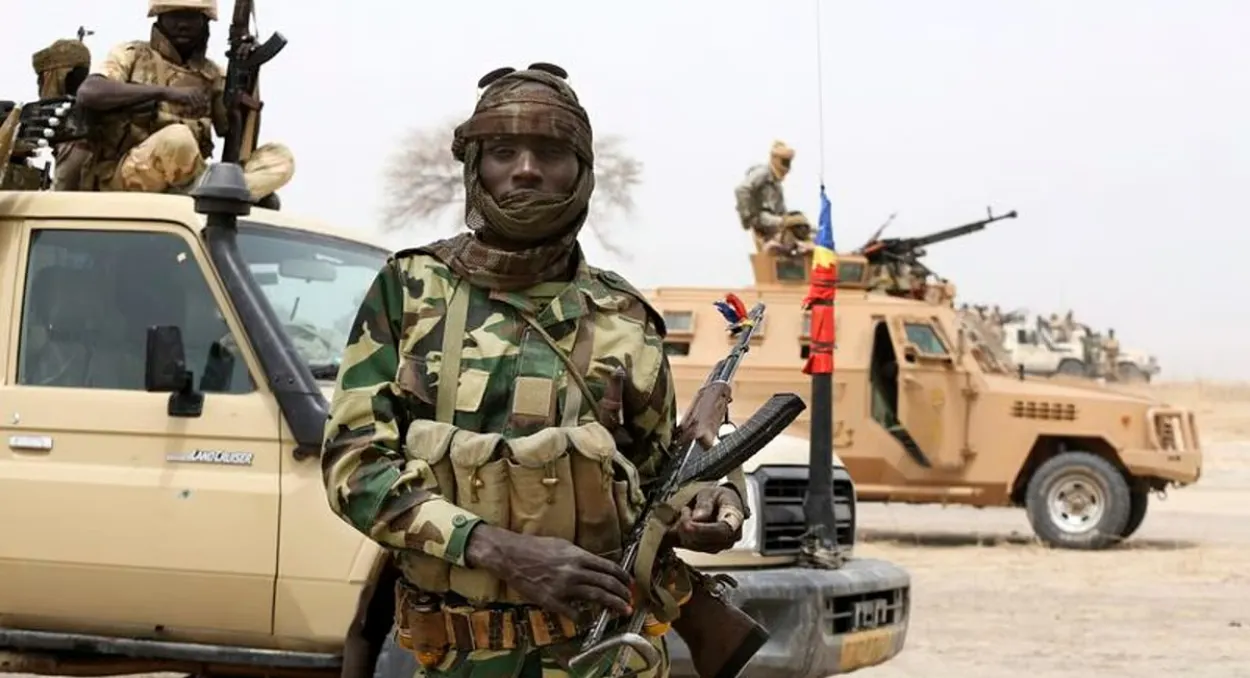
Photo: Collected
based militant organization Boko Haram, are increasingly leveraging advanced artificial intelligence technologies for bomb-making, tactical planning, and operational strategizing, according to a recent study conducted by the United Kingdom's University of Cambridge. The research, which draws on interviews with 27 former members of Boko Haram, sheds light on the growing exploitation of sophisticated generative AI systems by militant networks throughout 2023 and 2024, prompting widespread alarm among global security experts.
The Cambridge study focused on former operatives from two distinct factions: Islamic State West Africa Province, which is affiliated with ISIL, and Jama'at Ahl as-Sunnah lid-Da'wah wa'l-Jihad. According to the interviewed individuals, fighters regularly consulted prominent commercial AI models—including OpenAI's ChatGPT, Anthropic's Claude, Google's Gemini, Elon Musk's xAI Grok, Meta AI, and China's DeepSeek—as operational resources before, during, and after attacks. Complementary documents obtained by international media further corroborate that supporters of the broader ISIL movement have been actively sharing instructions on how to bypass safety guardrails and extract weapons-related intelligence.
Tech Against Terrorism, an organization dedicated to countering online terrorism, successfully infiltrated an ISIL-aligned technical forum where members exchanged tutorials on circumventing AI safety restrictions. This trend aligns with warnings issued by United Nations officials to the UN Security Council regarding the escalating reliance on advanced AI by ISIL and its affiliates. Cybersecurity researchers and tech industry leaders have repeatedly cautioned that rapidly evolving AI capabilities are outpacing existing safety mechanisms, thereby lowering the barrier for illicit actors to weaponize these technologies.
Detailing the mechanics of this technological adoption, the study revealed that the militant groups established sophisticated infrastructure within insurgent-controlled strongholds in northeastern Nigeria. Specialized technical instructors reportedly traveled into Islamic State West Africa Province territory, utilizing laptops and projectors to train senior commanders and selected fighters on prompt engineering and bypassing safety protocols designed to prevent dangerous requests. Furthermore, these instructors supplied encrypted equipment, funded premium platform subscriptions, and established multiple accounts across various AI services.
In response to these developments, the militant factions institutionalized their technological capabilities by establishing dedicated AI units comprised of engineers, weapons specialists, and bomb-makers. One former commander of Jama'at Ahl as-Sunnah lid-Da'wah wa'l-Jihad detailed the operations of a 23-member specialized unit operating from a solar-powered facility, where operatives analyzed intelligence, answered complex tactical queries, and trained senior leadership. Experts warn that if such groups gain access to even more advanced future iterations of artificial intelligence, the global security implications could prove profoundly severe.