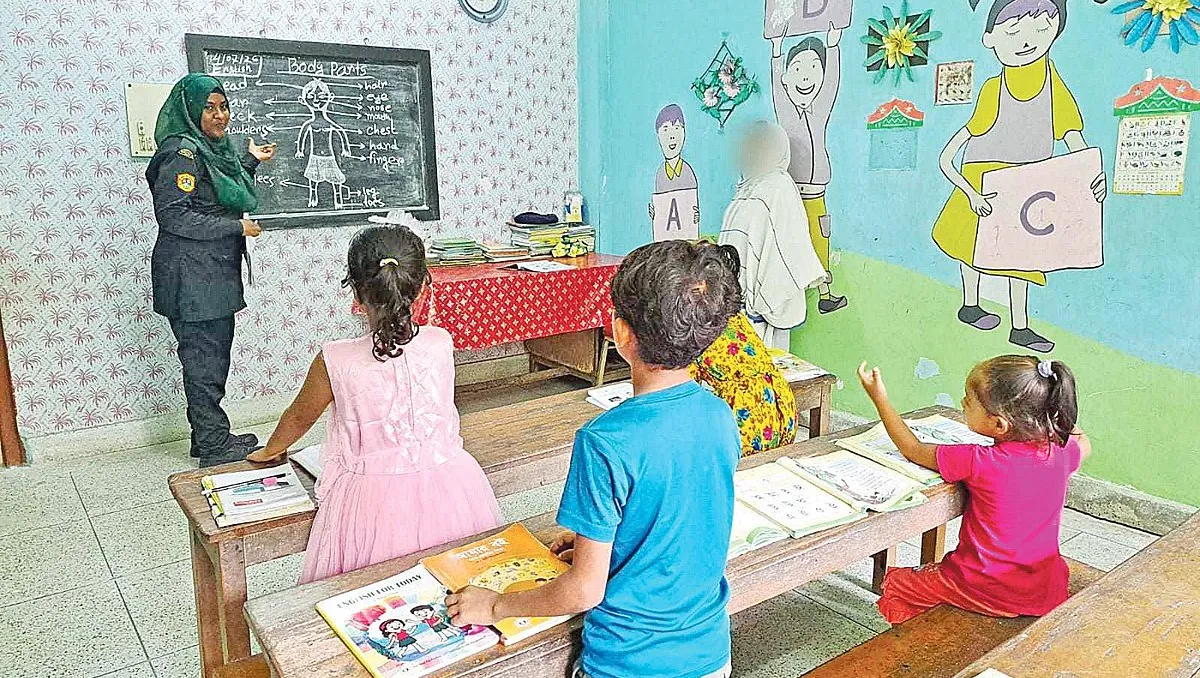
At the Kashimpur Women’s Central Jail, a small classroom serves as a rare sanctuary for four young children growing up behind bars. One girl, born on the jail premises to a mother serving a life sentence, recites songs about a world beyond the high prison walls—a world she has never experienced. Her name, given by prison guards, reflects the grass where she was born after her mother went into sudden labor while outside the facility.
According to data from the Department of Prisons as of July 26, there are 312 children living with 291 incarcerated mothers across Bangladesh’s prison system. This marks an increase from 306 children reported earlier that month. With 74 prisons nationwide, overcrowding remains a critical issue; the Kashimpur Women’s Central Jail, which houses 701 female inmates, was originally designed for only 212. In these cramped conditions, mothers and their children often sleep on floor mats with minimal personal space.
Brigadier General Syed Md. Motahar Hossain, Inspector General of Prisons, stated that the authorities have established 26 daycare centers across 25 prisons to support the mental development of these children. Under prison regulations, children may reside with their mothers until the age of six, after which they are typically transferred to child welfare homes managed by the Department of Social Services if no relatives are available to care for them.
Inside the facilities, the quality of care varies significantly. Prisons with larger populations of children provide daycare centers staffed by teachers or educated inmates, while smaller facilities rely on basic internal arrangements. Children in these centers participate in primary education, including lessons in Bengali, English, mathematics, and Arabic, alongside recreational activities like drawing and singing. However, experts warn that the prison environment poses developmental risks.

Fatema Rezina Iqbal, a professor of sociology at the University of Dhaka, emphasized that while a child’s proximity to their mother is essential, the institutional environment of a jail is far from ideal for early childhood development. She noted that children in these settings are susceptible to internalizing the behaviors of the incarcerated population, potentially impacting their social integration once they return to the outside world.
The legal landscape surrounding these children has gained increased scrutiny. Following various public reports and litigation, the High Court of Bangladesh has directed prison authorities to provide comprehensive reports on the number and welfare of children residing with incarcerated mothers. Advocates, including those from organizations like Aparajeyo Bangladesh, maintain that without professional intervention and structured educational programs, these children remain at high risk of neglect, trafficking, or social displacement.
For the mothers, many of whom are serving sentences for murder or drug-related offenses, the prison is the only reality their children have known. While some receive supplemental nutrition and basic supplies, the underlying concern remains the long-term impact of confinement on these minors, who are effectively serving sentences for crimes they did not commit.