The ceremony carries a meaning well beyond a single evening of worship. For many Hindu families, Tulsi Vivah signals the close of Chaturmas, the four-month period during which marriages and other auspicious ceremonies are traditionally avoided, and the reopening of the wedding season. The New Delhi marriage calendar lists further auspicious dates on 21, 24, 25 and 26 November, and families planning weddings in the second half of the month have begun finalising invitations, venues and travel in earnest. Tulsi is worshipped as a manifestation of Goddess Lakshmi, and devotees associate the rite with prosperity, peace and well-being in the household.
Behind the wedding lies a story retold every year. According to the Padma Purana tradition cited in festival accounts, Tulsi was earlier Vrinda, the devoted wife of the demon king Jalandhara and a steadfast devotee of Vishnu. When Vishnu took Jalandhara's form to break the protection her devotion gave her husband, Vrinda cursed him to become stone, and he is worshipped in that form as the Shaligram. Pleased by her devotion, Vishnu blessed her to be born as the tulsi plant, honoured in every home, and promised to marry her each year in that form. The annual wedding is held in fulfilment of that promise, and performing it is believed to bring the spiritual merit of giving a daughter in marriage.
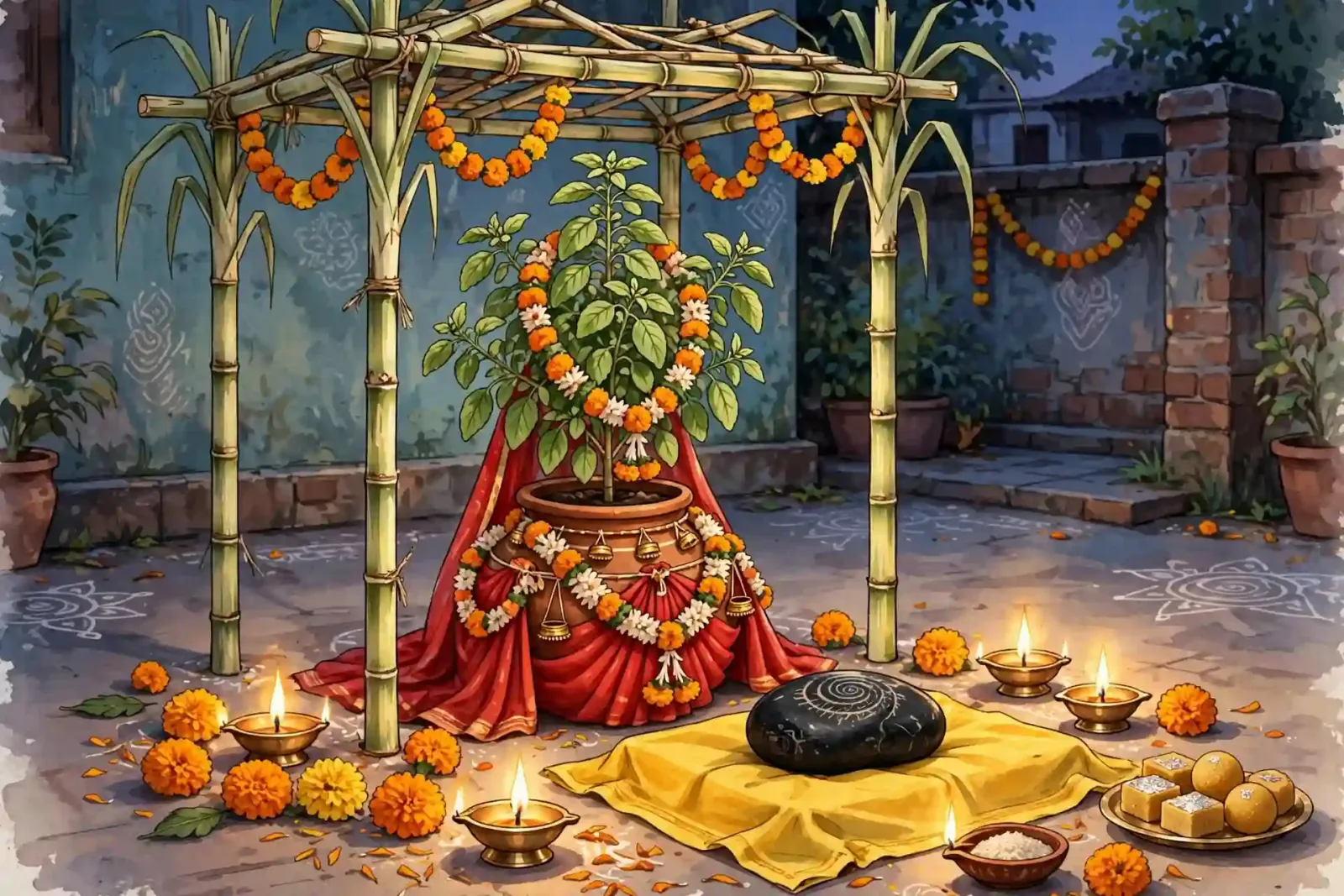
In practice, the rite is staged much like a family wedding, most often in the evening around sunset. Families clean and decorate the plant and the space around it, raise a small canopy of sugarcane stalks, and dress the tulsi in a red scarf or sari with bangles, vermilion and flower garlands. A Shaligram stone or an image of Vishnu, dressed in yellow cloth, is placed beside it, and the two are joined by tying the ends of their cloths together in a symbolic knot. Prayers, offerings of fruit and sweets, a lamp ceremony and four rounds around the canopy complete the ritual, after which the offered food is shared among family members and neighbours. Panchang listings for Saturday put the twilight window at 5:25 PM to 5:52 PM in Delhi, with the wider evening period running to 7:49 PM, while the daytime auspicious windows were 11:46 AM to 12:28 PM and 1:53 PM to 2:35 PM.
Celebrations were reported through the day. At Neh Nikunj on Rewa Road, the headquarters of the Pt. Ganesh Prasad Mishra Sewa Nyas, women gathered under a sugarcane-decorated pavilion to perform the wedding rituals, singing traditional wedding songs to the beat of drums and small cymbals and presenting folk dances alongside the prayers. In Uttarakhand, Chief Minister Pushkar Singh Dhami greeted residents on Friday for Dev Uthani Ekadashi and Tulsi Vivah, praying that the blessings of Vishnu and Tulsi bring happiness, peace, prosperity and positive energy to every home.
Customs vary from place to place, and not every household keeps the same day. Some families and temples performed the ceremony on Ekadashi evening, while others followed the Dwadashi tradition on Saturday, and regional practice also shapes the exact hour of worship. Festival guides therefore advise families to confirm the timing with a local Panchang and their family priest rather than treating any single national timing as universal.
For devotees, the appeal of the festival is both spiritual and deeply domestic. Unmarried worshippers traditionally pray for happiness and stability in their future married lives, while couples seek harmony and prosperity in their homes. As lamps were lit around decorated plants on Saturday evening, the message of the day was a familiar one: the long quiet months are over, and the season of weddings has begun again.