
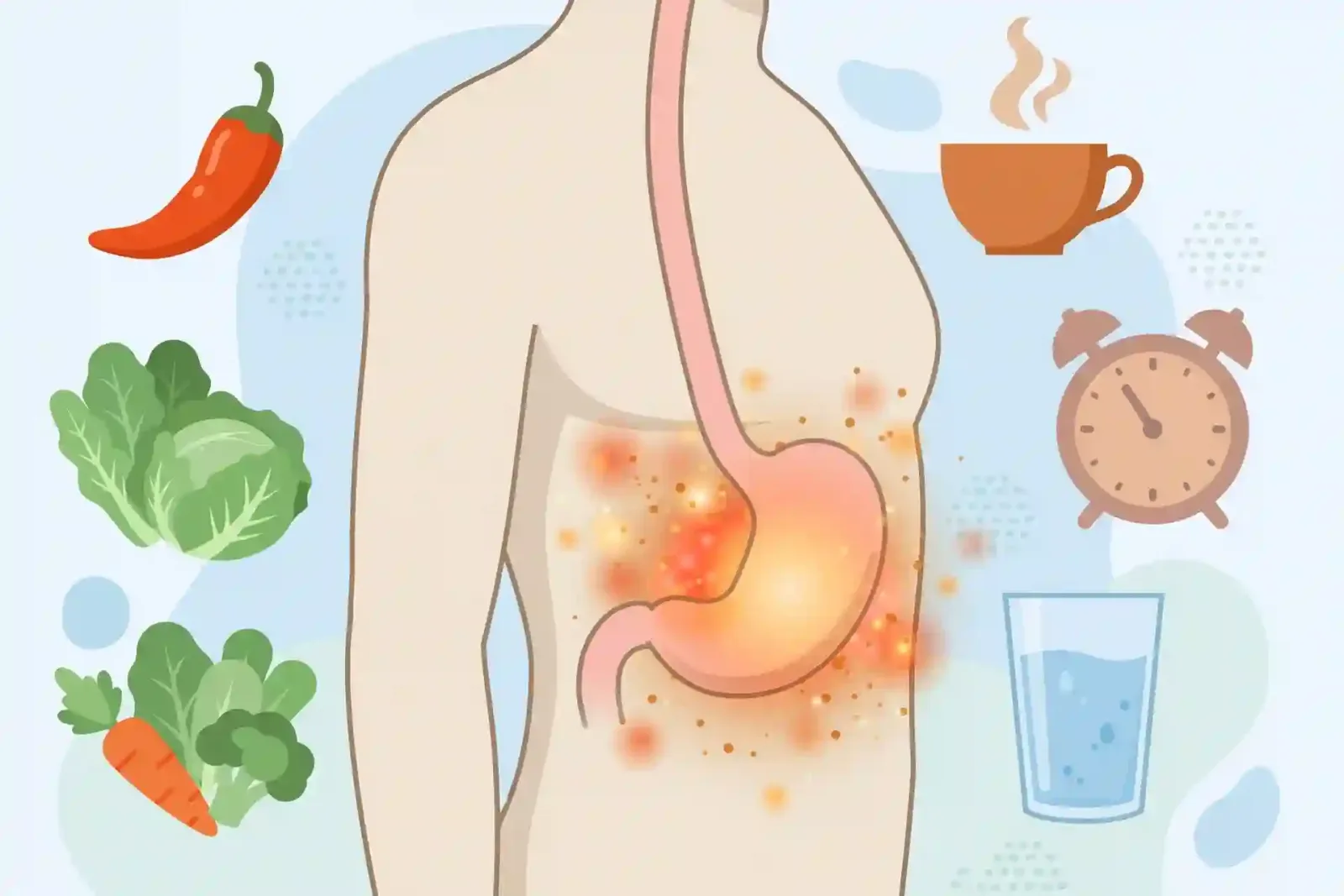
That burning feeling rising from your stomach to your chest after a heavy, spicy meal is something most of us know well. Acidity and gastric problems are among the most common health complaints in Bangladesh, affecting students, office workers and older adults alike. For many people the discomfort is occasional and settles with simple changes. For others it keeps coming back, disturbs sleep, and starts to interfere with work and appetite.
This guide explains, in plain language, what acidity and gastric problems actually mean, why they happen, which everyday habits make them worse, and what you can safely do at home. It also sets out clearly when self-care is no longer enough and a doctor's advice is needed. This is general information only — it cannot diagnose your condition, and it is not a substitute for medical advice about your own symptoms.
What acidity and gastric problems mean
Your stomach produces acid to break down food. Normally a protective mucus layer lines the stomach wall, so the acid does its job without harming you. Problems begin when that balance is disturbed.
Acidity, often felt as heartburn, happens when stomach acid flows back up into the food pipe (the oesophagus). That backflow is called acid reflux, and it causes a burning sensation in the chest or throat, sometimes with a sour taste in the mouth.
Gastric problems, in everyday language, usually refer to gastritis — inflammation or irritation of the stomach lining. When the lining is irritated, digestive juices can cause pain, indigestion and nausea. Gastritis can come on suddenly and severely, or develop slowly over time. Some people have no symptoms at all, which is one reason persistent discomfort should not simply be ignored.
Common symptoms to watch for
Symptoms vary from person to person, but the most commonly reported ones include:
• A gnawing or burning ache in the upper abdomen, which may feel worse or better after eating
• Indigestion, bloating and a feeling of fullness, sometimes after only a small meal
• Nausea, and occasionally vomiting
• Reduced appetite
• Heartburn — burning in the chest, often after meals or when lying down
Occasional mild indigestion after an unusually rich meal is common and usually passes. Symptoms that last for a week or longer, keep returning, or are getting worse deserve medical attention, even if they seem mild.
Why acidity and gastric problems happen
Several factors can irritate the stomach lining or increase acid backflow. The most common include:
Infection with Helicobacter pylori. This bacterium, known as H. pylori, is one of the most common causes of gastritis and stomach ulcers worldwide. Many people carry it without symptoms, but in some it inflames the stomach lining.
Regular use of certain painkillers. Anti-inflammatory painkillers such as ibuprofen, naproxen and aspirin can damage the stomach lining when used regularly or in high doses. If your discomfort tends to follow painkiller use, that pattern is worth mentioning to a doctor.
Food, drink and habits. Very spicy, fatty or acidic foods, fizzy drinks, coffee and strong tea, chocolate, and large late-night meals can all trigger symptoms in people who are already sensitive. Smoking and drinking too much alcohol also irritate the stomach lining and make reflux more likely.
Other factors. Being overweight puts extra pressure on the stomach. Severe stress from illness, injury or surgery can trigger acute gastritis. The stomach lining also tends to thin with age, which raises the risk in older adults.
What helps at home
For mild, occasional symptoms, lifestyle changes are often the first step, and they genuinely help many people. Consider these practical measures:
Eat smaller, more frequent meals. Large meals stretch the stomach and make backflow more likely. Smaller portions, eaten slowly and chewed properly, are easier to handle.
Watch the clock. Avoid eating within three to four hours of going to bed, and try not to lie down or bend over soon after a meal. Staying upright for a while after eating helps keep acid where it belongs.
Learn your triggers. Keep a simple note for a week or two of what you ate and when symptoms appeared. Common triggers include fried and fatty food, very spicy dishes, citrus juice, tomato-based food, coffee, fizzy drinks and alcohol — but your own pattern matters most.

Cut down on caffeine and fizzy drinks. Tea, coffee, cola and energy drinks are frequent culprits. Reducing them often eases symptoms within days.
Loosen the pressure. Avoid tight clothing around the waist. If you are overweight, gradual weight loss can reduce reflux. Raising the head of the bed by about 10 to 20 centimetres — with blocks under the bed legs, not extra pillows — can help night-time symptoms, because gravity keeps stomach contents down.
Do not smoke, and limit alcohol. Both irritate the stomach lining. Cutting down, or stopping, is one of the most effective long-term steps.
A pharmacist can also advise on short-term over-the-counter options that neutralise acid or form a protective layer. These can ease symptoms for a while, but they do not cure the underlying cause and should not be relied on regularly for long periods without medical advice. Always follow the pharmacist's guidance, and mention any other medicines you take.
Everyday prevention tips
Prevention is mostly about routine. Eat at regular times rather than skipping meals and then eating a very large one. Include plenty of vegetables, whole grains and other fibre-rich foods, and drink enough water through the day. Wash your hands often, especially before handling food — good hygiene helps reduce the spread of H. pylori. Manage stress where you can, with rest, gentle exercise, or relaxation practices that suit you; stress does not help an already irritated stomach. And if you need painkillers often, ask a doctor or pharmacist whether a stomach-friendlier option exists for you, rather than simply continuing and hoping for the best.
Common mistakes to avoid
A few habits quietly make acidity and gastric problems worse. Eating a heavy dinner late at night and going straight to bed is a classic one. So is lying down after lunch "for just five minutes," which often becomes an hour. Taking anti-inflammatory painkillers on an empty stomach, day after day, is another. Many people also self-treat for months with pharmacy medicines while symptoms slowly worsen — masking the discomfort without addressing the cause. Finally, do not stop any prescribed medicine on your own because you suspect it is upsetting your stomach; speak to the prescribing doctor first, so a safer alternative can be arranged if needed.
When to see a doctor
See a doctor promptly if any of the following apply:
• Stomach pain or indigestion lasts longer than a week, keeps coming back, or is getting worse
• You feel full after a very small meal, have lost your appetite, or have lost weight without trying
• Swallowing is painful or difficult, or food feels stuck
• You keep vomiting, or symptoms wake you from sleep or stop you eating and working normally
• Heartburn happens most days, or lifestyle changes and pharmacy advice are not helping
Seek urgent medical help immediately if you vomit blood or material that looks like ground coffee, pass black, sticky, very smelly stools, or develop severe stomach or chest pain that starts suddenly. These can be signs of bleeding or another serious problem and need emergency care.
A doctor can examine you, ask about medicines, diet and habits, and arrange tests if needed — for example to check for H. pylori. Treatment depends on the cause and may include medicines to reduce acid, treatment for infection, or referral to a stomach specialist if symptoms are severe or not improving. Untreated gastritis can, in some cases, lead to a stomach ulcer, which is another reason not to let persistent symptoms drift.
Frequently asked questions
Is acidity the same as gastritis? Not exactly. Acidity usually describes acid flowing back into the food pipe, causing heartburn. Gastritis is inflammation of the stomach lining itself. The two often overlap and share triggers, which is why they are commonly discussed together.
Can stress alone cause gastric problems? Severe physical stress from serious illness or injury can trigger acute gastritis. Everyday mental stress can worsen symptoms and make the stomach more sensitive, even if it is not the only cause.
Should I avoid all spicy food forever? Not necessarily. Triggers differ between people. Many find that reducing very spicy, fatty and acidic foods during a flare-up, then reintroducing them in moderation, works better than a permanent blanket ban.
How long should I try home measures before seeing a doctor? If symptoms are mild and clearly linked to a particular meal, a few days of sensible changes may be enough. If they last a week or longer, return often, or include any of the warning signs above, book an appointment rather than waiting.
Acidity and gastric problems are common, but "common" does not mean you have to live with them. Smaller meals, sensible timing, fewer known triggers, no smoking and limited alcohol resolve many cases. When symptoms persist or warning signs appear, early medical advice protects you from complications and gets you the right treatment sooner. Listen to your stomach — it is usually telling you something worth hearing.