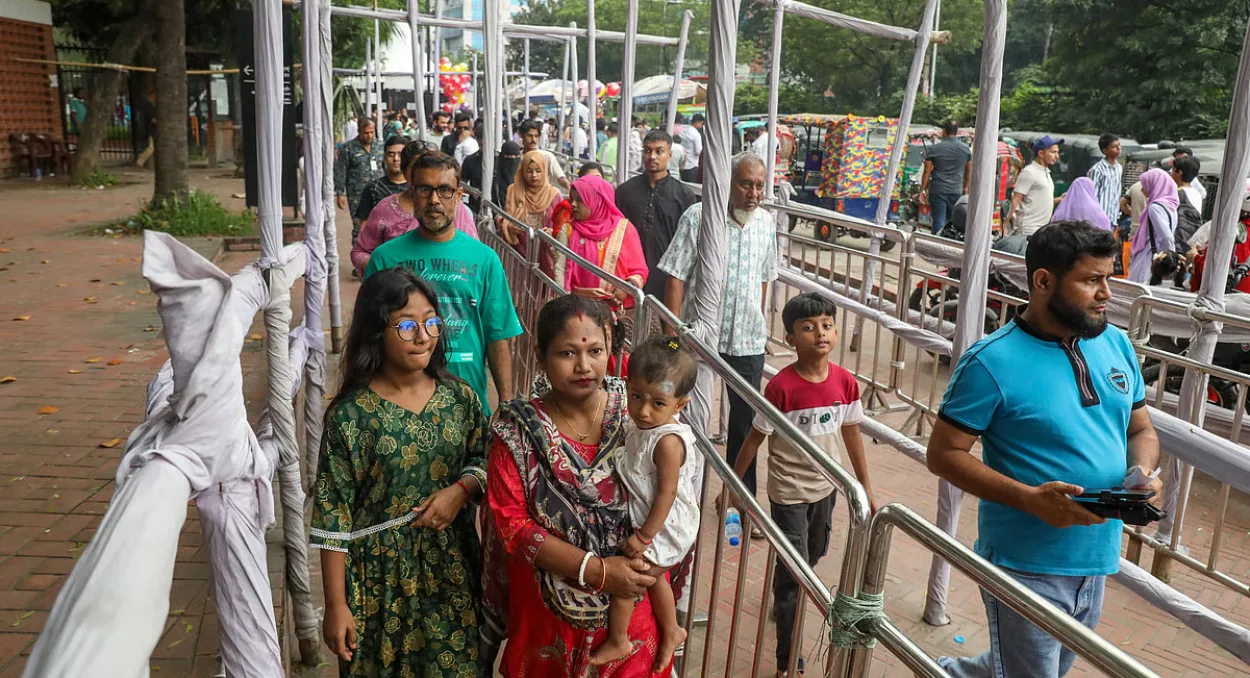
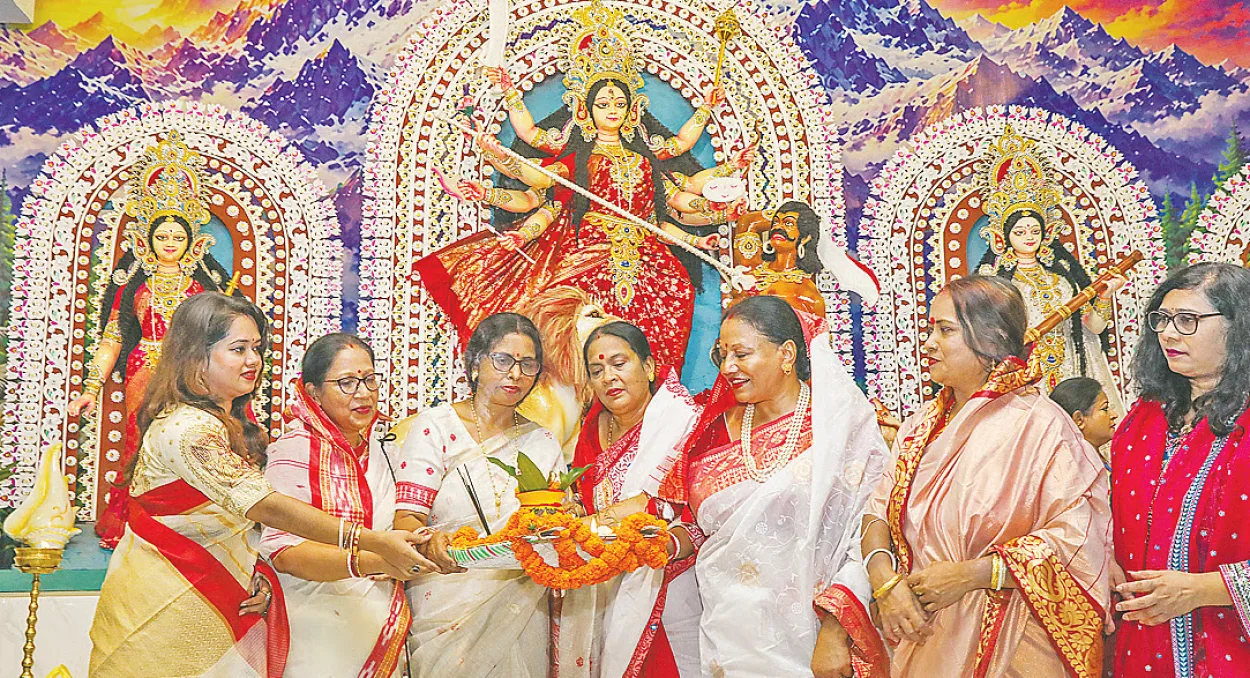
The grand celebration of Sharadiya Durgapuja commenced across Bangladesh on Friday with sacred chants, uludhvani, and the rhythmic beats of traditional dhaks, conch shells, and gongs, marking the auspicious occasion of Durga Shashthi. The festivities progressed into Maha Saptami on Saturday, initiating the core rituals of the Hindu community's largest religious festival.
According to ritual schedules, Maha Saptami spans two days this year. The first phase commenced on Saturday morning between 7:39 AM and 9:57 AM with the enshrinement of Nabapatrika, Saptamadi Kalparambha, and Maha Saptami bihita puja, while the second day of Saptami will be observed on Sunday.
The formal rituals began at 9:00 AM on Friday beneath the sacred bel tree at the Dhakeshwari National Temple premises, which had been elaborately decorated with flowers, ritualistic food offerings, fresh fruits, and traditional lamps emitting fragrant incense smoke. Priests gathered at the altar to recite sacred hymns, accompanied by the resounding echoes of traditional instruments and fervent prayers from devotees seeking divine protection and universal peace. Following the morning rituals, priest Dharmadas Chattopadhyay led an offering session, praying for the eradication of all malevolence and the establishment of enduring peace in every household.
The evening of Friday witnessed the ceremonial invitation and adhivash of Goddess Durga, who arrived this year riding a horse and is scheduled to depart on a boat, according to scriptural traditions. Mythology recounts that the Goddess descends from Kailash to her paternal earthly abode to vanquish demonic forces that had previously dislodged the gods from heaven.
The five-day festival will continue with Maha Ashtami on Monday, Maha Navami on Tuesday, and will conclude on Wednesday with Bijaya Dashami and the immersion of the Goddess's idols. Official figures from the Bangladesh Puja Udjapan Parishad and Mahanagar Sarbojanin Puja Committee indicate that this year's celebrations are taking place across 33,851 mandaps nationwide, including 258 mandaps in the capital city of Dhaka.