
World Cup fever tests fan loyalty and sleep patterns in Bangladesh
World Cup fever tests fan loyalty and sleep patterns in Bangladesh
For those suffering from insomnia, the FIFA World Cup has arrived as a welcome companion, offering a legitimate excuse to embrace midnight broadcasts fueled by caffeine and snacks. While the erratic scheduling of this year’s tournament—ranging from late-night kickoffs to early morning matches—poses a logistical challenge for the sleep-deprived, it highlights the universal pull of the world’s most popular sport.
For others, the struggle is biological. At nearly eighty-five, the allure of the tournament often competes with an ingrained, nocturnal rhythm that makes staying awake past a standard bedtime a formidable task. Despite a determined effort to catch the opening ceremony and the inaugural match, even the consumption of multiple cups of coffee often proves insufficient against the natural urge to sleep, leading to a reliance on morning newspapers to catch up on the results.
This emotional investment in the tournament often extends to countries previously visited. There is a particular affinity for nations like Mexico, cherished for their vibrant artistic history and resilient cultures, even when their journey on the global stage remains uncertain. This personal attachment often forces a quiet internal resolution when two favored teams clash, a dilemma usually solved by a private, mental coin toss to decide where loyalties lie for the duration of the match.
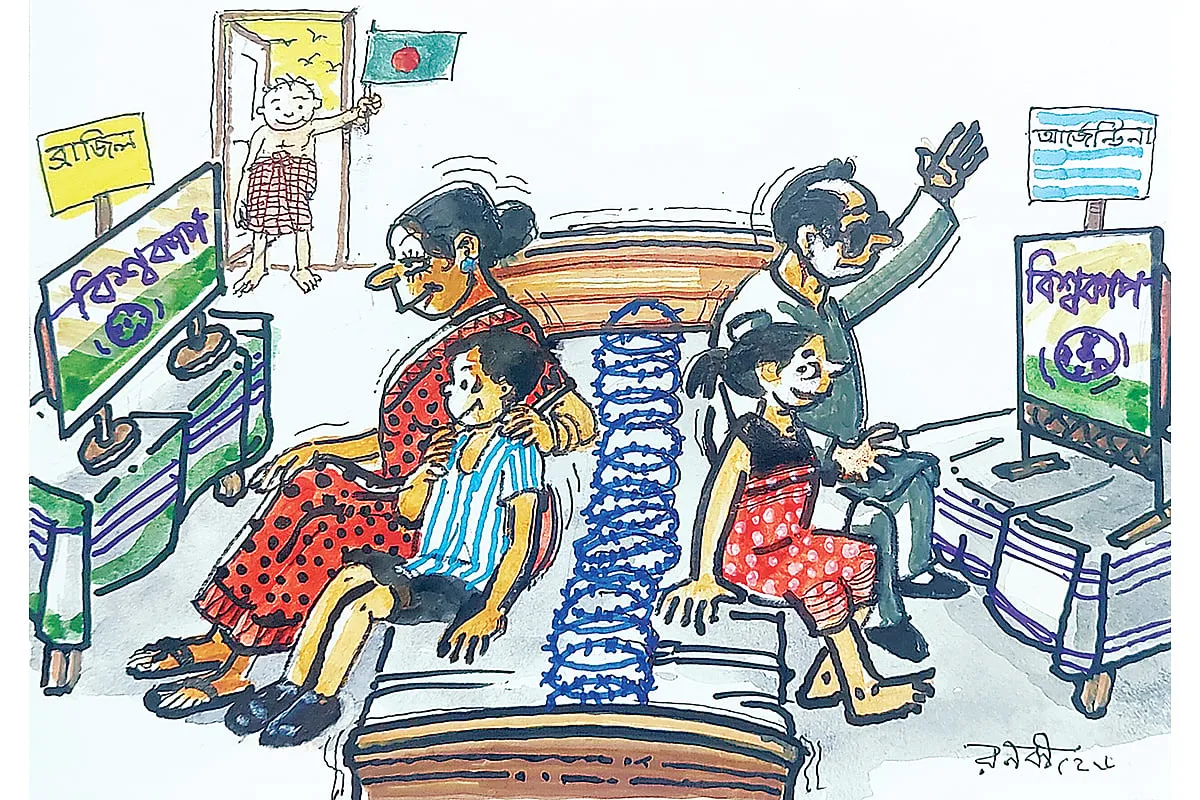
While casual followers may only recognize the sport’s modern titans—Ronaldo, Mbappé, Neymar, and Messi—the sheer tactical skill and intelligence displayed by these players remain a source of genuine wonder. Yet, the atmosphere in Bangladesh during the World Cup is unique, characterized by a fervor that transcends borders. Streets are draped in the flags of Brazil and Argentina, and households are frequently divided by spirited, generational debates over which footballing giant commands greater loyalty.
This passion underscores a bittersweet irony: despite the intense national craze for the sport, the absence of a local team on the world stage remains a point of reflection. There is a lingering hope that, much like the progress seen in cricket, the nation’s enduring love for football will one day lead to its own flag appearing in the tournament.
In the spirit of the underdog, there is a distinct pleasure in witnessing powerhouses falter against less-heralded squads, particularly in a year where the gap in technical skill between nations continues to narrow. As the tournament progresses, attention will likely turn toward teams facing internal or external hardships, such as Iran, whose performance on the pitch will undoubtedly be bolstered by immense emotional resilience. Regardless of the sleep lost or the inevitable upsets, the World Cup remains a unifying force, a global theater that momentarily bridges the divides of a fragmented world.