



Thousands of Tourists Ignore Warning Flags as Dangerous Rip Currents Grip Coxs Bazar Beach
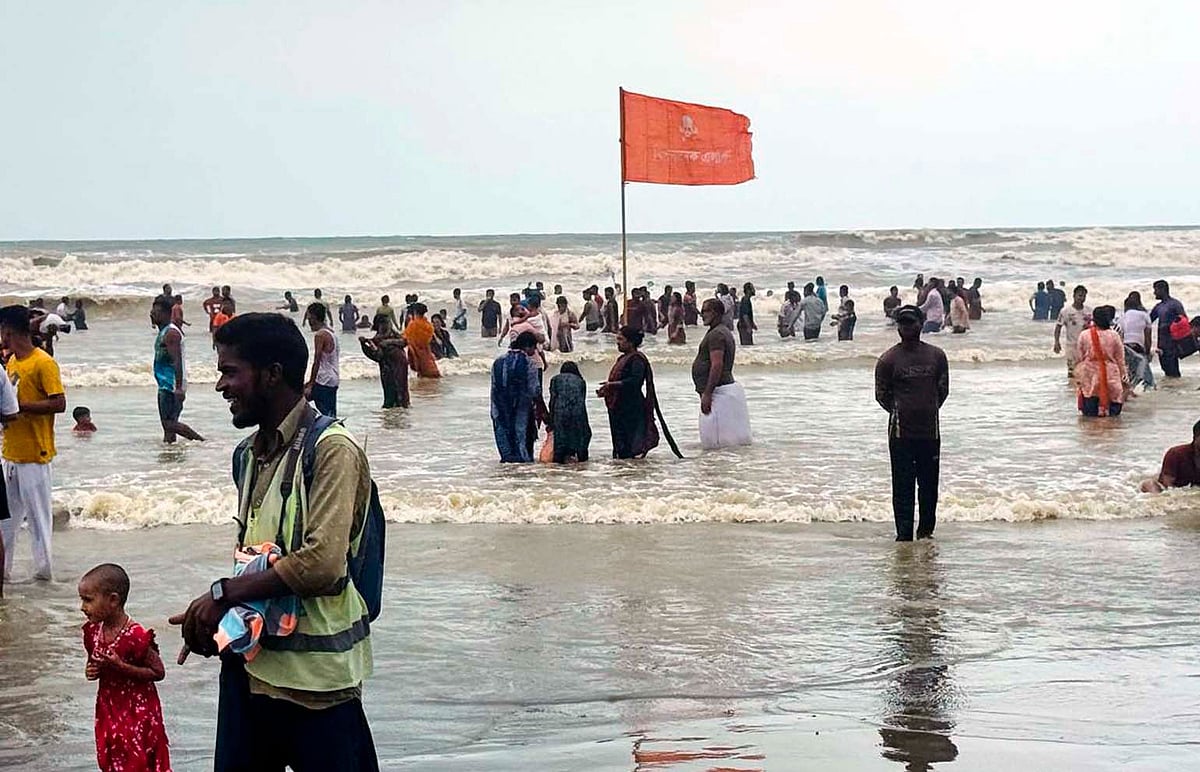
Photo Collected
Thousands of tourists defied heavy rainfall and life-threatening conditions at Cox’s Bazar beach on Saturday, ignoring explicit safety warnings as they waded into an increasingly turbulent sea. Despite the deployment of red flags marking at least 17 treacherous “hidden channels” along the shoreline, authorities reported that visitors repeatedly disregarded directives from lifeguards to stay out of the water.
According to the private lifeguard firm Sea-Safe, the five-kilometer stretch of coastline from Kolatoli to Laboni Point remains the epicenter of the danger. As of Saturday afternoon, an estimated 40,000 tourists had visited the area, with nearly 40 percent ignoring safety protocols to swim in the rough surf. Lifeguards, operating with a skeleton crew of just 27 personnel, struggled to manage the massive crowds, many of whom ventured deep into the ocean using inflatable tubes, forcing rescuers to rely on loudspeakers and constant patrols to prevent fatalities.
বিজ্ঞাপন
Regional manager of Sea-Safe, Imtiaz Ahmad, warned that these hidden channels can reach depths of six to ten feet. He emphasized that the current weather patterns have rendered the water particularly volatile, with outgoing tides creating powerful undercurrents. While lifeguards are equipped to assist those swept away by waves, the beach lacks specialized divers required to retrieve individuals trapped in these deep channels. Over the past two days alone, lifeguards have rescued 12 people from life-threatening situations.
The disregard for safety is a persistent issue, exacerbated by the sheer scale of the tourist influx. Data from Sea-Safe reveals that between 2015 and June 2024, 76 tourists have drowned while swimming at Cox’s Bazar, with 25 fatalities recorded last year alone. During the same period, lifeguards rescued over 1,000 individuals, many of whom were aged between 16 and 28. Recent tragedies, including the drownings of two young men in late May and June, underscore the lethal risks posed by the unmonitored stretches of the coast beyond the primary beach points.
বিজ্ঞাপন
Despite warnings and ongoing adverse weather conditions, tourist numbers have begun to climb again following a brief lull caused by heavy flooding that disrupted transportation routes across the region. Mukim Khan, general secretary of the Hotel-Resort Owners Association, noted that while approximately 20,000 guests are currently occupying local hotels, the total number of people on the beach swelled to over 50,000 on Saturday, driven by a surge of day-trippers. With travel restrictions in place for mountainous regions like Bandarban and Rangamati, tourism officials anticipate that Cox’s Bazar will see continued pressure, heightening concerns for public safety along the unprotected 115-kilometer stretch of coastline from Kolatoli to Teknaf.
0%
0%
0%
0%