

Scholars and Activists Call for Preservation of Cultural Records from July Mass Uprising
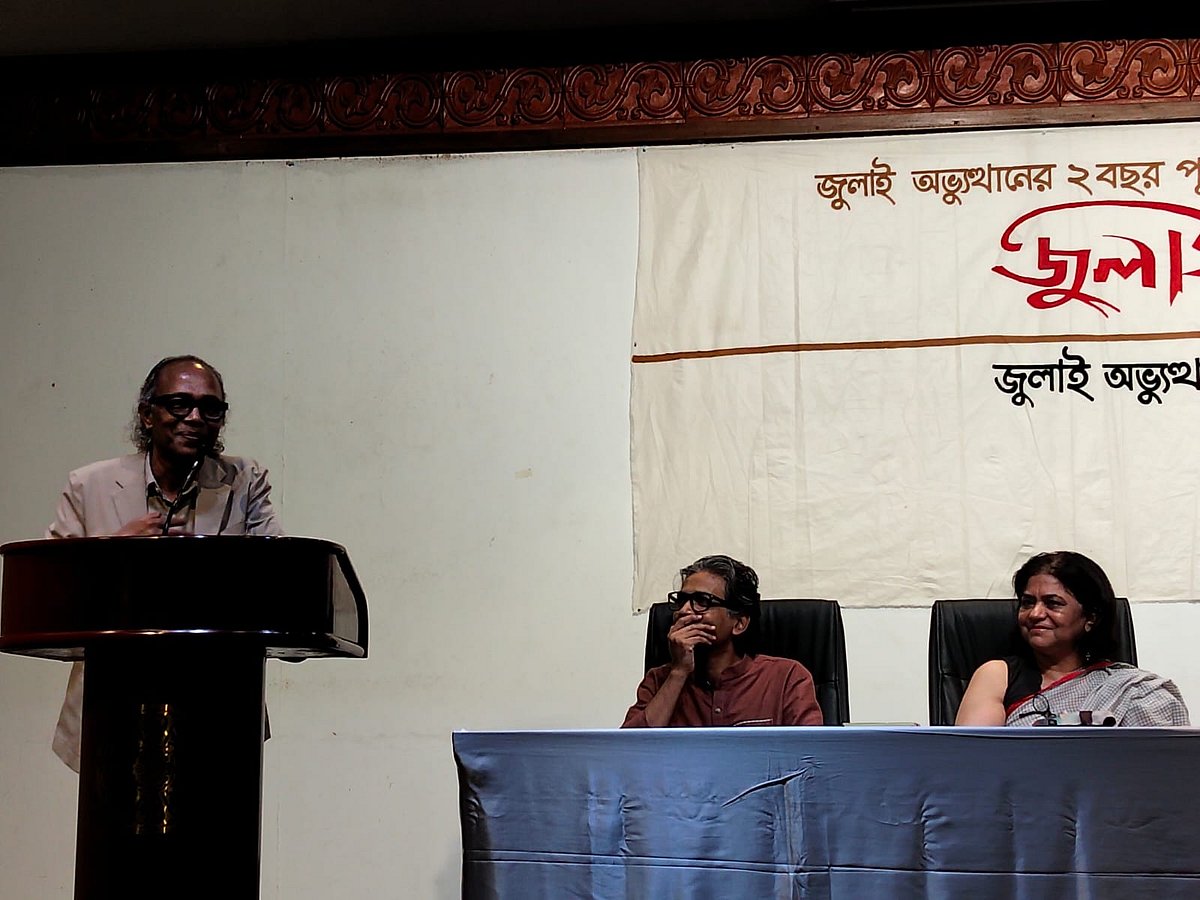
Photo Collected
Cultural activists and scholars are calling for the urgent preservation of songs, poetry, and slogans that defined the 2024 July uprising, arguing that failure to archive these cultural artifacts risks diminishing the historical significance of the movement. Proponents emphasized that such records serve as vital historical documentation, akin to the artistic expressions that fueled the mass movements of 1969 and 1990.
The discussion, titled “July Mass Uprising: A New Journey of Struggle,” was hosted by the cultural organization Samageet Sanskriti Prangan at the Sufia Kamal Auditorium in the National Museum at Shahbag on Saturday. The event commemorated the uprising while addressing the need to protect its legacy for future generations.
New Age editor Nurul Kabir noted that a comprehensive history of any mass uprising cannot be written solely through the lens of political parties and leadership. He cited the 1990 movement as a cautionary tale, where the lack of systematic archival of its protest art meant that younger generations lost a nuanced understanding of the era’s sacrifices and scale. Kabir urged the necessity of building an organizational and ideological foundation for future political movements rooted in this historical preservation.
Senior Supreme Court lawyer Sara Hossain expressed concern over what she described as a “politics of denial” emerging two years after the uprising. She noted that participants of the movement are currently facing systematic disinformation campaigns. Hossain also critiqued a perceived hypocrisy in public discourse, where some activists who once stood against injustice remain silent when similar abuses occur against political opponents. She asserted that justice must be pursued universally, regardless of the target, and that preserving the cultural artifacts of July—including posters, photography, and music—is essential to maintaining the movement’s core demands for systemic reform and human rights.
Taslima Akhter, president of the Bangladesh Garment Sramik Sanghati, pointed to the evolution of protest language between 1990 and 2024. She stressed the importance of studying these shifts, noting that understanding the changing mindset and aesthetic preferences of the new generation is critical for future cultural engagement. Poet and artist Kafil Ahmed echoed these sentiments, describing protest music not as mere entertainment but as a visceral response to societal pain and oppression. He argued that honoring the martyrs requires a commitment to dismantling exploitation and servitude at every level of the state.
During the event, a book titled “Songs of the July Mass Uprising” was unveiled. Compiled by Bithi Ghosh, the anthology contains 230 songs from various individuals and organizations involved in the movement. The discussion was presided over by Samageet president Rebeka Nila and featured remarks from protest singer Amal Akash. In tandem with the discussion, the organization hosted an art exhibition titled “Call of July,” featuring works by 30 artists.
0%
0%
0%
0%
More News from Local