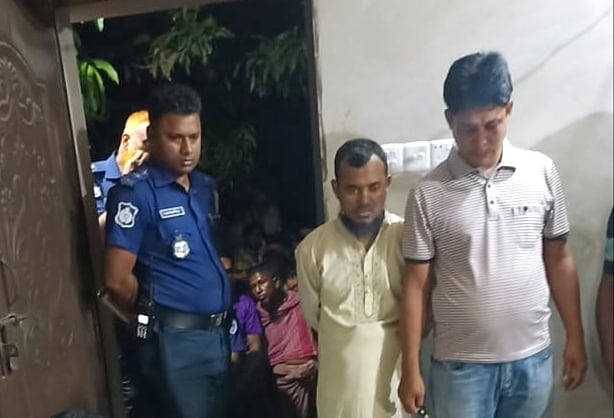
Rising Violent Crime and Persistent Muggings Plague Dhaka Transit Hub Jatrabari

Photo Collected
Jatrabari, the vital gateway linking Dhaka to the southern and eastern regions of Bangladesh, has become a hotbed for rampant mugging and violent crime. Despite recurring police operations and hundreds of arrests, the area remains notoriously insecure, posing persistent threats to commuters and travelers alike.
Between January and July 2025, Jatrabari police recorded 119 cases related to mugging and attempted robbery, with authorities arresting 1,151 suspects. Disturbingly, these criminal activities have claimed at least three lives since the start of the year. The frequency of these crimes is exemplified by the experience of Dr. Shamsunnahar Hena, who was robbed at knifepoint by three assailants while traveling in a rickshaw toward Sadarghat on February 3. Although her mobile phone was recovered through personal connections, her belongings were never fully retrieved.
The strategic importance of Jatrabari has surged following the inauguration of the Padma Bridge, turning the area into a primary transit point for travelers from the Khulna and Barisal divisions. However, the high volume of traffic and the proximity of the Sayedabad bus terminal have created an environment ripe for exploitation. Research conducted by the Department of Criminology at the University of Dhaka identified the Jatrabari intersection, Kazlarpar, the Chittagong highway corridor, Dolaipar, and the Sayedabad bus stand as high-risk zones. The study highlights that the heavy flow of people and easy escape routes make these locations ideal for criminals who strike most frequently at dawn and dusk.
Local residents and business owners report that criminals operate with a sense of impunity. Sharifur Mia, a local tea stall owner, described persistent attempts by muggers to snatch mobile phones from passengers through bus windows, often in broad daylight and even in the vicinity of law enforcement personnel. Commuters frequently report that while bus supervisors issue warnings to keep windows shut, these measures are often insufficient to deter coordinated groups of thieves.
Police officials attribute the ongoing crisis to the transient nature of the offenders. Mohammad Raju, the Officer-in-Charge of Jatrabari Police Station, stated that many suspects are nomadic, entering the area to commit crimes before dispersing. He claimed that police efforts have reduced overall crime rates and that many detainees are processed through mobile courts. However, victims frequently note that suspects released on bail often return to criminal activity immediately.
The human cost of this unchecked criminality remains severe. Families of victims, such as the father of Md. Yusuf, an auto-rickshaw driver murdered in the area last year, continue to express deep skepticism regarding the judicial process, noting that those arrested for lethal muggings are often released on bail. The situation reached a grim turning point this past Monday, when an unidentified man died after being beaten by a mob for attempting to snatch a woman’s earrings near the Jatrabari bus station.
Public frustration is mounting as the transit corridor remains fraught with danger. For transport workers like Mozammel Haque, whose bus was stormed by armed robbers on May 25, the risk is an unavoidable professional hazard. “This road is terrifying,” Haque remarked, “but we have no choice. To reach Dhaka, we must pass through Jatrabari.”
0%
0%
0%
0%