President Mirza Fakhrul Islam Alamgir Vows Legal Action Against All Perpetrators of Enforced Disappearances
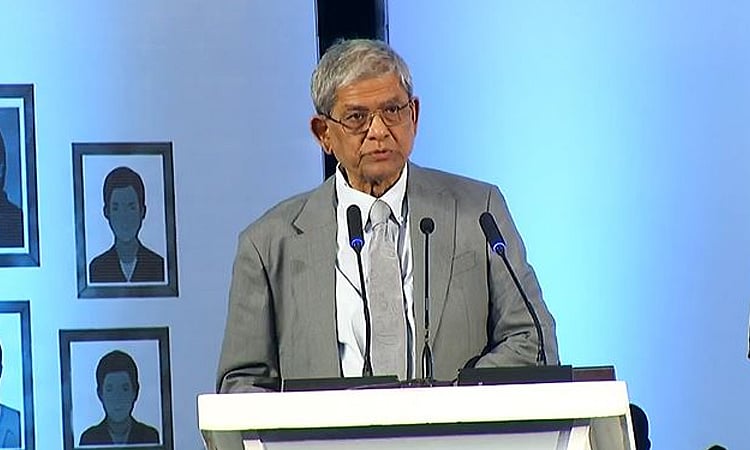
Photo Collected
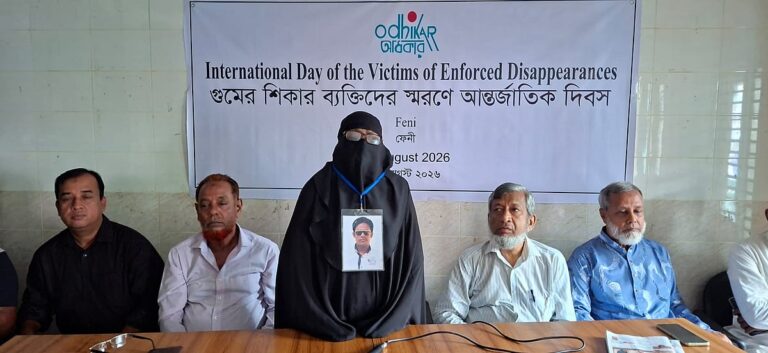
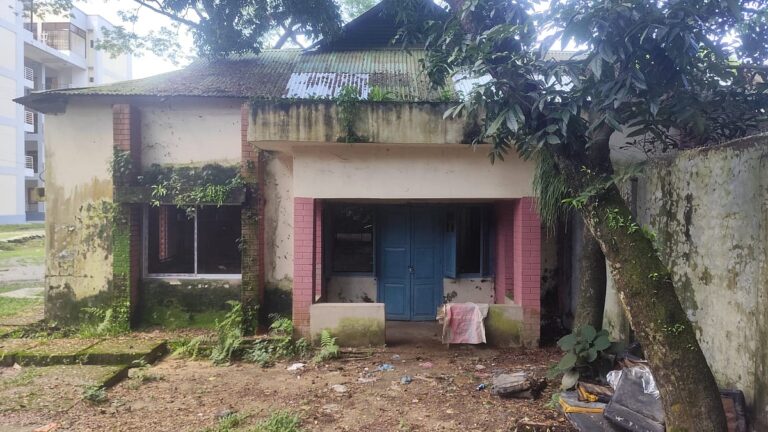
President Mirza Fakhrul Islam Alamgir vowed on Sunday that all individuals responsible for enforced disappearances in Bangladesh will face justice, regardless of their political influence. Speaking at an event marking the International Day of the Victims of Enforced Disappearances in Dhaka, the President declared that such clandestine detention centers, often referred to as “Aynaghar,” will no longer exist in the country.
The event, hosted by the Ministry of Liberation War Affairs at the Bangladesh-China Friendship Conference Center, served as a platform for the President to address the systemic abuses carried out over the past fifteen years. President Alamgir emphasized that the avenues for the return of fascism must be permanently closed, adding that the state has a sacred duty to support the families of the victims. He asserted that no mother should have to weep for a lost child and no wife for a missing husband due to political vendettas.
Reflecting on the previous administration, the President described the era as one defined by a “fascist” grip, where critics, journalists, and activists were silenced through abductions and extrajudicial killings. He criticized state institutions for having facilitated these crimes while consistently denying their occurrence. He noted that the recent student-led uprising forced the previous regime to flee, and the focus must now shift toward legal redress rather than acts of retribution.
President Alamgir underscored that enforced disappearance is a gross human rights violation that strips away the peace and stability of entire families. He cited the constitutional guarantee of life and personal liberty, stating that these rights were routinely trampled by the former regime. He paid tribute to numerous high-profile victims of the past, including Ilias Ali, Chowdhury Alam, Sajedul Islam, Salahuddin Ahmed, Mir Ahmad Bin Quasem, and Brigadier General (Retd.) Abdullahil Aman Azmi, among many others from diverse professional and political backgrounds.
The President also acknowledged the vocal opposition of the late former Prime Minister Khaleda Zia, who had long campaigned against the culture of disappearances. He praised the resilience of activists such as Sanjida Islam Tuli, who championed the cause against state-sponsored abductions during the period of political unrest.
Beyond criminal prosecutions, the President urged the state to take responsibility for the rehabilitation, social security, medical care, and education of the victims’ families. He outlined a vision for a future Bangladesh where political differences coexist without the threat of vengeance, and where the exercise of state power remains strictly constrained by the constitution and the rule of law.
The event was presided over by Minister of Liberation War Affairs Ahmed Azam Khan. Other notable attendees included Minister of Home Affairs Salahuddin Ahmed, Minister of Law, Justice and Parliamentary Affairs Md. Asaduzzaman, and State Minister for Liberation War Affairs Ishrak Hossain. During the proceedings, family members of the victims shared their harrowing accounts and reiterated their demand for formal investigations and accountability.
0%
0%
0%
0%
More News from Local