President Mirza Fakhrul Islam Alamgir to Occupy Historic Bangabhaban Residence
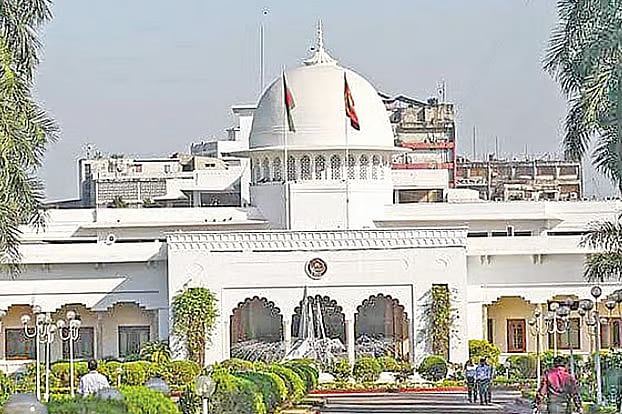
Photo Collected
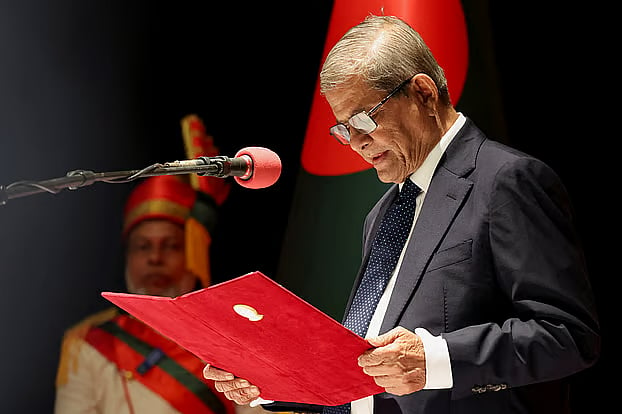
Newly appointed President Mirza Fakhrul Islam Alamgir is set to take up residence at Bangabhaban, the official home and office of the President of Bangladesh, this Sunday. The move follows his formal oath-taking ceremony held at the presidential palace’s Darbar Hall last Friday evening.
Bangabhaban, a site of significant historical weight, traces its origins to the 1905 partition of Bengal. When the British government divided the region into West Bengal—with its capital in Kolkata—and the province of Eastern Bengal and Assam, Dhaka was designated as the administrative center for the latter. To accommodate the newly appointed Lieutenant Governor, Sir Joseph Bampfylde Fuller, the colonial authorities commissioned a residence on the grounds of Dana Dighi Maidan in the Dilkusha area.
Construction of the initial structure began in 1905 on land formerly owned by the Dhaka Nawab family. Sir Salimullah, a key figure in the Nawab family, proposed the site, leasing a portion of the family’s garden to the British government. Sir Bampfylde Fuller personally selected the location, and by 1906, he had already moved into the developing residence. The project was completed in 1911.
Historical records, including those documented in Muntasir Mamun’s *Dhaka: Smriti Bismritir Nagori* and the Asiatic Society of Bangladesh’s *Dhaka Kosh*, note that the building served as the seat of the legislative council for the province of Eastern Bengal and Assam until the partition was annulled in 1911. Subsequently, the building—then known as Government House—continued to be used by provincial governors during their visits to the city.
The original structure was renowned for its unique composition and was often referred to as the “Timber Palace.” Spanning 25,128 square feet, the edifice was built largely from teak wood, with floors raised four feet above ground level. However, a devastating cyclone in 1961 rendered the wooden palace unusable, prompting the provincial administration to initiate a reconstruction project.
Architect Moinuddin Chishti of Lahore was commissioned to design the new building, incorporating Islamic architectural influences at the request of the then-governor, Azam Khan. The current 84,000-square-foot, two-story structure was completed on January 17, 1964, featuring a grand Darbar Hall, official offices, and private quarters.
Following damage sustained during air raids in the 1971 Liberation War, the building underwent significant renovations. Following the independence of Bangladesh, the site was officially renamed Bangabhaban and designated as the permanent residence and office of the President. The first cabinet meeting of the newly independent nation was held there on December 23, 1971. In the decades since, the building has been expanded to meet modern requirements and is now decorated with artworks by prominent Bangladeshi artists.
0%
0%
0%
0%