
NCP Leader Nasiruddin Patwary Announces Media Blackout Following Coordinated Attacks on Party Officials
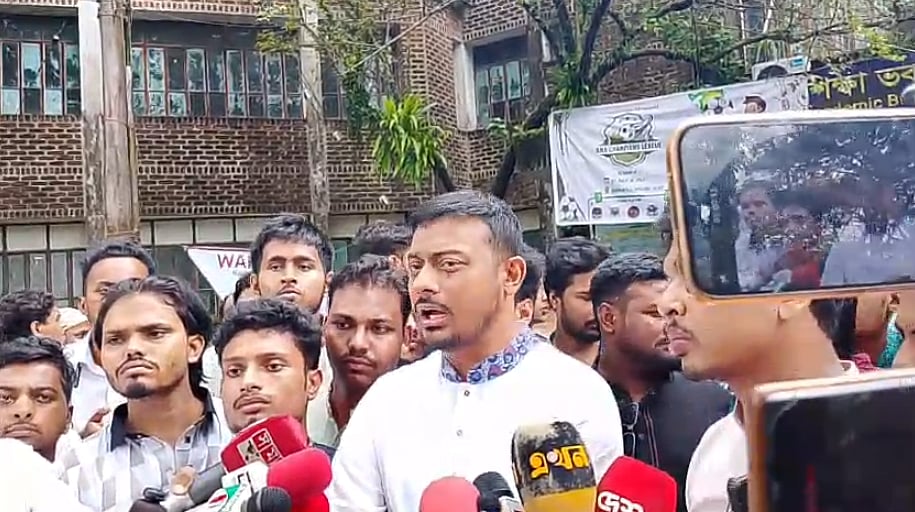
Photo Collected
Nasiruddin Patwary, the chief coordinator of the National Citizens Party (NCP), has announced he will remain silent regarding political developments following a series of violent attacks against his party members. Patwary, who made the remarks on Thursday afternoon at Shahjalal University of Science and Technology in Sylhet, stated that he would no longer comment on the situation but would observe how far the current climate of unrest escalates.
The announcement came shortly after reports emerged that a vehicle carrying Sarjis Alam, the NCP’s chief organizer for the northern region, was attacked in Golapganj. The vehicle’s rear window was shattered as the team departed from an event at the Golapganj Municipal Auditorium. Patwary explicitly blamed members of the Chhatra Dal for the assault, noting that the attackers justified the violence by citing his own public statements.
This latest incident follows an aggressive confrontation on Tuesday in Habiganj, where the NCP’s vehicle convoy was attacked and several members were beaten following a “July Procession” program. The resulting tensions led to local administration imposing Section 144, prohibiting public gatherings, which prevented central NCP leaders from holding a planned protest march. While Patwary indicated that police are finalizing an FIR regarding the Habiganj incident, he expressed deep frustration over the prevailing culture of impunity in the country.
During his address, Patwary highlighted the plight of Alif Chowdhury, a youth organizer who suffered severe injuries during the Habiganj attack. He issued a direct appeal to Tarique Rahman, calling for accountability regarding the irreparable harm done to Chowdhury. Patwary questioned whether the political leadership could restore the vision lost by the young activist, emphasizing that the party does not wish to see further political violence.
Patwary warned that the state is regressing into a “sanctuary for terrorists,” mirroring patterns of political intimidation seen in the past. He accused the government of employing old tactics to suppress new political forces and stifle democratic reform. Despite these challenges, he maintained that the NCP remains committed to its agenda of reform and public advocacy.
Addressing the government directly, the NCP leader suggested that the ongoing attacks signal a reluctance to embrace democratic change. He cautioned that if the administration continues to facilitate or ignore such violence, it will face significant public resistance. Despite his pledge to remain silent, Patwary asserted that the party would continue its programs, stating that the ultimate judgment on these actions rests with the people of Bangladesh.
0%
0%
0%
0%