Last artisan of Rajshahi cane district holds onto fading legacy as craft declines
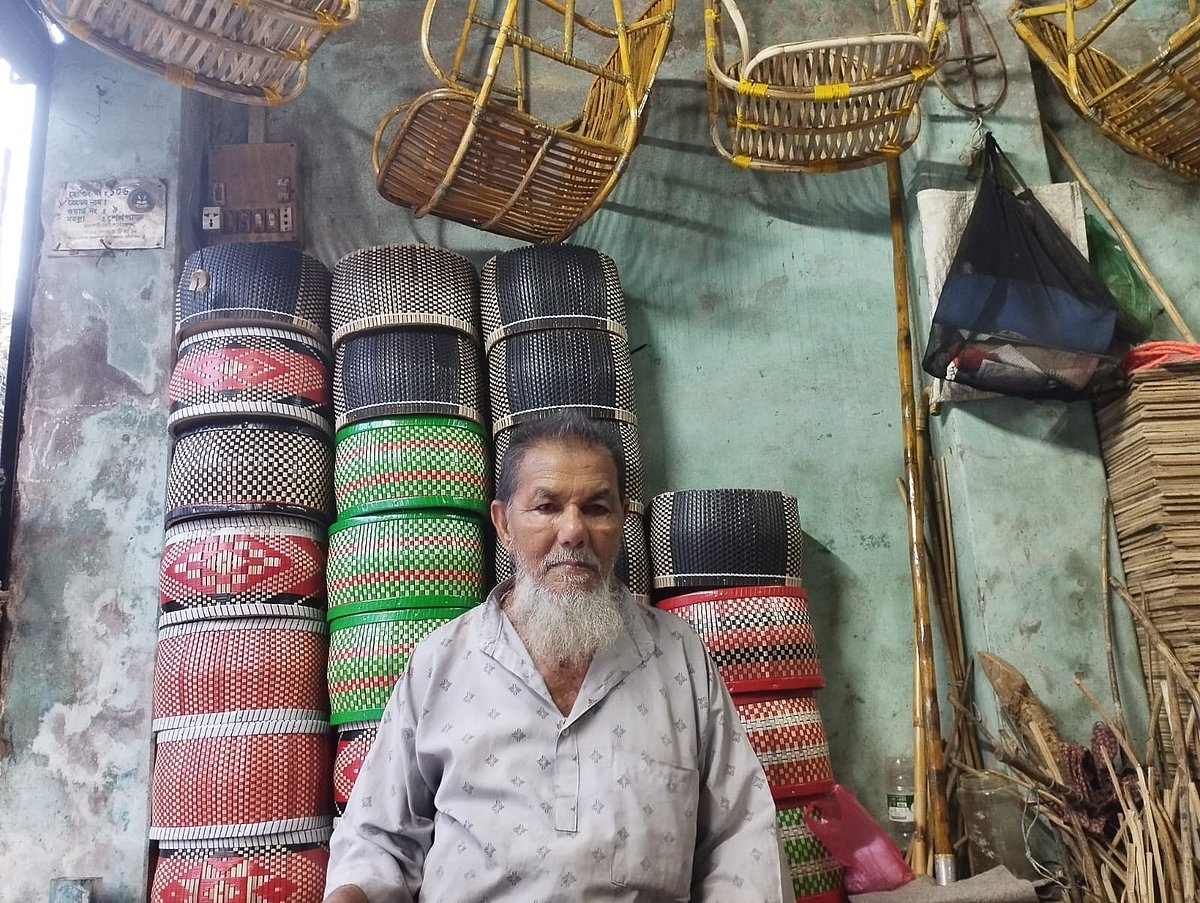
Photo Collected
For seven decades, Fooridur Rahman has been the living history of Rajshahi’s rattan industry, a craft that once defined the bustling Shekharpara district. Originally a hub of activity where artisans and traders congregated, the area has slowly succumbed to silence, leaving Rahman as the final custodian of a vanishing trade.
Rahman arrived in Rajshahi as an orphan, seeking a new life with distant relatives after losing both parents by the age of 15. What began as a temporary stay evolved into a permanent residence, where he built a career that once commanded a team of 22 artisans and a network of shops across the city. His expertise, honed in his native Sylhet and refined in Rajshahi, earned him contracts for prestigious institutions, including the local engineering and cadet colleges.
বিজ্ঞাপন
Today, the vibrancy of the “Betpatti”—or rattan quarter—has faded, leaving only three shops standing. Rahman’s store remains a testament to his enduring dedication, filled with hand-woven chairs, intricate baskets, and nursery swings. Despite his advanced age and the physical toll of a lifetime of labor, his presence remains a focal point for those seeking quality craftsmanship.
Behind the aesthetic appeal of the shop lies a history of personal loss. Rahman reflects on his ancestral home in Sylhet’s Kazirbazar with a sense of weary resignation. Over the decades, his absence allowed distant relatives to seize the land, a loss he has come to accept as irreparable due to the lack of documentation and legal standing. He views the cost of travel and the emotional void left by the passing of his immediate family as barriers to returning, noting that the pull of a home is tied to the people who once inhabited it.
বিজ্ঞাপন
The industry itself is facing an existential crisis. Modern alternatives such as plastic, steel, and mass-produced furniture have eroded demand, and the pool of skilled, dedicated labor has shrunk significantly. Rahman’s own innovation, such as his pioneering use of plastic strips to weave furniture during a rattan shortage prior to the nation’s independence, was once met with skepticism before becoming an industry standard. Yet, he finds little comfort in this legacy as he struggles to find successors who share his commitment.
His children have shown interest in the property, but according to Rahman, they lack the dedication to the craft that defines true ownership. Following a stroke last year, his ability to work has diminished, and he now spends his days overseeing the shop, watching as customers demand lower prices and younger artisans prioritize convenience over precision.
As he sits among the remnants of his life’s work, Rahman acknowledges the inevitable closure of his shop once he is no longer there to guide it. In a city that has changed beyond recognition, he remains a solitary figure guarding the fragments of a trade that requires not just raw material, but a legacy of patience and passion that is becoming increasingly difficult to find.
0%
0%
0%
0%