

Jagannath Universitys only female dormitory faces severe overcrowding and infrastructure crisis
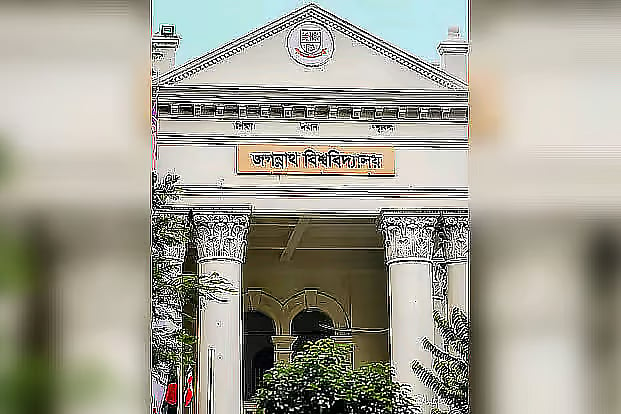
Photo Collected
Students residing at Jagannath University’s sole female dormitory, the Nawab Faizunnesa Chowdhurani Hall, are grappling with severe living conditions characterized by acute overcrowding, failing infrastructure, and a lack of essential services. Despite being inaugurated four years ago, the 16-story facility has struggled to manage a student population that far exceeds its intended capacity, according to reports.
Designed to accommodate 600 students with four residents per room, the hall currently houses approximately 1,250 women. This discrepancy has forced university officials to cram eight students into spaces originally meant for four, often by supplementing provided steel beds with additional, narrow makeshift cots. Residents report that this extreme density leaves them without adequate study space, noting that the rooms contain only four desks each.
বিজ্ঞাপন
The pressure extends to the hall’s common areas, where only 90 seats are available in the reading room for the entire student body. Many students describe being forced to study on their beds, citing the impossibility of finding a quiet or available space elsewhere. Academic pursuits are further hindered by unreliable, slow internet access, which students claim persists despite administration assertions that new routers have been installed.
Basic amenities within the hall are also in decline. Residents face frequent water shortages, with only two functioning taps per floor, often requiring them to search for potable water on different levels when filtration units fail. Cooking facilities are similarly inadequate, as only four stoves are provided per floor to serve more than 100 residents. Compounding these issues, low gas pressure during daylight hours frequently forces students to wait until late at night to prepare meals.
বিজ্ঞাপন
Concerns regarding hygiene and safety have reached a critical point. Students report that bathrooms are rarely cleaned, leading to unsanitary conditions and lingering odors. Furthermore, the hall lacks a functional medical center. Security remains a primary anxiety for many, as the large facility is overseen by only two guards, and a significant portion of the internal CCTV camera network is reported to be inoperative. Mechanical reliability is also a recurring problem, with students frequently facing issues with the hall’s four elevators, which are prone to sudden outages.
University administration has acknowledged the challenges, though they emphasize that resource allocation remains a primary obstacle. Hall Provost Anjum Ara stated that the administration is working to address the grievances, citing recent efforts to lower meal costs and plans to stock basic medical supplies in the absence of on-site healthcare professionals. While officials maintain that improvements are underway, they also pointed to internal political dynamics and student factionalism as complications hindering the resolution of these long-standing issues. Student leaders, however, continue to urge the university to prioritize the immediate rehabilitation of facilities and to strictly regulate hall occupancy to ensure a habitable environment.
0%
0%
0%
0%