
Iranian Ambassador Dismisses Concerns Over Makkah Agreement Amid Regional Shifts
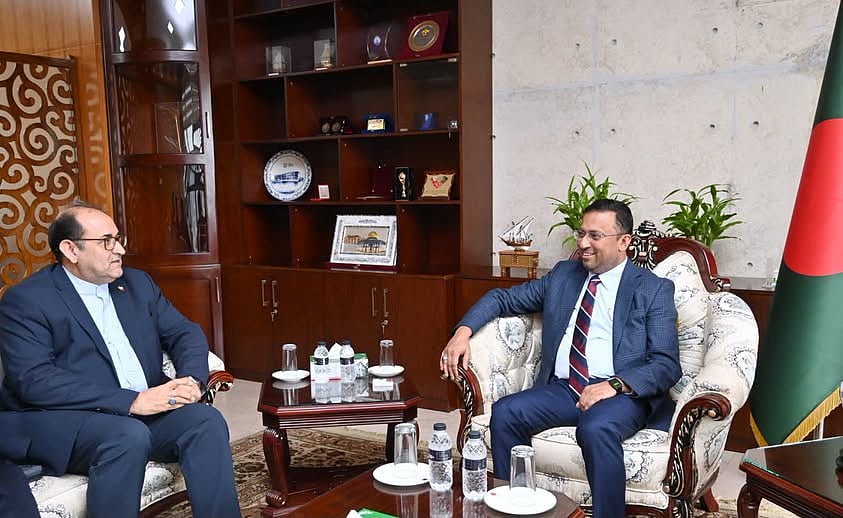
Photo Collected
DHAKA — Iranian Ambassador Jalil Rahimi said on Wednesday that Tehran remains unconcerned by the formation of the Makkah Agreement, characterizing the pact as a reflection of dwindling U.S. influence in the Middle East rather than a threat to Iranian interests.
Speaking to reporters following a meeting with State Minister for Foreign Affairs Humayun Kabir at the Ministry of Foreign Affairs in Dhaka, the ambassador reaffirmed that Iran maintains balanced diplomatic relations with regional powers, including Saudi Arabia, Turkey, and Pakistan. He dismissed suggestions that the Makkah Agreement is a hostile coalition, arguing instead that it serves as evidence of American vulnerability in the region.
The ambassador addressed concerns regarding recent regional tensions, asserting that Iranian military operations have remained strictly focused on American assets. He emphasized that during recent conflicts, Iranian forces targeted U.S. military installations in countries such as Jordan, Bahrain, Kuwait, and Iraq’s Kurdistan region, while scrupulously avoiding the territory of Arab host nations.
Rahimi argued that the U.S. has historically employed a strategy of leveraging security promises to drive regional arms sales and maintain political hegemony, a model he claims has failed to produce results. He cited the stability of the Iranian political system and the continued development of its uranium program as evidence of this failure. According to Rahimi, regional nations are beginning to realize that massive stockpiles of American weaponry do not guarantee sovereignty.
Regarding the potential for Iranian participation in the Makkah Agreement, the ambassador stated that Tehran has not formally applied for membership. However, he noted that Iran would be open to considering an invitation should the member states extend one. He highlighted that Iran had proposed a regional security architecture a decade ago, including a nuclear-weapons-free zone and a joint defense pact among Islamic nations—proposals that were dismissed at the time by the U.S. and its regional allies.
Rahimi concluded by questioning the efficacy of the U.S. security umbrella in the Middle East. He pointed to recent Iranian missile trajectories toward Tel Aviv, which traversed various regional airspaces, as a demonstration that American military presence is unable to provide the comprehensive security that regional states seek.
0%
0%
0%
0%
More News from Local