

Inclusive education initiative boosts school enrollment for children with disabilities in Bangladesh
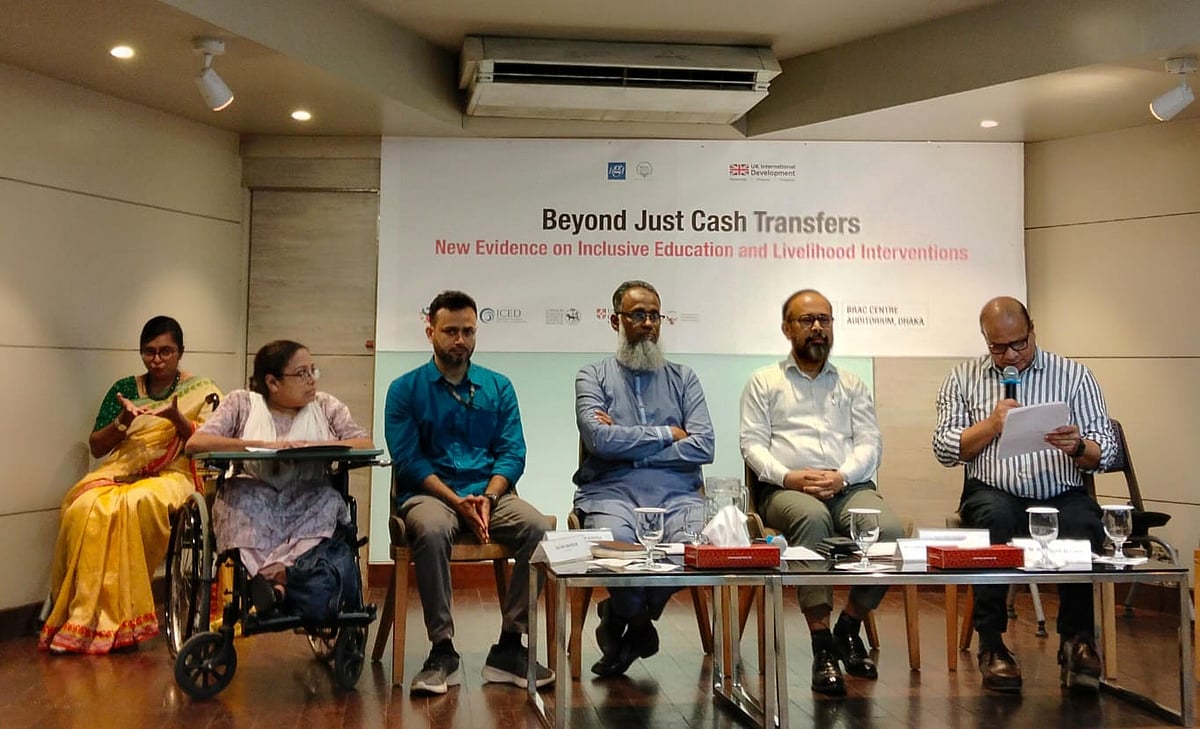
Photo Collected
Inclusive education initiatives in Bangladesh have led to a 15% increase in school participation among children with disabilities, alongside an 8% reduction in bullying and harassment incidents. These findings were disclosed Tuesday at a seminar hosted by the BRAC Institute of Governance and Development (BIGD) in Dhaka, which examined the efficacy of holistic intervention programs for marginalized students.
The research centered on “Shikbo Shobai” (We Will All Learn), a project implemented by the international NGO Sightsavers. A joint study conducted by BIGD, BRAC University, and the University of Cambridge analyzed data from 1,615 children with disabilities across 122 schools between 2022 and 2025. Professor Narayan Chandra Das, a senior research fellow at BIGD, noted that the initiative’s success stems from a multi-faceted approach, including infrastructure improvements, increased parental involvement, and specialized social support.
বিজ্ঞাপন
The data highlighted a particularly positive impact on girls, who showed significant improvements in examination participation and home-study hours. Researchers attributed these gains to the provision of assistive devices and physiotherapy, which helped foster a more welcoming school environment. While the study emphasizes the need for continued support for both male and female students, experts noted that the model’s long-term success depends on integrating these interventions into sustainable government policy.
Beyond education, the event also examined the “Disability-Inclusive Ultra-Poor Graduation” (DIUPG) program, which aims to provide economic independence to families with members living with disabilities. Research presented by BIGD indicated that participating households saw their average monthly income rise by 20%, while the value of productive assets surged by 256%. Employment among individuals with disabilities in these households grew by 21%, as participants moved beyond mere subsistence to active economic investment.
বিজ্ঞাপন
BRAC officials emphasized that the program’s success lies in shifting the narrative: moving away from viewing individuals with disabilities as unproductive recipients of aid toward empowering them as active participants in the workforce. This holistic approach, which includes training, resource allocation, and social integration, has significantly bolstered the self-confidence and financial stability of families involved.
During the concluding policy discussions, experts and government officials debated the integration of these models into national development strategies. Mohammad Nazmul Ahsan, joint secretary of the Ministry of Social Welfare, highlighted that the government is exploring the use of artificial intelligence to better support disabled individuals and is committed to scaling up therapy and assistive device distribution at the grassroots level.
BIGD Executive Director Imran Matin underscored the cyclical nature of poverty and disability, asserting that financial stipends alone are insufficient. He called for a comprehensive national framework that treats inclusive education and economic participation as fundamental to the country’s development. Other stakeholders, including representatives from the British High Commission and disability rights advocates, echoed these sentiments, urging policymakers to phase out segregated schooling in favor of mainstreaming, supported by specialized training for educators and direct input from the disability community itself.
0%
0%
0%
0%