

Hunter tiger pursues DC through eerie night forest
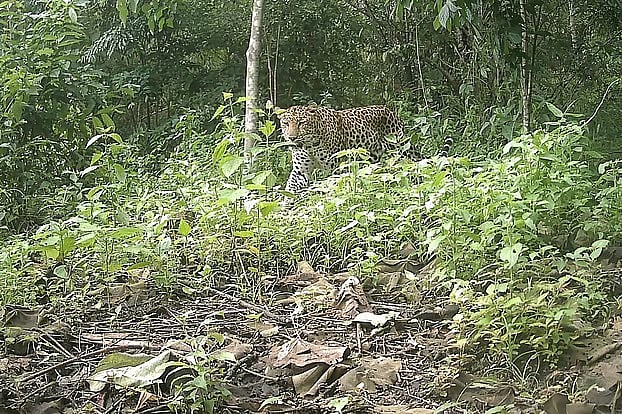
Photo Collected
The verdant hills of the Chittagong Hill Tracts, once a sanctuary teeming with diverse wildlife, are now a stark testament to ecological transformation. Decades of human encroachment, development, and the relentless march of concrete have dramatically altered a landscape that for centuries harbored tigers, rhinos, and vast elephant herds. Historical accounts from British administrators and naturalists paint a vivid picture of an almost mythical era, a stark contrast to the diminishing wildlife populations of today.
Early explorations by British officials such as Francis Buchanan in 1798 and T.H. Luen, who served as Deputy Commissioner in the 1860s, laid the groundwork for understanding the region’s natural wealth. Luen’s harrowing expedition in the late 1860s, detailed in his memoir “A Fly on the Wheel,” vividly describes navigating treacherous, uncharted forests with his team of 90, facing down formidable predators like tigers and rhinoceroses while charting maps. His accounts, later translated and published, recount close encounters with wildlife, including a persistent tiger that shadowed his camp for two days and nights, and the sight of elephants bathing in rivers.
বিজ্ঞাপন
These early narratives highlight a period of unparalleled biodiversity. Luen’s writings, for instance, describe witnessing herds of one to 150 elephants, and encounters with animals like the Indian rhinoceros, gibbons, langurs, bears, and various bird species. George P. Sanderson, who arrived in the 1870s to hunt wild elephants, documented similar abundance. His book, “Thirteen Years Among the Wild Beasts of India,” includes an account of a tiger preying on an elephant calf near his camp, a brutal yet natural event in the ecosystem of the time. Sanderson himself successfully hunted a large, 9-foot tiger after it had killed the calf.
R.H. Snayde Hutchinson, an administrator in the 1890s, further detailed the region’s rich fauna in his “An Account of the Chittagong Hill Tracts.” He noted the presence of multiple deer species, wild goats, rhinos, elephants, various bears, marbled cats, gaur, wild buffaloes, and tigers. Hutchinson specifically mentioned the free ranging of rhinoceroses in the hilly areas of Thega, Maini, and Thui-Chong near Rangamati, a sight now relegated to history, as rhinos have vanished from the region.
বিজ্ঞাপন
Even during the Pakistan era, accounts suggest a significant presence of wildlife. Yusuf S. Ahmed, then Inspector General of Forests, wrote about his experiences, including a poignant encounter where he refrained from shooting a tigress nursing her cubs, only to learn later that the tigress was killed by villagers after preying on their livestock. This incident, he noted, symbolized the growing human-wildlife conflict.
More recent extensive research by Professor Monirul Khan of Jahangirnagar University’s Zoology Department, spanning from 2003 to 2022, underscores the Chittagong Hill Tracts’ status as Bangladesh’s most biodiverse region. His book, “In Search of Biodiversity in the Chittagong Hill Tracts,” identifies 87 mammal species, 597 bird species, and numerous reptiles, amphibians, plants, and fish. Despite its ecological richness, Professor Khan’s findings also reveal the devastating impact of development. He recounts returning to Sajek, a once pristine area, to find it transformed into a concrete tourist hub, with plastic waste littering the hillsides.
The historical accounts reveal an ecosystem where apex predators like tigers and elephants were integral. Sanderson’s narrative of a tiger hunting an elephant calf and Hutchinson’s own close calls with tigers highlight the natural dynamics of the era. Similarly, Ahmed’s account points to the increasing conflict that began to arise as human settlements expanded.
However, the present reality is a stark departure. Tigers are now virtually extinct in the region, and rhinos are long gone. Many species are either extinct or critically endangered. While elephants still exist, they face shrinking habitats and increased conflict with humans. The construction of roads, resorts on hilltops, and the influx of tourism have fragmented habitats and led to pollution. The wild spaces that once served as the exclusive domain of these animals are rapidly diminishing.
Despite the grim picture, pockets of biodiversity persist in the deeper forests of Kasalong, Sangu, Matamuhuri, Reamkri, and Sajek. Scientists believe there is still potential for discovering new species. However, conserving this last major hill tract biodiversity hotspot requires a concerted, long-term effort focusing on forest preservation, safeguarding wildlife corridors, regulating tourism, involving local communities, conducting scientific surveys, and mitigating human-wildlife conflict. The history of the Chittagong Hill Tracts is intrinsically linked to the story of Bangladesh’s vanishing forests and wildlife, and the question remains whether the last vestiges of this natural heritage can be saved.
0%
0%
0%
0%