

Half of public hospital diagnostic equipment remains idle due to mismanagement and staffing shortages
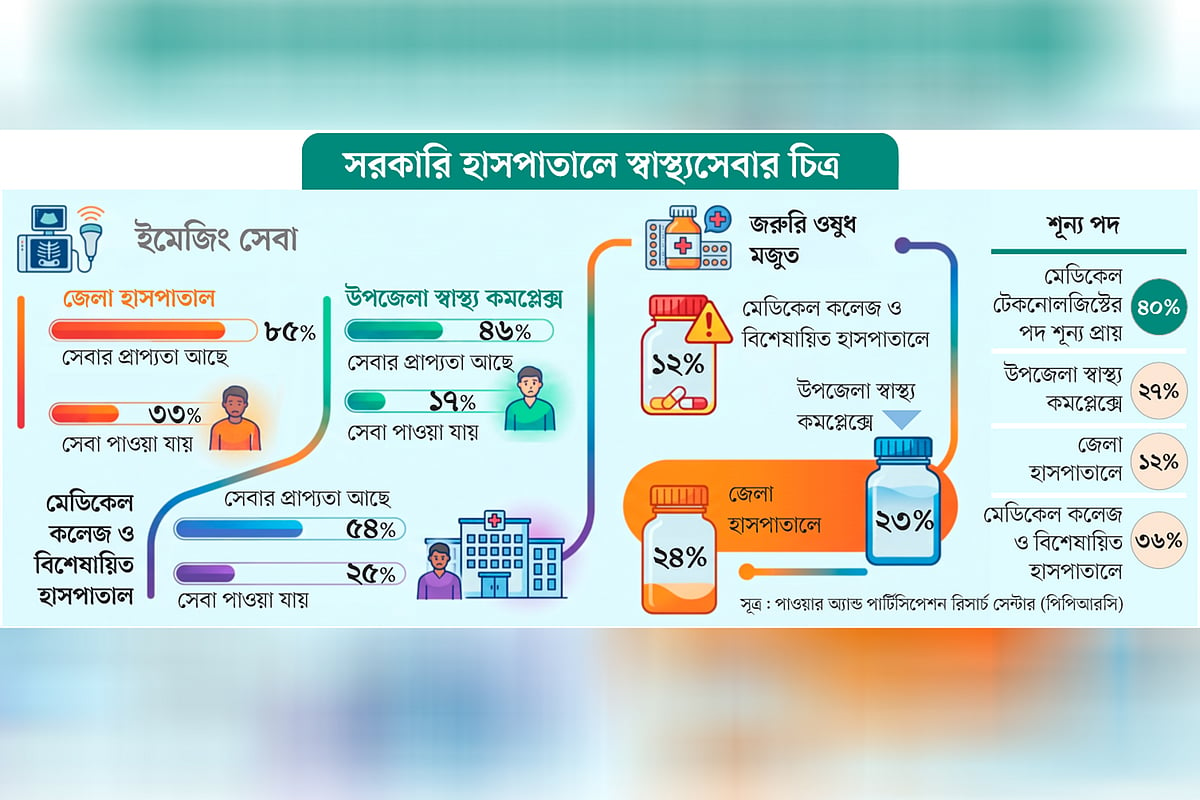
Photo Collected
A new study has revealed that a significant majority of medical diagnostic equipment in Bangladesh’s public hospitals remains underutilized or entirely non-functional, severely hindering the nation’s efforts to provide universal health coverage. The research, conducted by the Power and Participation Research Centre (PPRC), found that while diagnostic services are theoretically available in many facilities, actual, regular service delivery is alarmingly low.
According to the findings, although district hospitals report an 85% availability of diagnostic equipment on paper, consistent service was provided only 33% of the time over the past year. Across a sample of 22 public healthcare institutions—ranging from উপজেলা-level complexes to specialized medical colleges—52% of diagnostic machines remained completely unused throughout the year.
বিজ্ঞাপন
The study, led by PPRC Executive Chairman Hossain Zillur Rahman and funded by the Ministry of Health’s Health Economics Unit, highlights systemic inefficiencies, including the procurement of unnecessary equipment, failure to repair broken machinery, and a persistent shortage of essential medicines. Researchers noted that the lack of trained personnel is a primary bottleneck; for instance, nearly 40% of the government-approved positions for medical technologists remain vacant, leaving high-end equipment idle due to a lack of operators.
Health Minister Sardar Md. Sakhawat Hossain, speaking at the release of the report in Dhaka, acknowledged the failures in planning and implementation. He attributed the waste of public funds to corrupt procurement practices during previous administrations and a lack of accountability. The minister emphasized that without addressing internal malpractice—such as doctors prioritizing private clinics and commissions over their duties at public facilities—structural reforms and research recommendations alone would be insufficient to fix the sector.
বিজ্ঞাপন
The research details a broader crisis in resource management, noting that essential medicine stocks are critically low, with specialized hospitals reporting only 12% of their required supply. Due to these shortages, nearly one-third of hospitals are forced to procure medicines from sources outside the state-run Essential Drugs Company Limited (EDCL). Furthermore, while routine supplies like gauze and syringes are generally available, vital emergency equipment—such as tourniquets and newborn resuscitation tools—is absent in a significant portion of surveyed facilities.
The data further shows that financial mismanagement compounds these operational failures. In the 2024-25 fiscal year, most institutions failed to utilize their full budgets, with district hospitals spending as little as 78% of their allocated funds. Paradoxically, institutions often struggled to spend on vital equipment while disproportionately allocating funds to travel and administrative fees.
To address these shortcomings, researchers have proposed a series of urgent reforms. Short-term recommendations include the immediate recruitment of medical technologists, the digitalization of resource management, and the simplification of government procurement processes. In the long term, the PPRC suggests the modernization of the EDCL, the professionalization of hospital management structures, and the decentralization of financial authority to allow institutions to respond more effectively to local medical needs.
0%
0%
0%
0%