

Dhaka South City Corporation unveils 4 billion taka budget amid skepticism over implementation capacity
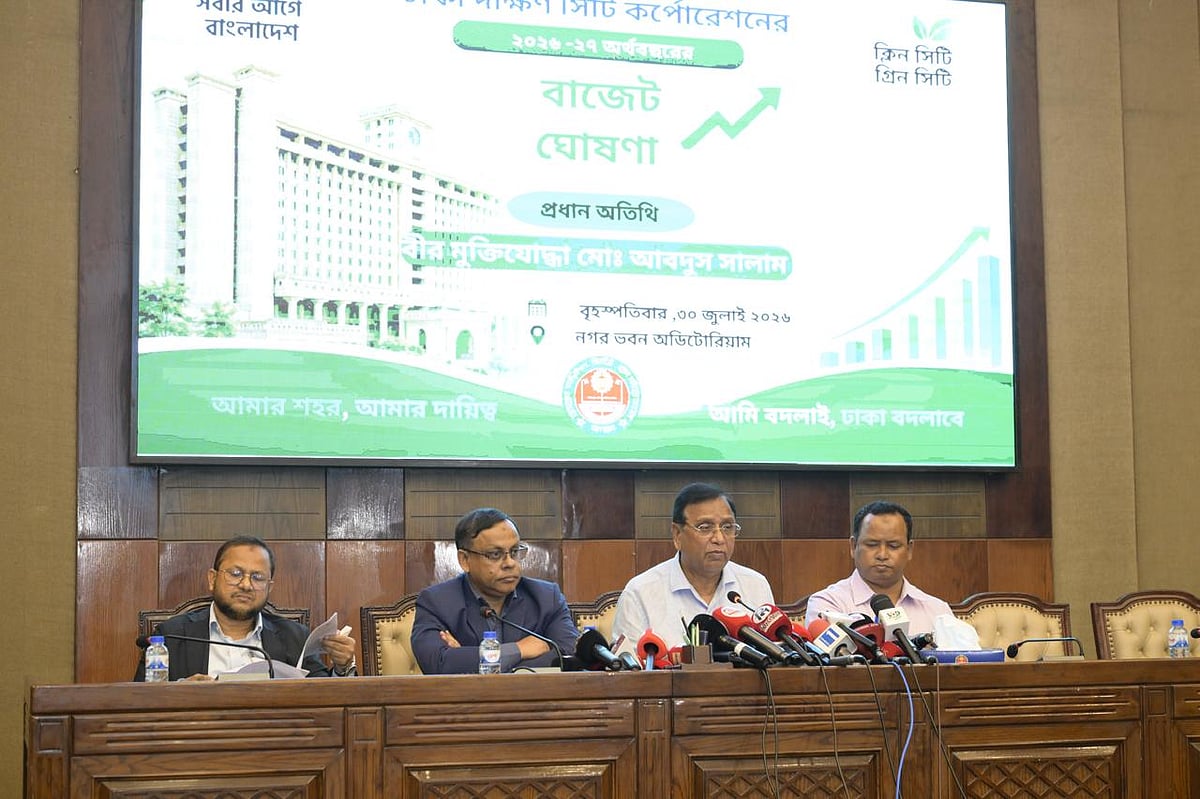
Photo Collected
Dhaka South City Corporation (DSCC) has announced a budget of 4.004 billion taka for the 2026-27 fiscal year, marking an increase of approximately 866 million taka over the previous year’s revised figures. Administrator Md. Abdus Salam unveiled the fiscal plan at the city’s Nagar Bhaban, emphasizing a commitment to fiscal responsibility, the avoidance of new tax burdens, and a move toward what he described as a realistic, implementable strategy for urban development.
Despite the headline figure, the budget’s practical utility faces scrutiny due to historical trends in implementation. In recent years, DSCC has consistently struggled to execute its ambitious financial plans. Data from the previous three fiscal years reveals that the corporation achieved an average implementation rate of only 33 percent. For instance, in the 2024-25 fiscal year, while the budget was set at 6.76 billion taka, actual expenditures reached only 32 percent of that amount. The current fiscal plan also includes 730.93 million taka in unspent funds from the previous year, with an expectation that 540.50 million taka will remain unutilized by the end of the new cycle, suggesting that the full four billion taka will not be directed toward immediate urban services or capital development.
Budgetary allocations for cleanliness and health highlight the disparity between headline figures and operational reality. The cleaning budget has been increased fourfold to 327 million taka, yet the vast majority of this rise is earmarked for irregular workers’ wages, fuel, and maintenance rather than a significant expansion of modern waste management infrastructure. Similarly, the health budget has been elevated to 121.66 million taka, though roughly 87 percent of these funds are dedicated to mosquito control and labor costs, leaving minimal resources for hospital expansions or broader healthcare services.
Revenue targets also reflect an reliance on non-traditional sources. The corporation has projected 400 million taka in “liability increases,” primarily stemming from security deposits and suspense accounts, rather than recurring tax revenue. Furthermore, the target of 200 million taka from road-cutting fees is contingent upon major utility projects, such as those planned by Dhaka WASA, rather than steady, predictable income. The development budget is equally aspirational; it sets an expenditure target of 1.904 billion taka, nearly triple the 814 million taka actually spent on development in the 2024-25 fiscal year, leaving the plan vulnerable to fluctuations in government and foreign project funding.
While Administrator Salam has pledged to improve fiscal discipline through ward-level public hearings and the reduction of unnecessary expenditures, experts suggest that institutional credibility depends on transparent reporting. To move beyond the cycle of large-scale declarations followed by low implementation, the corporation must provide quarterly updates on progress, ensure the certainty of project-based funding, and establish measurable performance indicators for its cleaning and health initiatives. Without such oversight, the current budget risks mirroring the performance of its predecessors, where the gap between proposed and actual results remains a persistent challenge for the capital’s governance.
0%
0%
0%
0%