



Concerns Mount Over Police Searches of Personal Phones and Privacy Violations
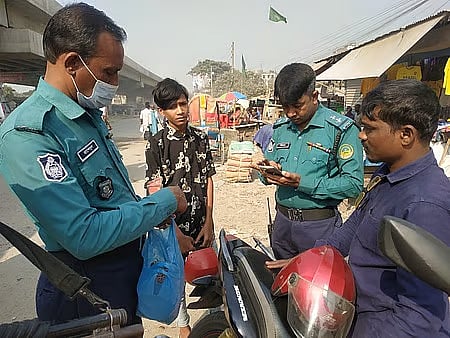
Photo Collected
Across the capital and beyond, citizens are reporting an alarming rise in intrusive police searches, where officers are routinely demanding access to personal mobile phones, scouring private photo galleries, WhatsApp messages, and social media profiles. The practice, which often involves “mobile journalism” (MoJo) content creators filming the encounters for social media, has sparked a firestorm of debate regarding the boundaries of police authority and the constitutional right to privacy.
Abir Mahmud Zakaria, a 27-year-old lawyer, recounted a recent incident where he was stopped by a patrol team near Eastern Plaza while returning home late at night. Despite presenting an invitation to the wedding he had attended, officers insisted on searching his person and mobile device. When Zakaria refused, citing personal privacy, the officers claimed they were acting under orders to identify members of “banned groups” rumored to be organizing late-night protests. Zakaria’s experience is not an isolated one; similar reports of invasive searches have emerged from Chittagong and other urban centers, often captured in viral videos that have drawn widespread public criticism.
বিজ্ঞাপন
These digital footprints, often recorded by third-party content creators accompanying police patrols, show officers rummaging through private bags and vehicles, sometimes while broadcasting the identity of the detained individuals to a public audience. In one widely circulated video from Dhanmondi, an officer is seen scrolling through a citizen’s private social media posts and WhatsApp messages without consent, dismissing the individual’s claims of employment while searching for evidence of political affiliation.
Legal experts argue that such practices flagrantly violate both national law and international human rights standards. Rezaul Karim Sohag, head of the Department of Criminology at the University of Dhaka, emphasized that the Bangladeshi Constitution guarantees the right to life, personal liberty, and the privacy of communication under Articles 32 and 43. He noted that even where the Code of Criminal Procedure provides police with powers to search, these are strictly regulated and require reasonable grounds, often necessitating judicial oversight or formal documentation that is currently absent in these street-level operations.
বিজ্ঞাপন
The issue is further complicated by the involvement of unauthorized videographers who publish footage of these searches online. While police headquarters has attempted to distance itself from these recordings, the optics have fueled perceptions of systemic overreach. Assistant Inspector General A. H. M. Shahadat Hossain of the Police Headquarters stated that there is no official directive authorizing the general screening of citizens’ mobile phones or social media accounts. He clarified that such searches are permitted only on the basis of specific, intelligence-led allegations regarding criminal activity or rumors.
Hossain acknowledged that the publication of police-led search videos on social media constitutes an infringement on privacy, yet he admitted that authorities are struggling to curb the influence of third-party content creators who film these interactions. As public frustration mounts, legal scholars are calling for a definitive interpretation of the law, urging authorities to clarify the limits of “reasonable suspicion” to prevent the erosion of civil liberties under the guise of security operations.
0%
0%
0%
0%


