

Bangladesh to utilize cultural ministry staff for primary school music instruction

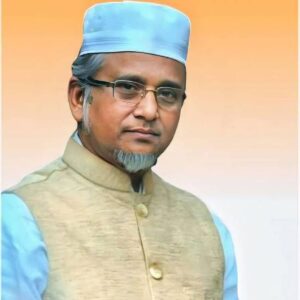
Photo Collected
The Bangladesh government is recalibrating its primary education strategy, moving to integrate “culture” and “sports” as formal subjects into the fourth-grade curriculum starting next academic year. This expansion, coupled with plans to introduce “Learning with Happiness” and technical vocational education for sixth graders, has reignited the national debate over the necessity of dedicated music teachers in primary schools.
Primary and Mass Education Minister A.N.M. Ehsanul Haque Milan confirmed that while the government intends to bolster cultural education, it currently lacks a specialized workforce to teach music. To bridge this gap, the ministry is pursuing a collaborative strategy with the Ministry of Cultural Affairs. Under this model, music teachers from the cultural ministry will be organized into “clusters” to provide instruction at the sub-district level. The government also intends to enlist the Shilpakala Academy for further support as it works to address the shortage, with the long-term goal of recruiting graduates from expanding university-level music and culture departments.
বিজ্ঞাপন
The issue of dedicated music instructors has long been a contentious policy point. In 2024, the previous interim government initially drafted regulations to create 5,166 new positions for music and physical education instructors. However, following intense pressure and threats of protest from various religious-based organizations—who demanded the inclusion of religious teachers instead—the government amended the recruitment rules within two months, scrapping the provisions for specialized music and physical education staff. Minister Milan clarified that recent rumors suggesting the Cabinet had formally rejected the recruitment of music teachers are inaccurate, noting that no such discussions occurred at that level.
Currently, the National Curriculum and Textbook Board (NCTB) does not provide separate textbooks for music at the primary level, and students are not subjected to formal examinations in the subject. Instead, teachers are provided with guidelines to evaluate students throughout the year. The curriculum currently features 13 foundational songs, including the national anthem and various patriotic and cultural compositions intended to foster national identity and social values among the country’s 10.6 million primary students.
বিজ্ঞাপন
Critics and educators have frequently argued that the current system of relying on generalist teachers to deliver music instruction is ineffective. Under the existing framework, primary school teachers are responsible for all subjects, which experts contend limits the quality of arts education when instructors lack specialized training. Despite the inclusion of these songs in the curriculum and short-term teacher training programs, the absence of a professionalized teaching cadre remains a primary obstacle.
As the government prepares to roll out its new curriculum, it is also emphasizing moral education, family values, and recitation competitions to complement the broader cultural shift. Whether this hybrid approach of using inter-ministerial clusters will suffice to support a system comprising over 65,000 primary schools remains a central challenge for the Ministry of Primary and Mass Education as it balances pedagogical goals with competing societal pressures.
0%
0%
0%
0%


